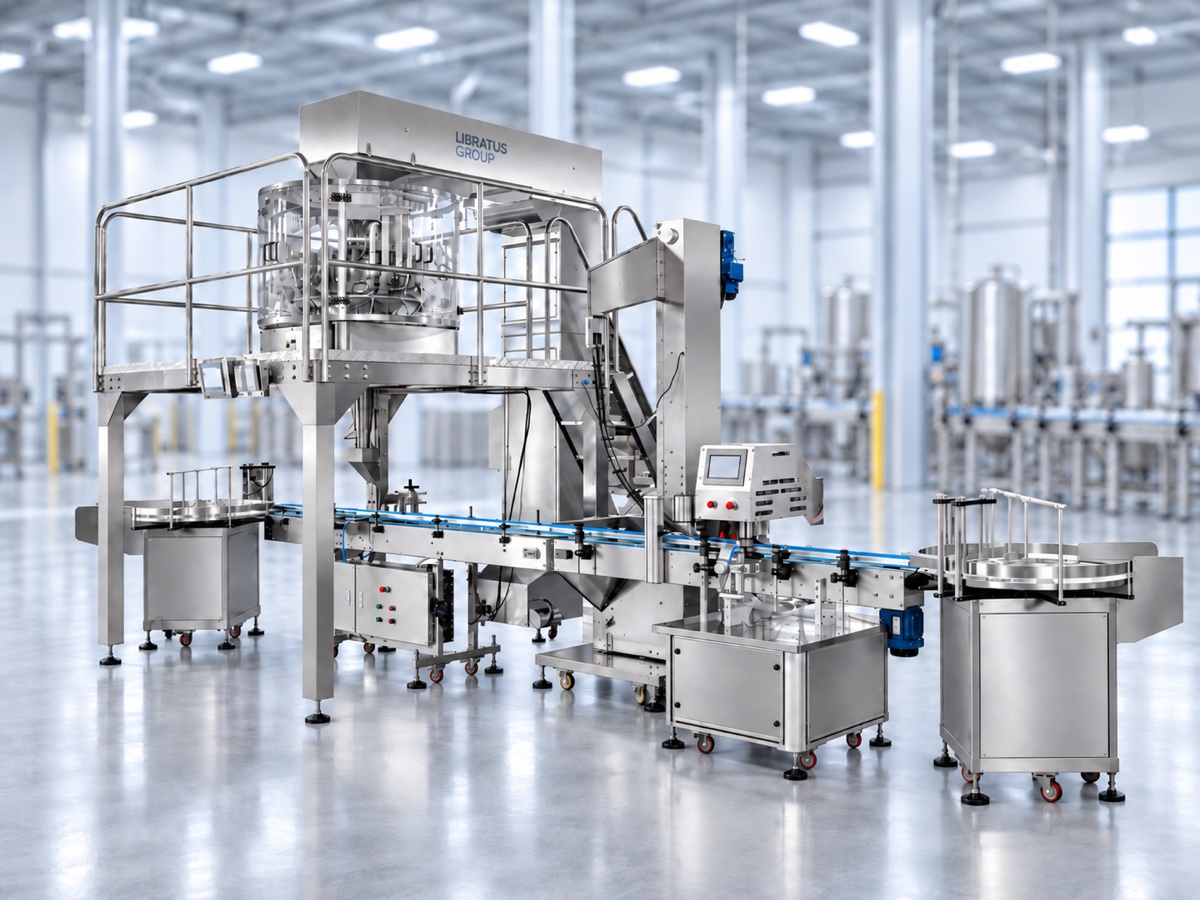
Libratus GroupGet a quote

Industries / Grains, rice & dry foods

Weighing, filling and bagging machinery for rice, grains and dry foods

Staple products are packed at thin margins and high volume. That combination makes weighing accuracy an economic decision before it is a technical one — and it is why the wrong machine costs money on every pack, every shift.

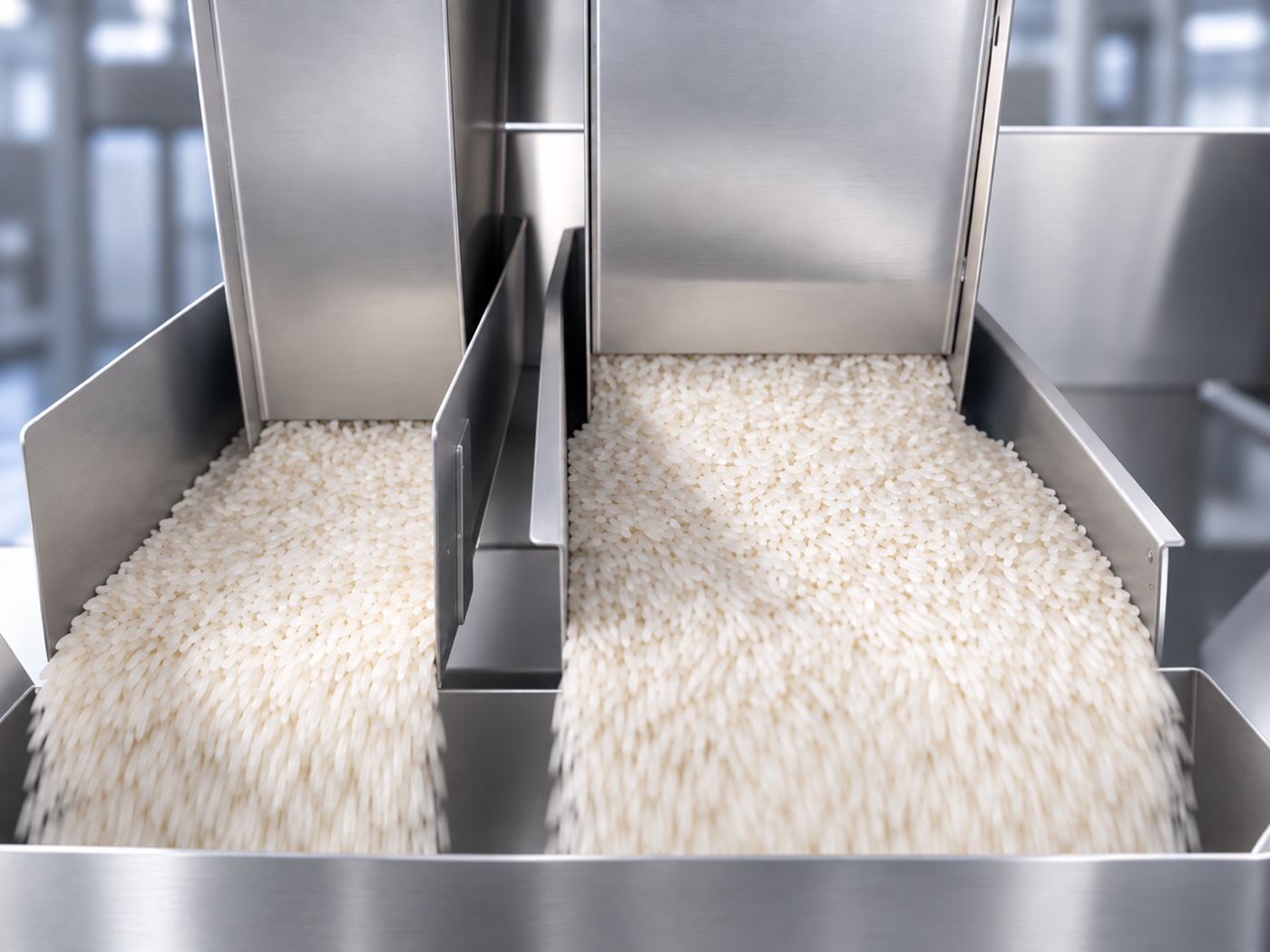
Rice flowing through stainless-steel weighing channels

Sector context

Rice, pulses, lentils, beans, seeds and cereals are among the most heavily packed products in the region. Most of them are free-flowing, which producers often take to mean they are easy. In practice, free-flowing products tend to expose weighing weaknesses rather than hide them, because there is nothing about the material to disguise a filler that consistently runs over target.

Libratus manufactures weighing, filling, sealing and conveying machinery, specified around target weight, output and material behaviour rather than sold as a fixed configuration.

What triggers the investment in grain and dry food packing

The drivers here are different from those in higher-margin food categories.

Bulk-to-retail conversion.

The commercial move that changes a business is packing under your own brand, or under a customer’s, instead of shipping in bulk. It captures margin, but it converts a handling operation into a packing operation — and a packing operation needs weighing equipment it did not previously own. A mill, importer, processor or trader making that move typically finds that the storage, cleaning and transport side of the business is already capable, and the entire new requirement lands on the packing hall.

Milling and processing capacity is being modernised.

Where milling capacity is upgraded or newly built, the packing hall is often the last section specified and the first to become the bottleneck. A mill that can process more than it can pack has simply moved its constraint.

Declared quantity has to be met consistently.

Every pack carries a declared net quantity, and your customers expect it to be accurate. Filling below it is not an option. Filling reliably above it, pack after pack, is the quiet cost that most manual and semi-automatic operations carry without measuring. Retail and export customers increasingly ask how weight consistency is controlled and, in some cases, how finished packs are verified — worth establishing for your own customers and channels rather than assuming a common standard.

Giveaway belongs in the investment calculation.

On a commodity product, the difference between filling accurately and filling a little generously is the difference between a viable margin and a thin one. Work out what a one per cent average overfill costs you across your annual packed tonnage at your own product value. On high-volume staple products, even a small recurring overfill can represent a material annual cost, and it is worth putting that number alongside the labour saving rather than treating labour as the whole case.

Product behaviour

Free-flowing is not the same as easy

The products on this page cover a wider range of behaviour than the phrase “dry goods” suggests.

Rice flows well but is not uniform. Grain length, moisture content and broken-grain content all vary between batches and varieties, and all three affect bulk density. A filler calibrated against one batch may drift against another. Broken grains and fines can also concentrate in hoppers, so the first packs of a run may not resemble the last.

Pulses, lentils and beans are dense, hard and mildly abrasive. They flow readily but land heavily, which puts more energy into contact surfaces and into the bag. Split products behave differently from whole ones. Larger beans introduce the same piece-size-versus-target-weight problem found in pet treats, but at a smaller scale.

View pet & animal products

Seeds vary from fine and dusty to large and oily. Oily seeds can leave residue on contact surfaces over a run; fine seeds find every gap in a machine that was not specified for them.

Cereals and flaked products are the fragile case in this category. Flakes, puffed grains and extruded cereal break under drop and vibration, and broken product is both a quality complaint and a density problem.

Blends and multigrain mixes can segregate. Components of different size and density separate under vibration and during free fall, so a correctly weighed pack may still show the wrong visible composition.

Two behaviours matter more than most others on a grain line. Dust is generated at transfer points, can affect seal integrity and weighing stability, and accumulates. Bulk density variation — between batches, between suppliers, between moisture conditions — is one of the most common reasons a line that was accurate at commissioning is no longer accurate six months later.

We do not treat flours and milled powders as part of this page. Powders are a different filling problem and are specified differently.

Machinery routes

Libratus machinery on grain and dry food lines

Understand the problem, narrow the technology, then discuss it with us. Libratus confirms final machine selection during specification.

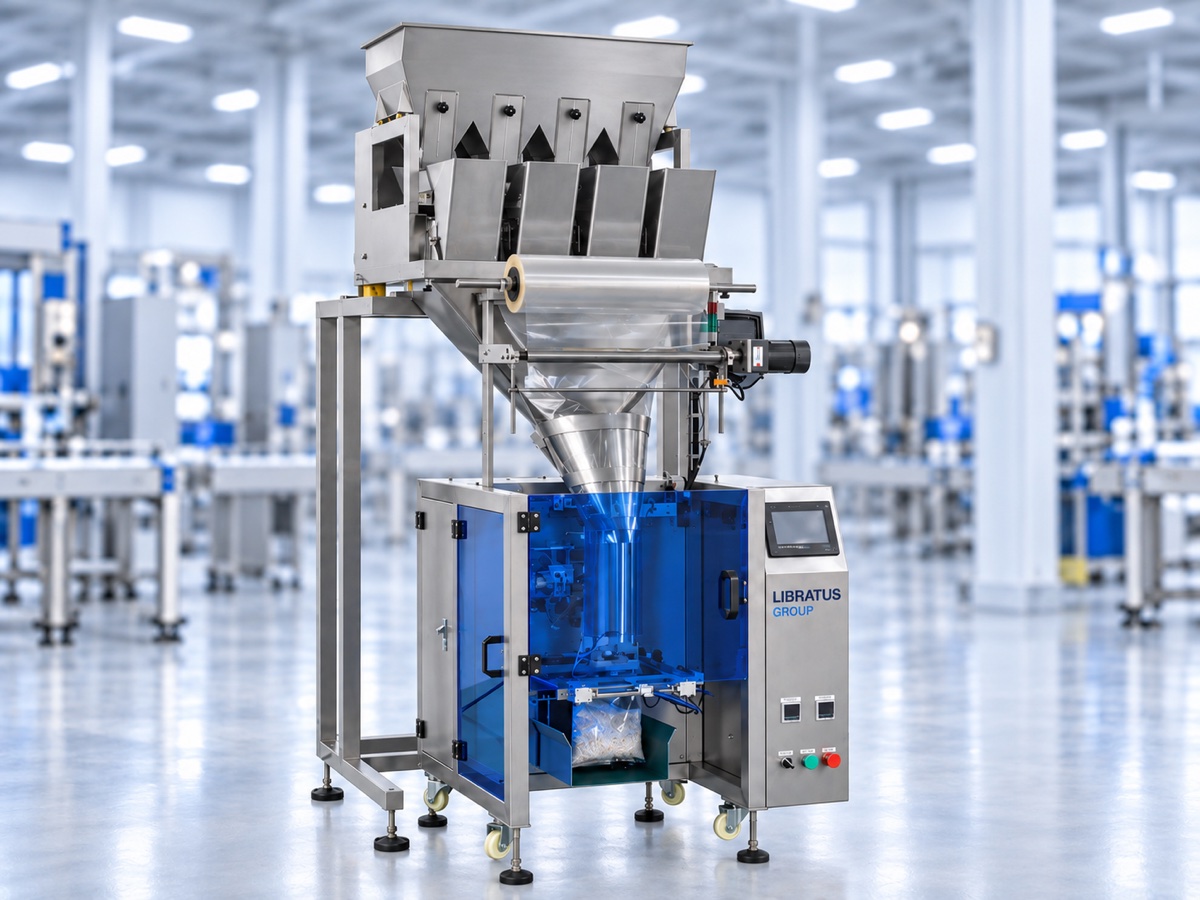
Linear weigher mounted above a vertical bagging machine

Linear weighers

Linear weighers cover a large share of this category. For free-flowing rice, pulses, beans and seeds at moderate to high target weights, they provide repeatable filling with straightforward operation and lower capital cost than combination weighing. For a substantial proportion of grain packers, this is the correct answer, and we will say so.

View linear weighers
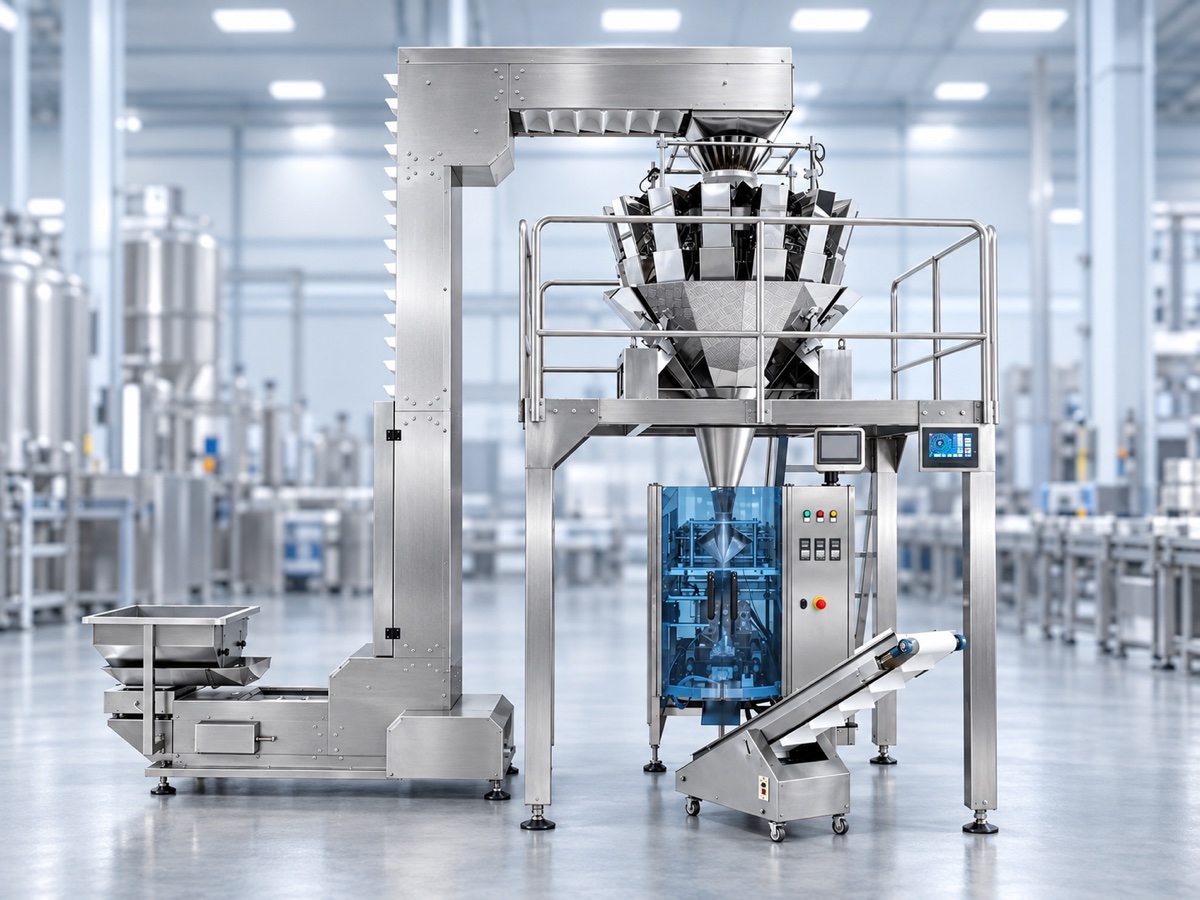
Multihead weigher above a vertical bagging machine, with feed elevator and supporting platform

Multihead weighers

Multihead weighers apply where output, small target weights, blends or fragile product justify combination weighing — premium and specialty products, small retail packs, and mixed-grain lines where accuracy across an irregular product matters more than machine cost.

View multihead weighers
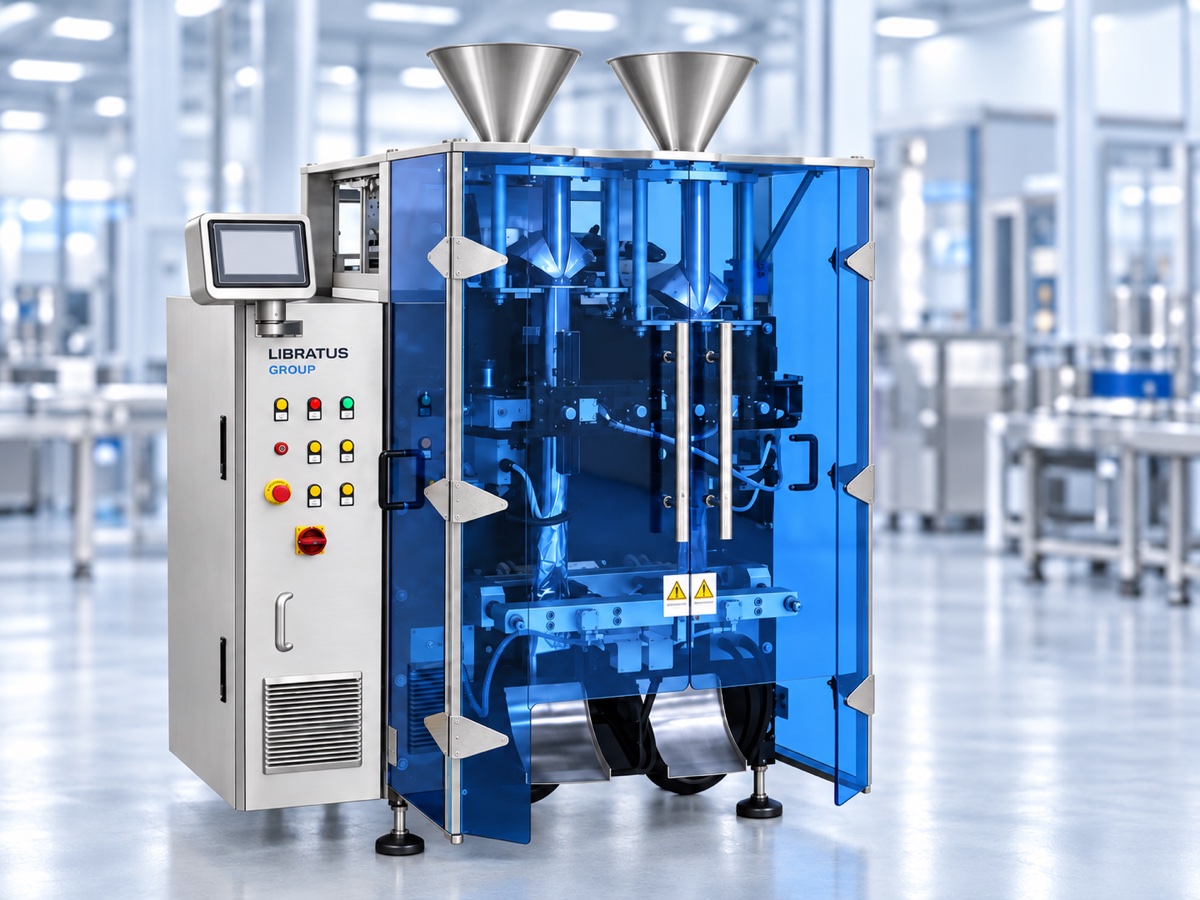
Vertical form-fill-seal bagging machine with guarded access doors

VFFS baggers

VFFS baggers form, fill and seal from roll film, suited to sachets and small-format roll-film packs.

Selection detail for VFFS baggers

Where the pack format, volumes and production setup support it, roll film can reduce packaging cost per pack compared with premade bags — but that depends on format, run length, film specification and changeover pattern, and is worth costing against your own numbers rather than assumed. If you need a particular bag construction or format, specify it at enquiry and we will confirm what applies.

View VFFS baggers
Rotary premade pouch filling and sealing machine

Premade pouch machines

Premade pouch packing suits branded retail products in stand-up and flat-bottom pouches, including formats with resealable closures and windows.

Selection detail for Premade pouch machines

Material cost per pack is generally higher; shelf presence and structural quality are better. For premium rice and specialty pulses sold on brand rather than price, this is often the commercially correct format even where it is not the cheapest per pack.

View premade pouch machines
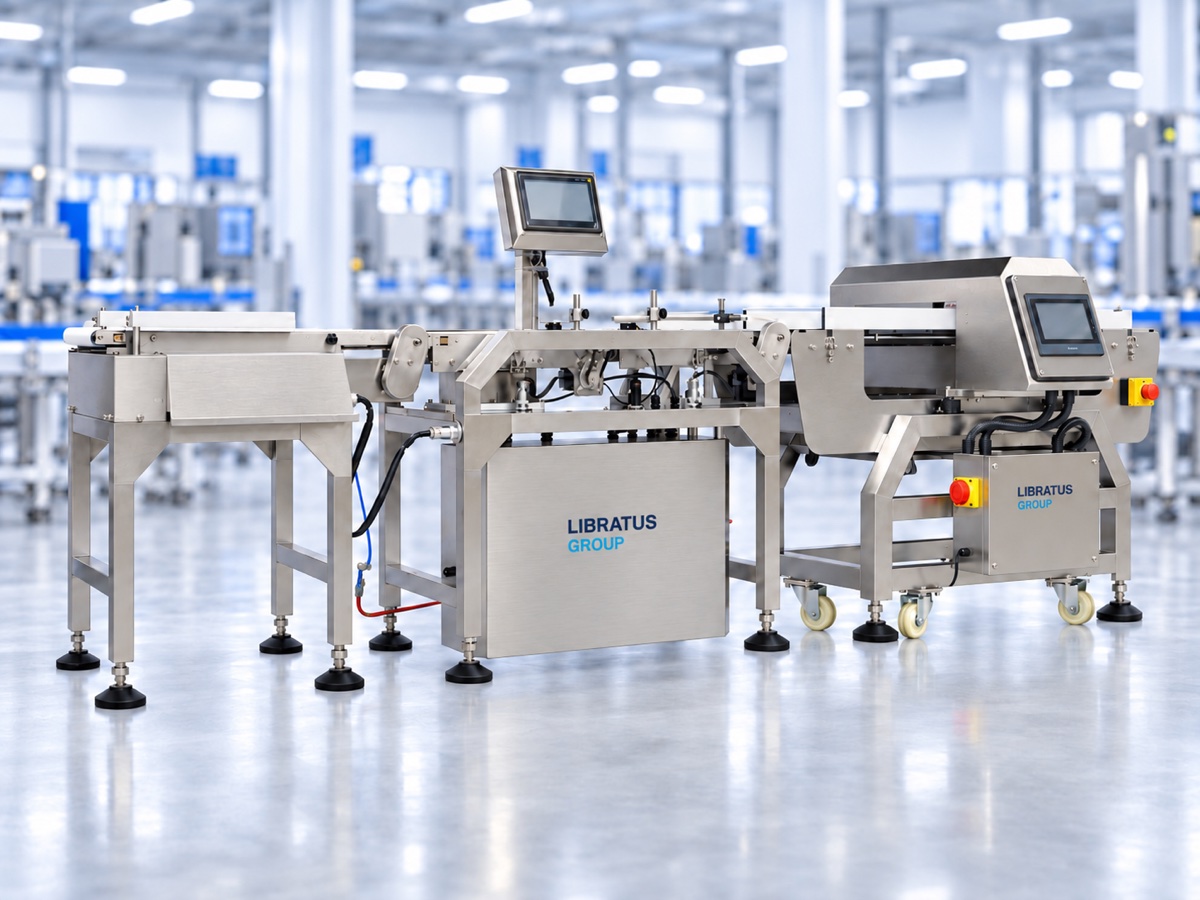
Combined checkweighing and metal-detection system with conveyor

Checkweighers

Checkweighers verify finished packs after filling and sealing.

Selection detail for Checkweighers

Their practical value on a staple product is usually visibility: seeing drift as it develops is what allows a filler to be corrected before it produces a shift’s worth of overfilled packs. Whether checkweighing is required, in what form, and whether any particular approval or verification applies to it depends entirely on your market, your customers and the application. Establish that requirement for your own situation, and tell us what it is at enquiry — we will not assume it, and we do not present our checkweighers as satisfying any approval regime by default.

View checkweighers
Conveyors and product-handling equipment integrated with a packaging line

Conveying systems

Conveying systems move product from storage, milling or cleaning to the weigher.

Selection detail for Conveying systems

The design questions are dust containment, avoiding breakage of fragile products, maintaining hopper level so the weigher runs stable, and preventing blends from separating in transit. Vacuum conveying is one configuration within this category; mechanical alternatives are others. Suitability depends on the product’s particle characteristics and flow behaviour, the distance and height involved, the required rate, the layout of the building, and the product’s fragility and dust behaviour. It should be established per product rather than assumed.

View conveying systems

Selection factors

Choosing a weighing method when margins are thin

For many free-flowing grain and pulse applications, linear weighing is the practical starting point.

This is the most useful thing we can tell a grain producer. Where the product is uniform and well behaved and the target weight is moderate to high, a linear weigher will frequently deliver what the line needs at materially lower capital cost than a multihead system. Selling upward is easy; on a commodity product it is usually not the right advice.

Multihead weighing earns its place in three situations:

where output requirements are high enough that combination weighing is the practical route to the pack rate; where target weights are small enough that a fixed overfill becomes a punishing percentage; and where the product is irregular, fragile or blended in a way that single-stream filling struggles to hold accurately. Premium rice in small retail packs, mixed grains and specialty products fall here more often than commodity rice in large packs.

Target weight shapes the decision more than product type.

A 500 g premium pack and a 10 kg foodservice pack of the same rice can be different machines. It is common and reasonable for a producer with a wide weight range to run two lines rather than compromise one.

Long runs and frequent changeover are different businesses.

A packer running one product for a full shift should optimise for sustained output and stability. A packer running six SKUs in a shift should optimise for changeover time and recipe recall. Buying for the first when you are running the second is a common and expensive mistake.

Throughput must be sustainable, not peak.

Headline speeds are quoted under favourable conditions. What matters is what the line produces across a full shift including changeovers, cleandowns, film and bag changes, and hopper refills. Ask about output per shift, not output per minute.

Pack formats

Pack formats: retail, foodservice and wholesale

Grain and dry food producers usually serve three channels with three different pack economics.

Small retail packs (roughly 250 g to 2 kg) carry the most branding and the highest material cost per kilogram of product. Weighing accuracy is proportionally most demanding here because a fixed overfill is a large percentage of a small target. Premade pouches and roll-film packs both apply; the choice is commercial as much as technical.

Standard retail packs (roughly 1 kg to 5 kg) are the volume core for rice in most markets. Giveaway across this format tends to cost more in absolute money than anywhere else in the range. Bag presentation and stackability matter to retail customers.

Foodservice and wholesale packs (roughly 5 kg to 25 kg and above) are bought on price and durability. Weighing is generally less demanding per pack; handling, bag closing and stacking become the constraint. Woven and laminated sacks at these sizes need their closure method established before equipment is specified, because bag construction determines what closing methods are available. Tell us the target weight, bag construction, intended closure method and required output at enquiry and we will confirm what is appropriate.

Two practical points recur. Hopper capacity determines how often the line stops for refilling, and undersized hoppers quietly reduce shift output on high-volume staple lines. Line height determines whether the layout works at all: weighing equipment sits above the pack, and available headroom above the filling point is often the binding constraint in an existing building.

What we need from you

What to establish before specifying equipment

  • Every product to be packed, with grain or piece size, and which products share a line
  • Bulk density, loose and tapped, for each product — and how much it varies between batches, suppliers and seasons
  • Moisture content range, and whether it varies seasonally
  • Broken-grain or fines content, and whether it varies
  • Full list of target weights and tolerances, present and planned
  • Required output per shift, and the number of shifts run
  • Pack formats and bag construction for each channel, including closure method for larger sacks
  • Number of changeovers per shift or week, and who performs them
  • How product reaches the packing point now, and available buffer capacity above the filler
  • Available headroom, floor space, floor loading, power and compressed air
  • Any finished-pack weight verification your customers or your market require of you
  • Your current giveaway, if you measure it — and if you do not, that is worth establishing before you specify anything
  • What documentation you, your customers or your auditors expect to receive with a machine

Documentation

Documentation

What documentation is appropriate depends on the machine, the destination market, how the equipment is installed and used, and your own customers’ requirements. It is not the same for every machine or every buyer.

We therefore treat documentation as part of specification. Raise it at enquiry, and we will confirm what is supplied with the machine you are considering.

For producers supplying supermarket customers or export buyers, the documentation that arrives with a machine is frequently what an auditor asks for. It is worth settling at enquiry rather than at commissioning.

Enquiry

Discuss a grain or dry food packing line

Tell us the products, target weights, pack formats and output, and we will tell you what suits — including where a linear weigher will do the work of a more expensive machine.

All industries

Fields marked are required.

Prototype preview: enquiries are not sent. Use the live enquiry form