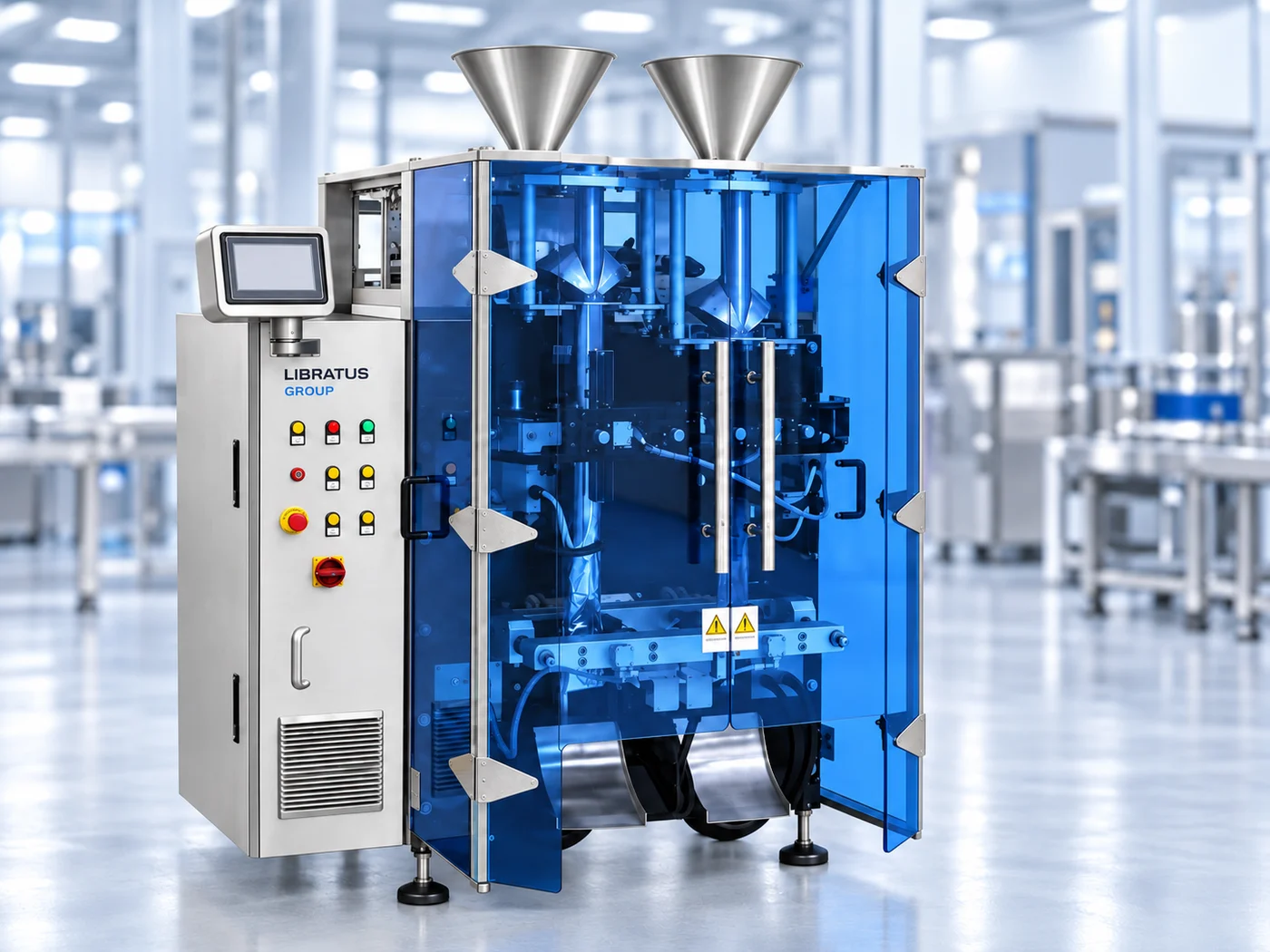
VFFS baggers
Form-fill-seal for pouches, quad-seal and flat-bottom bags.
Explore capabilities: VFFS baggers Get a quote
Weighing
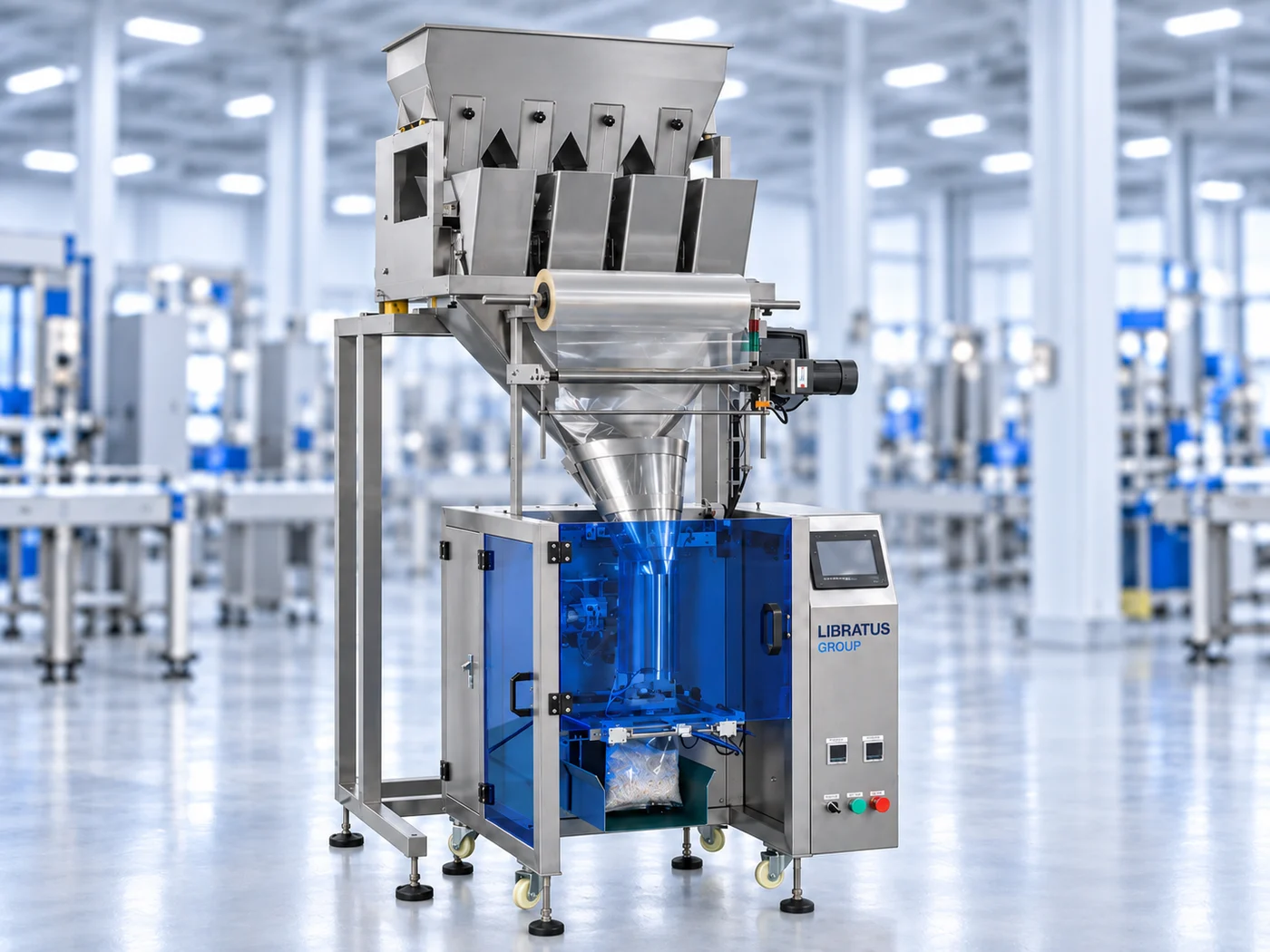
Linear weighing uses one or more independent weighing channels to measure and portion product. Each channel weighs sequentially toward a target, offering a straightforward, mechanically direct method of portion weighing. The configuration — number of channels, feed method and control setup — is selected around your product's flow characteristics, target weight and required output.
Single-machine configurations from USD 6,500
Systems built to USD 60,000
All figures USD, indicative, and confirmed by quotation. Other currencies converted at an indicative rate.
How it works
A Linear Weigher feeds product into one or more independent weighing channels. In each channel, product typically moves through a bulk feed stage — dispensing at a faster rate toward an approximate target — followed by a controlled fine feed stage that tops up more slowly as the target weight approaches. A load cell beneath the weigh hopper measures the accumulating weight in real time, and feed stops once the target condition is met. The weighed portion is then discharged into the packaging line.
The specific feed arrangement — vibratory, belt, or another mechanism — and the number of stages used depend on the product and the configuration selected; not every Linear system is built the same way.
Typical products include grains, rice and pulses; seeds and small granules; pet food kibble; snack pieces and confectionery; and other free-flowing dry products with reasonably consistent piece size and flow behaviour.
Multihead weighing may be the better method where:
Selection note
Product examples are illustrative: suitability depends on flow characteristics, piece size, target weight and required output. Linear is the appropriately matched method for these conditions, not merely the cheaper option.
Configuration
A Linear system is configured around your specific requirements, including:
Accuracy, repeatability, weighing range, throughput and giveaway are all functions of the specific configuration — the product's flow characteristics, target weight, number of channels and feed staging selected.
Libratus doesn't publish one figure as a universal Linear Weigher specification because no single figure would be accurate across the range of products and configurations this family covers.
These parameters are established and confirmed during specification for the product.
Qualification
The documentation supplied is confirmed during specification and depends on the selected machine, destination market, installation/use and customer requirements.
To specify the right Linear configuration, we typically need:
If physical assessment is needed, Libratus will advise on the appropriate route during specification.
Line integration
Linear Weighers commonly integrate with:
Not the right fit?
Related machines
Form-fill-seal for pouches, quad-seal and flat-bottom bags.
Explore capabilities: VFFS baggers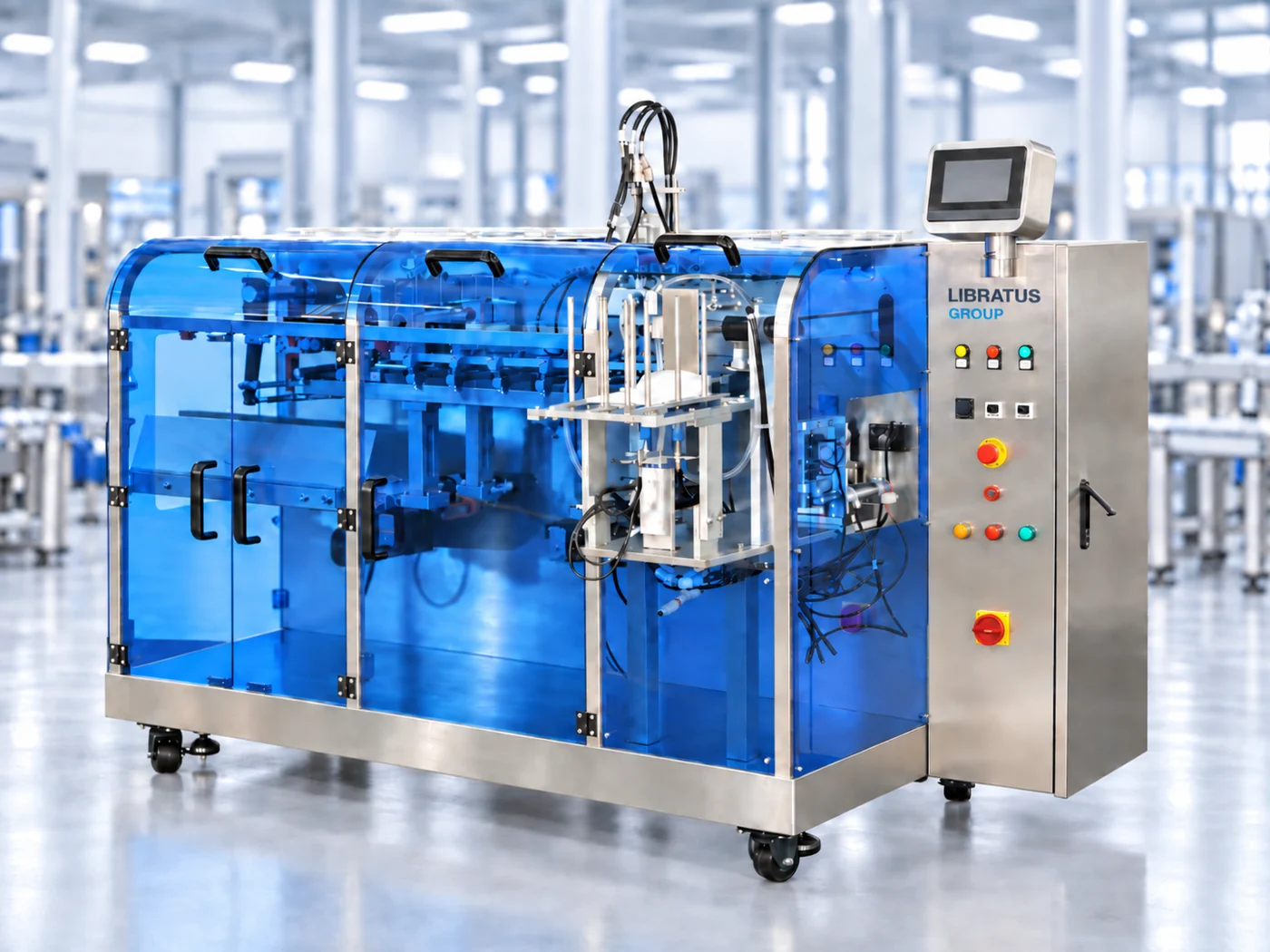
Mini doypack through eight-station rotary, gas flush and vacuum.
Explore capabilities: Premade pouch machines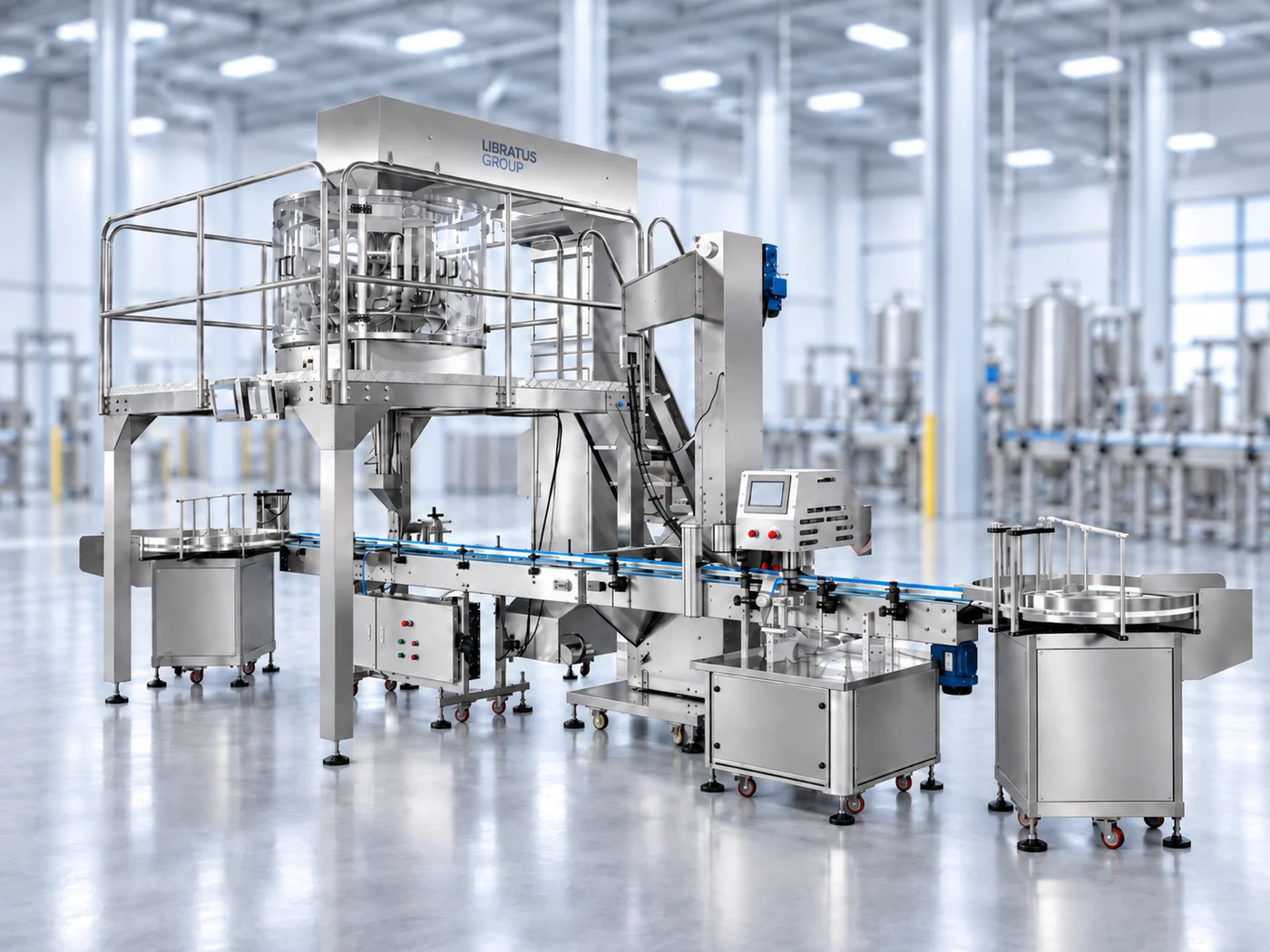
Enclosed dust-free transfer of powders, granules and whole pieces.
Explore capabilities: Conveying systems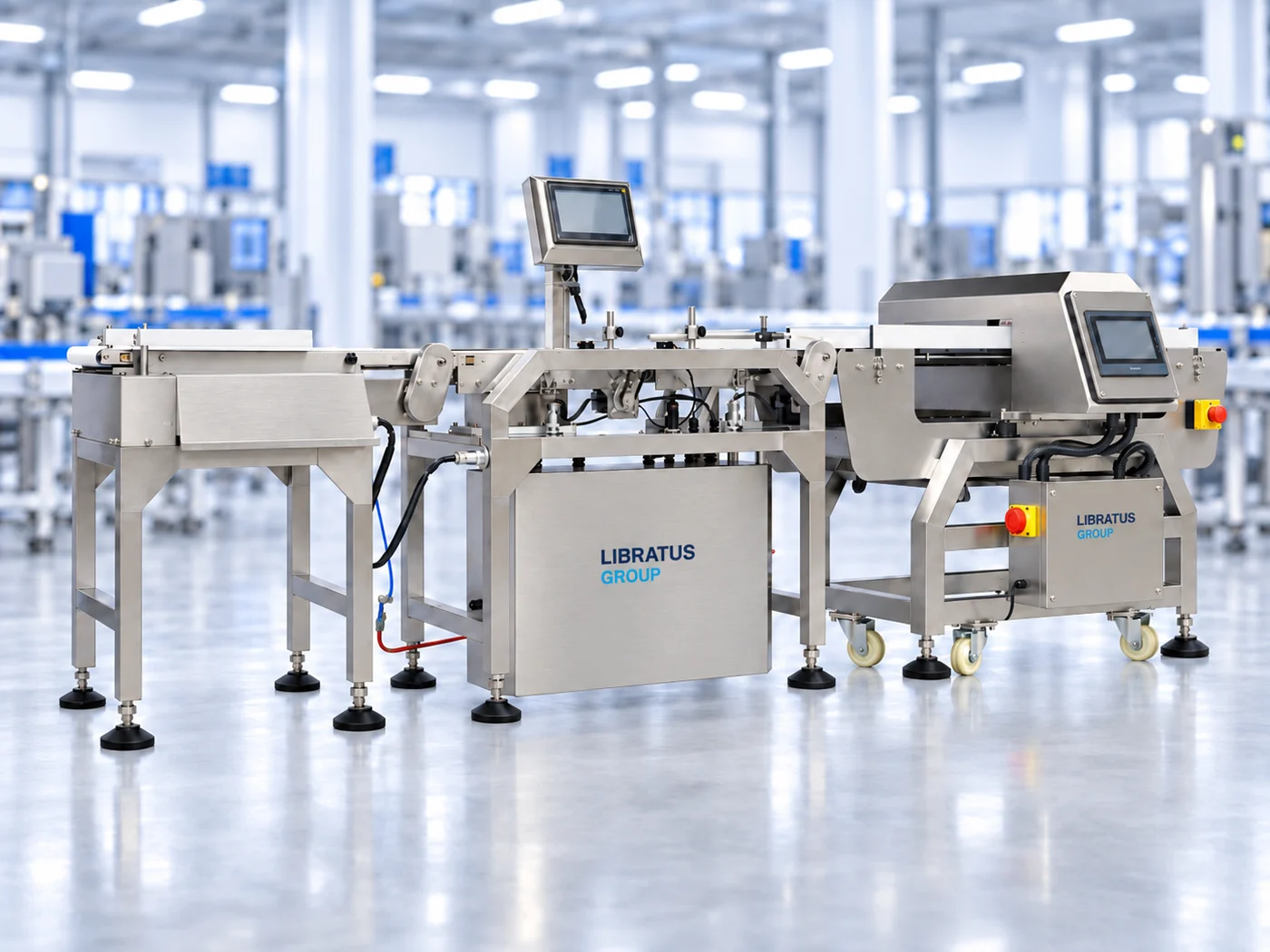
In-line weight verification and metal detection, standalone or combined, integrating upstream and downstream.
Explore capabilities: Checkweighing and metal detectionIndustries
A primary connection for free-flowing grains, rice and dry foods.
View Grains, Rice & Dry Foods →A primary connection for consistent snack pieces and confectionery.
View Snacks & Confectionery →A primary connection for free-flowing kibble and similar products.
View Pet & Animal Products →A connection only for genuinely free-flowing granular or coarser materials.
View Ingredients & Powders →A conditional connection, where product geometry and handling requirements are confirmed during specification.
View Industrial & Non-Food Products →Enquiry
Tell us about your product, target weight, required output and pack format. Request a quote and we'll confirm the appropriate weighing configuration for your line.
Back to the machine range