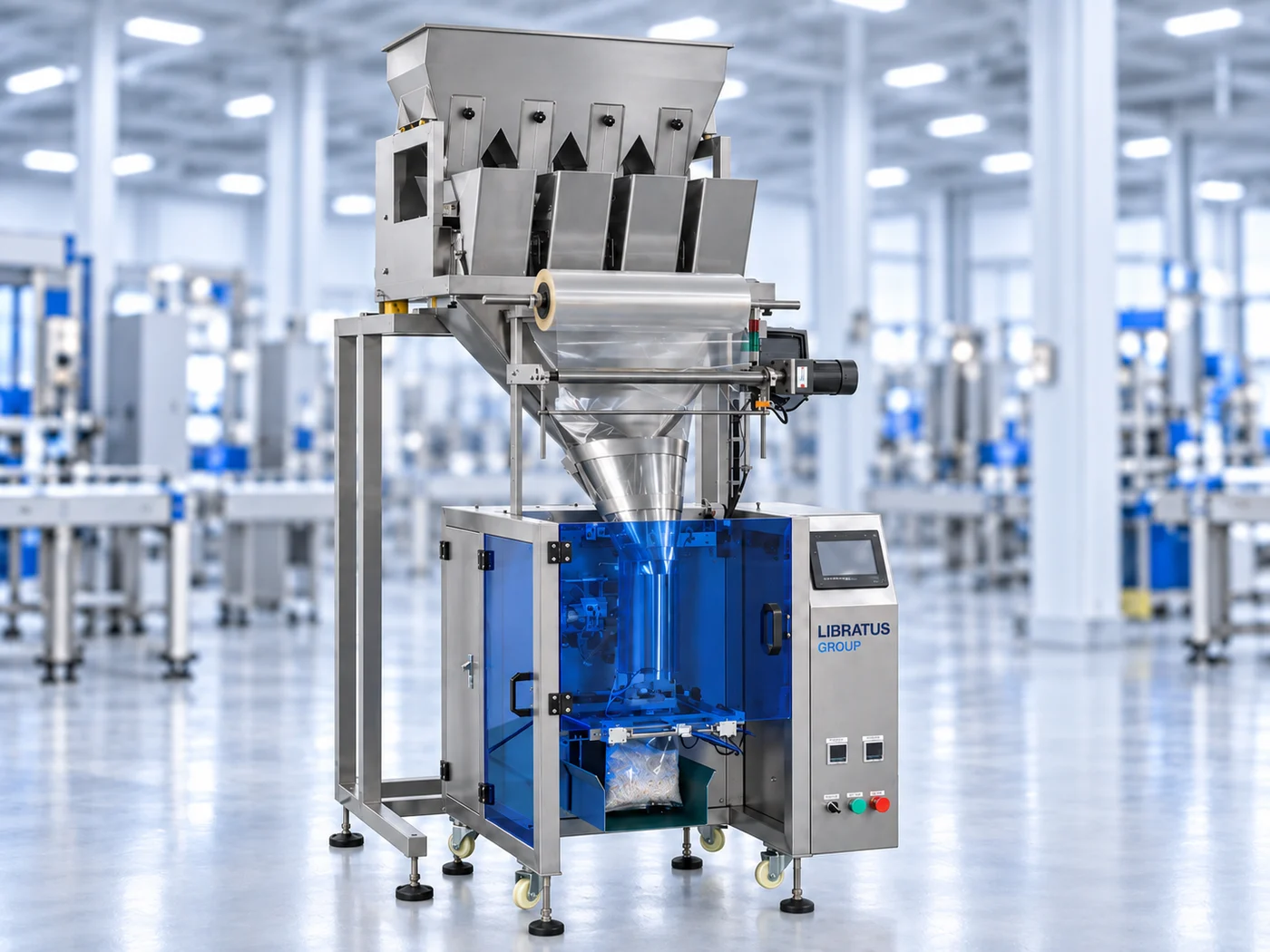
Linear weighers
One to four heads, granules and whole pieces, bench through floor-standing.
Explore capabilities: Linear weighers Get a quote
Filling
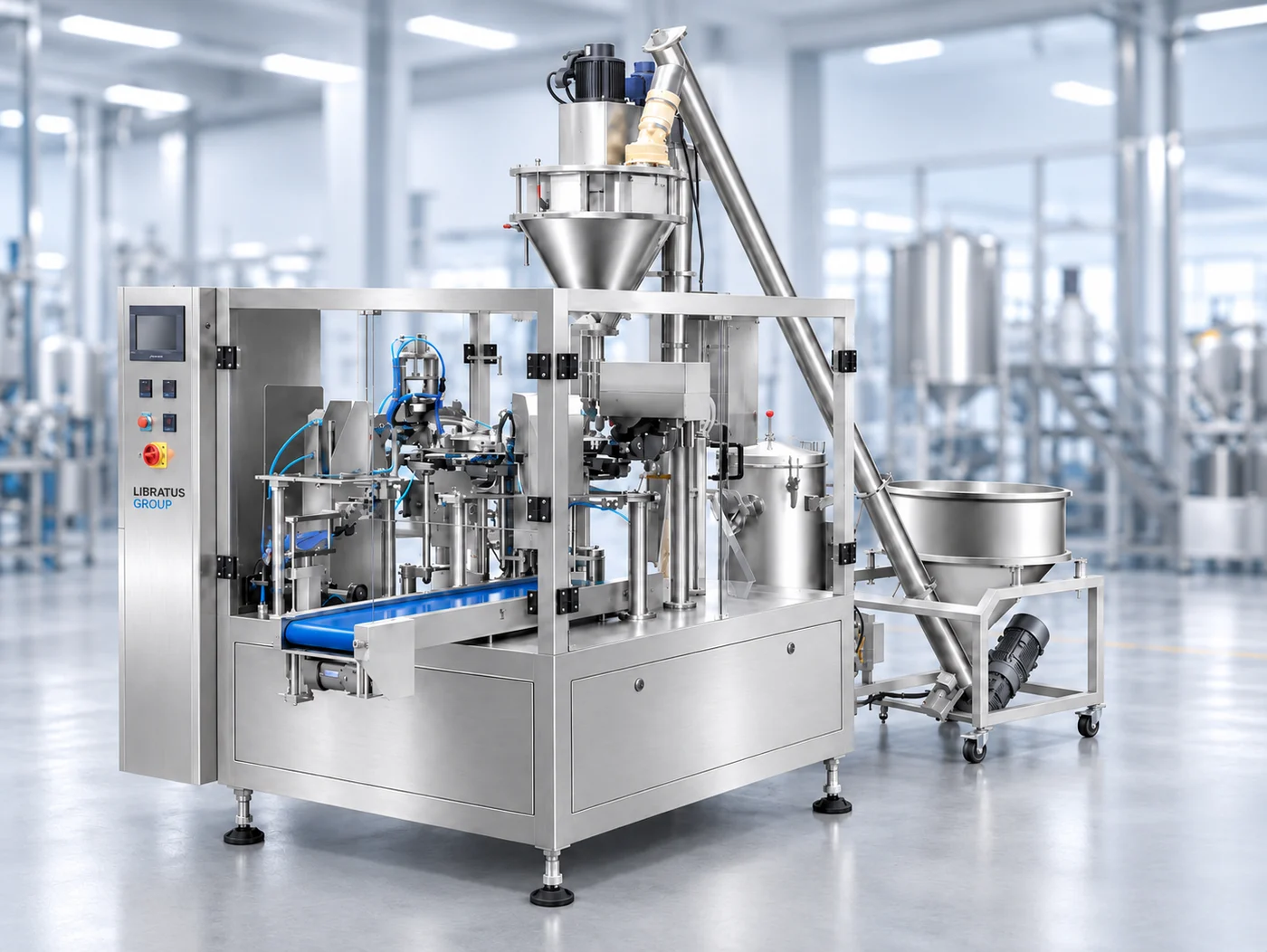
Libratus Auger Fillers are specified around the material, target dose, pack format and required output, rather than presented as one fixed machine configuration. A full machine specification is produced once your application is understood.
Single-machine configurations from USD 19,200
Systems built to USD 45,000
All figures USD, indicative, and confirmed by quotation. Other currencies converted at an indicative rate.
How it works
An Auger Filler doses powder by rotating a screw (the auger) inside a tube beneath the product hopper. Each rotation — or, in weight-feedback systems, each monitored dosing cycle — meters a controlled amount of product through the discharge path into the pack or container below.
This controlled, metered discharge can make Auger filling well suited to fine, dusty or cohesive powders where the material behaviour and surrounding machine configuration support the method. Actual dust containment and spillage control on any given system depend on the hopper design, discharge arrangement, extraction or containment features, and the overall machine configuration — not on the auger mechanism alone.
Controls range from simple time- or rotation-based dosing through to load-cell weight-feedback systems that monitor delivered weight and adjust the cycle accordingly.
“Powder” is not one engineering category. Auger-filling suitability depends on the material’s flow, cohesion and density.
Linear or Multihead weighing may be the better method for some dry products.
Selection note
These examples are illustrative: apparently similar powders can behave differently once bulk density, moisture and particle size are measured, so material information is required before configuration.
Configuration
There is no single “Libratus Auger Filler” specification, because no single specification would be honest across the range of products an Auger system can handle. The configuration that suits your application is shaped by factors including:
Depending on the application, an Auger Filler system may be configured with:
Not every option is available on every configuration, and combinations are confirmed once your application is understood.
Filling accuracy, repeatability, target fill range, and throughput on an Auger system are outcomes of the selected machine and configuration, not fixed properties of “the Auger Filler.” A cohesive, low-density powder at a small target weight behaves very differently under a screw dosing mechanism than a coarser, denser material at a larger fill weight, and the required tolerance has a direct bearing on which dosing method is appropriate.
Key variables include the product's own behaviour and bulk-density stability, the target dose, the auger/tooling selected, hopper and feed consistency, the dosing method used, the required tolerance, and the output target. Where an application benefits from closed-loop correction, weight-feedback or direct-weight approaches may be considered as part of the configuration.
Performance figures are engineered and confirmed for your specific application once these variables are known — not published as a generic figure that would apply equally to every product and configuration.
Some fine, dry, organic powders can present a combustible dust risk under certain concentration and ignition conditions. Where this is a factor for your product and production environment, Libratus can source and specify hazardous-area-compatible Auger equipment, referencing recognised frameworks such as IEC 60079 / IECEx internationally, or ATEX where relevant to a specific destination or project.
Area classification, required equipment rating, and the applicable conformity route depend on the product, process, and destination market — not on the product alone — and are established as part of your project specification. Not every powder application requires hazardous-area equipment or third-party certification. Where independent inspection, testing, or conformity assessment is required by your project or destination market, this can be incorporated into the project scope and quotation.
Qualification
Final performance, configuration, utilities, dimensions, contact materials, compliance requirements, and documentation are confirmed for your selected system during specification and quotation. They depend on the selected machine, destination market, installation and use, and your project requirements — not on a generic Auger Filler listing. Where independent inspection, testing, or certification is genuinely required for your project or destination market, this is incorporated into the project scope and quotation.
To recommend the right configuration, we ask for information about your product and application rather than a physical sample at this stage:
If physical assessment is needed, Libratus will advise on the appropriate route during specification.
Line integration
An Auger Filler rarely operates alone. Depending on your line, it may connect to:
Not every architecture is a standard packaged system — line integration is scoped around your existing and planned equipment.
Not the right fit?
Related machines
One to four heads, granules and whole pieces, bench through floor-standing.
Explore capabilities: Linear weighers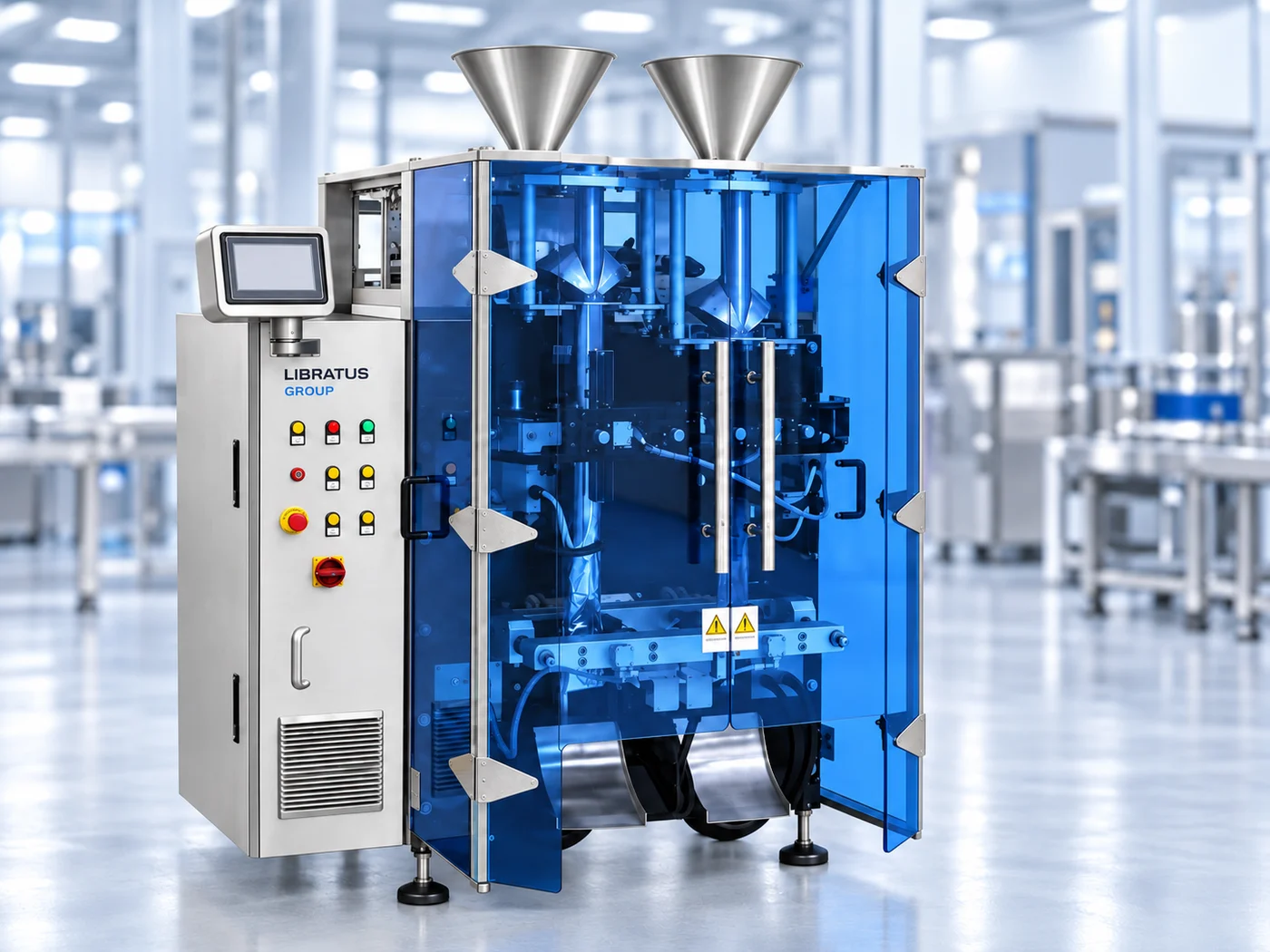
Form-fill-seal for pouches, quad-seal and flat-bottom bags.
Explore capabilities: VFFS baggers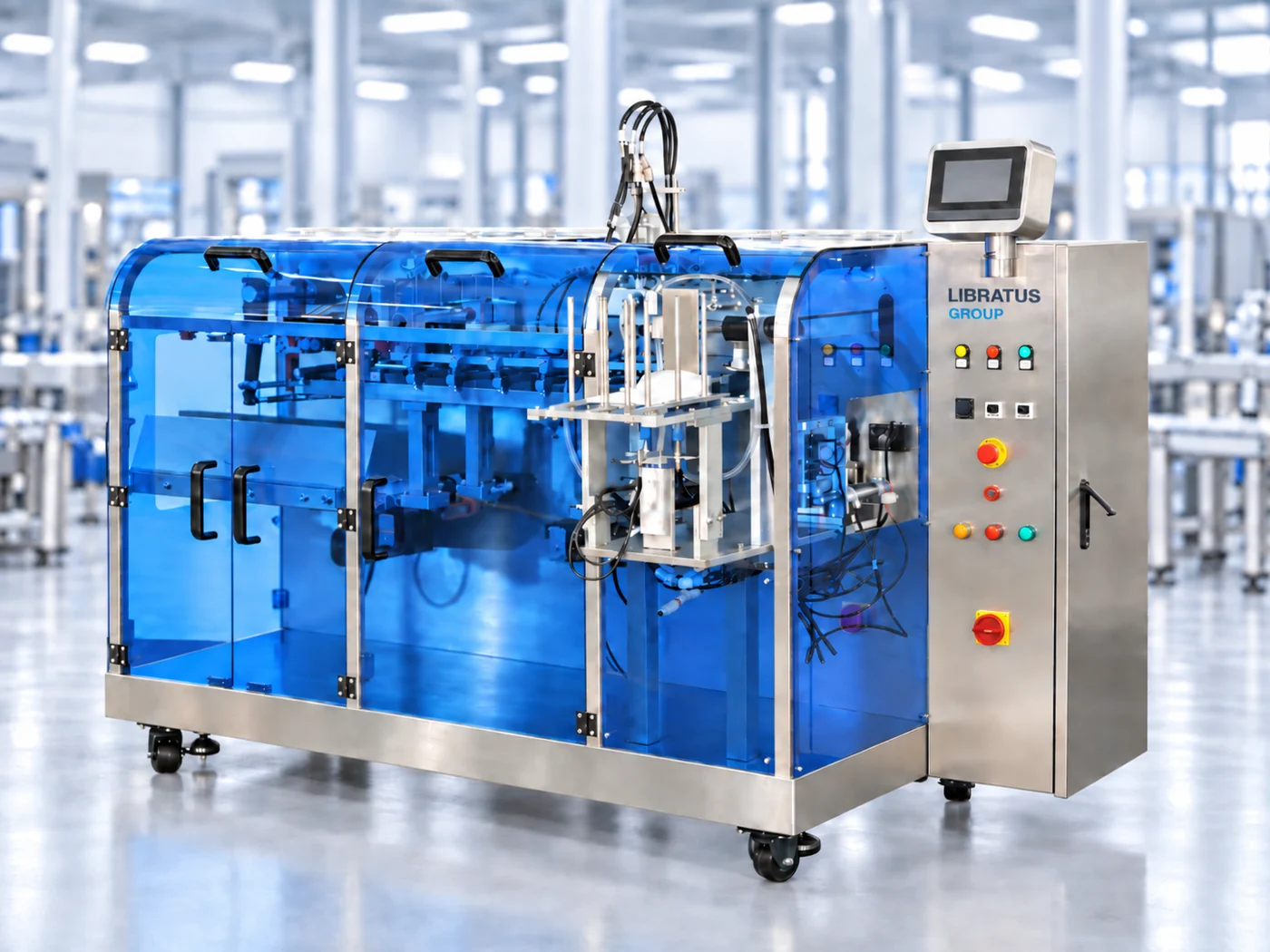
Mini doypack through eight-station rotary, gas flush and vacuum.
Explore capabilities: Premade pouch machines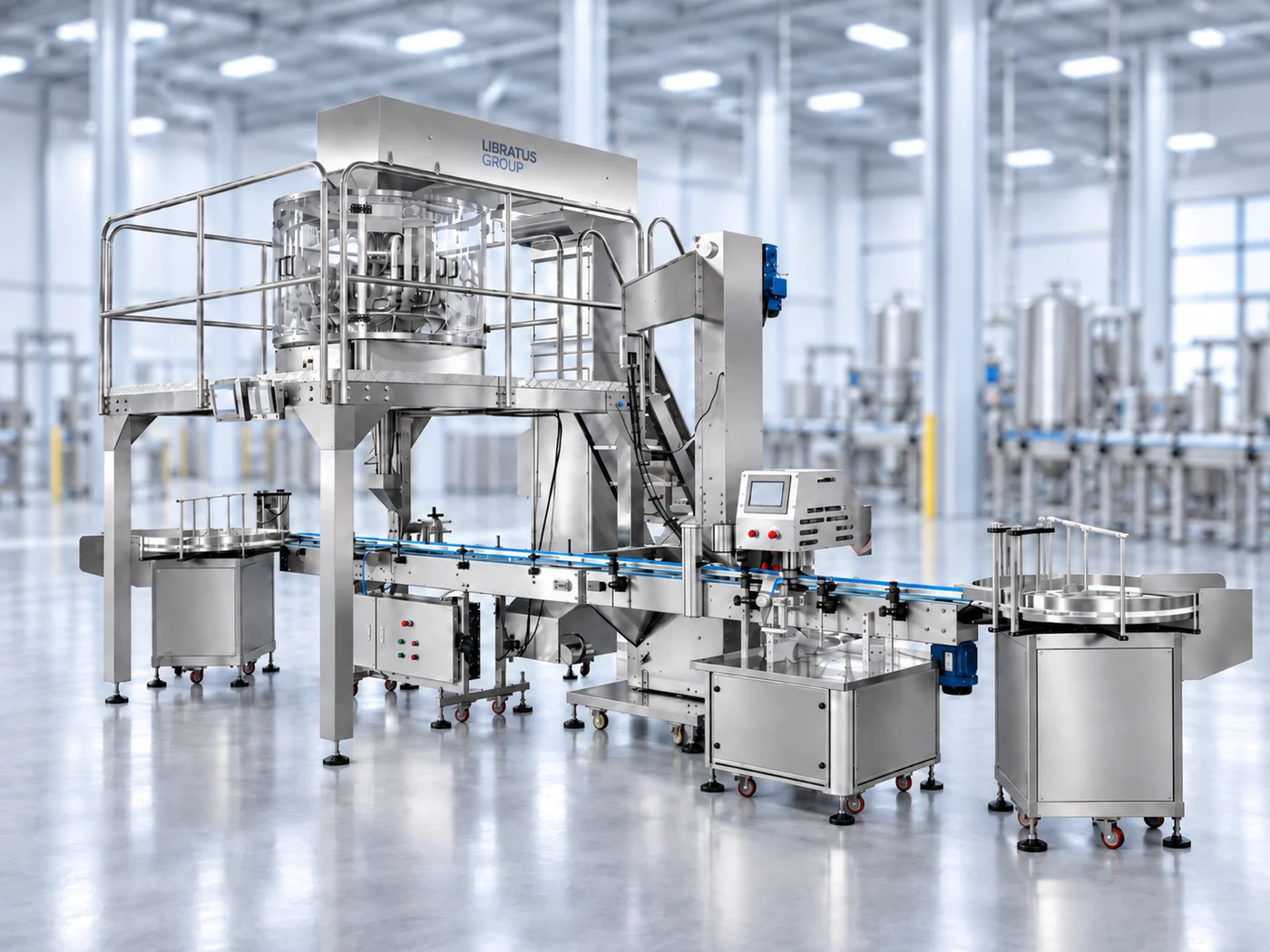
Enclosed dust-free transfer of powders, granules and whole pieces.
Explore capabilities: Conveying systemsIndustries
The primary industry connection for Auger filling — bulk ingredients and powder products specified around material behaviour.
View Ingredients & Powders →A primary connection where nutritional and protein powders are the product.
View Supplements & Nutrition →A secondary connection, for suitable ground-coffee applications.
View Coffee & Tea →Enquiry
Every Auger system we specify starts with your material and your target outcome, not a model number. Describe what you're filling, your target output, and your production requirement, and we'll recommend the configuration that actually fits.
Back to the machine range