Granular products can appear straightforward: dry, particulate and apparently consistent. In practice, how a granular material behaves on a production line depends on its physical characteristics, and those characteristics influence which weighing, conveying and packaging equipment is appropriate.
"Free-flowing" is therefore not just a description of what a product is. It describes how the material behaves under the conditions in which it is stored, fed, weighed and transferred.
A product is not necessarily free-flowing merely because it is granular, dry or crystalline.
Two batches of the same nominal product can therefore behave differently if characteristics such as particle-size distribution, moisture or fines content change.
Libratus treats flow behaviour as something to establish for the actual product rather than infer from its name or category.
Why granular products behave differently
Products such as rice, sugar, salt, seeds, coffee beans, granular supplements and some pet-food products may all be granular in form, but they do not necessarily feed, discharge or transfer in the same way.
A product that flows readily when dry may behave differently after moisture exposure, coating, seasoning or the addition of oil.
Changes in particle size or the proportion of fines can also alter how material moves through hoppers and feeders.
The relevant behaviour is therefore the behaviour of the product as it will actually arrive at and move through the packaging line.
Key handling challenges
What affects the machinery choice
Important characteristics can include:
particle or piece size
size distribution
shape
bulk density and density consistency
surface friction
moisture
oils or coatings
fragility
susceptibility to breakage
fines
dust
abrasiveness where relevant
tendency to segregate in mixed products
These characteristics affect how consistently product reaches the weighing system, how it behaves in feeders and hoppers and how reliably it discharges.
Fragility & breakage
Brittle or fragile granular materials can be affected by drop height, feeder action, vibration, hopper geometry, transfer points, discharge geometry and repeated handling. Appropriately selected configurations may reduce unnecessary mechanical stress, but no system should be assumed to guarantee zero breakage, zero fines, zero degradation or universally gentle handling.
Oils & coatings
A material that begins as a free-flowing granule does not necessarily remain one after coating, seasoning, oil addition or moisture exposure — this can affect feeding, adhesion to surfaces, discharge, product buildup, weighing consistency, cleaning and changeover. Suitability needs to be judged using the product in the condition the packaging system will actually handle it.
Blends & segregation
Granular mixtures can contain components that differ in particle size, shape, density or surface characteristics. Movement during storage, feeding, transfer or conveying can cause some mixtures to segregate — distinct from deliberate multi-product dosing. Where blend distribution matters, segregation risk needs to form part of the specification; no system should be assumed to preserve mixture uniformity automatically.
Likely machinery routes
Where to start looking
Linear weighers
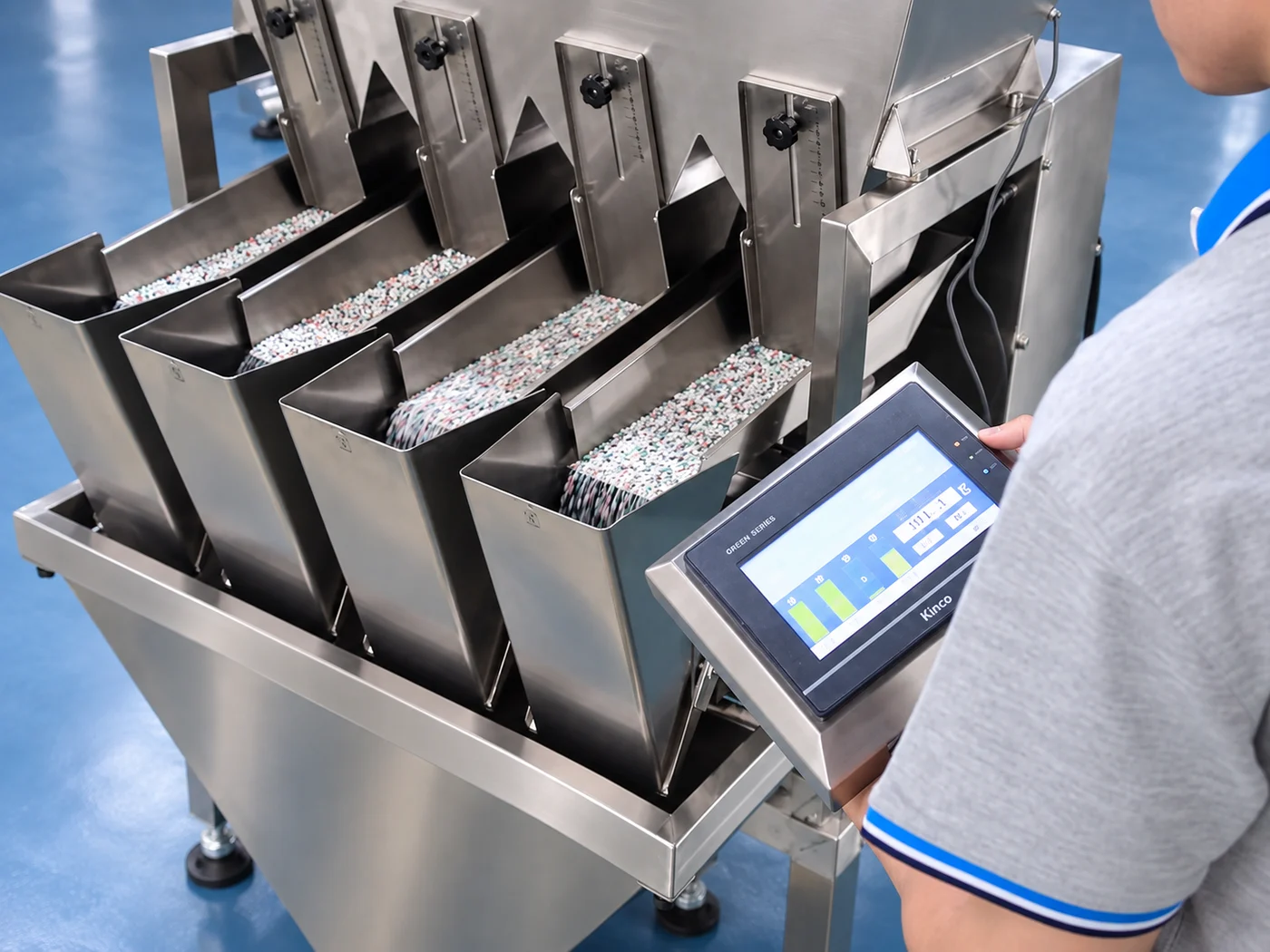
A strong candidate for genuinely free-flowing granular materials where the product feeds predictably — its relative simplicity can be an engineering advantage rather than a limitation.
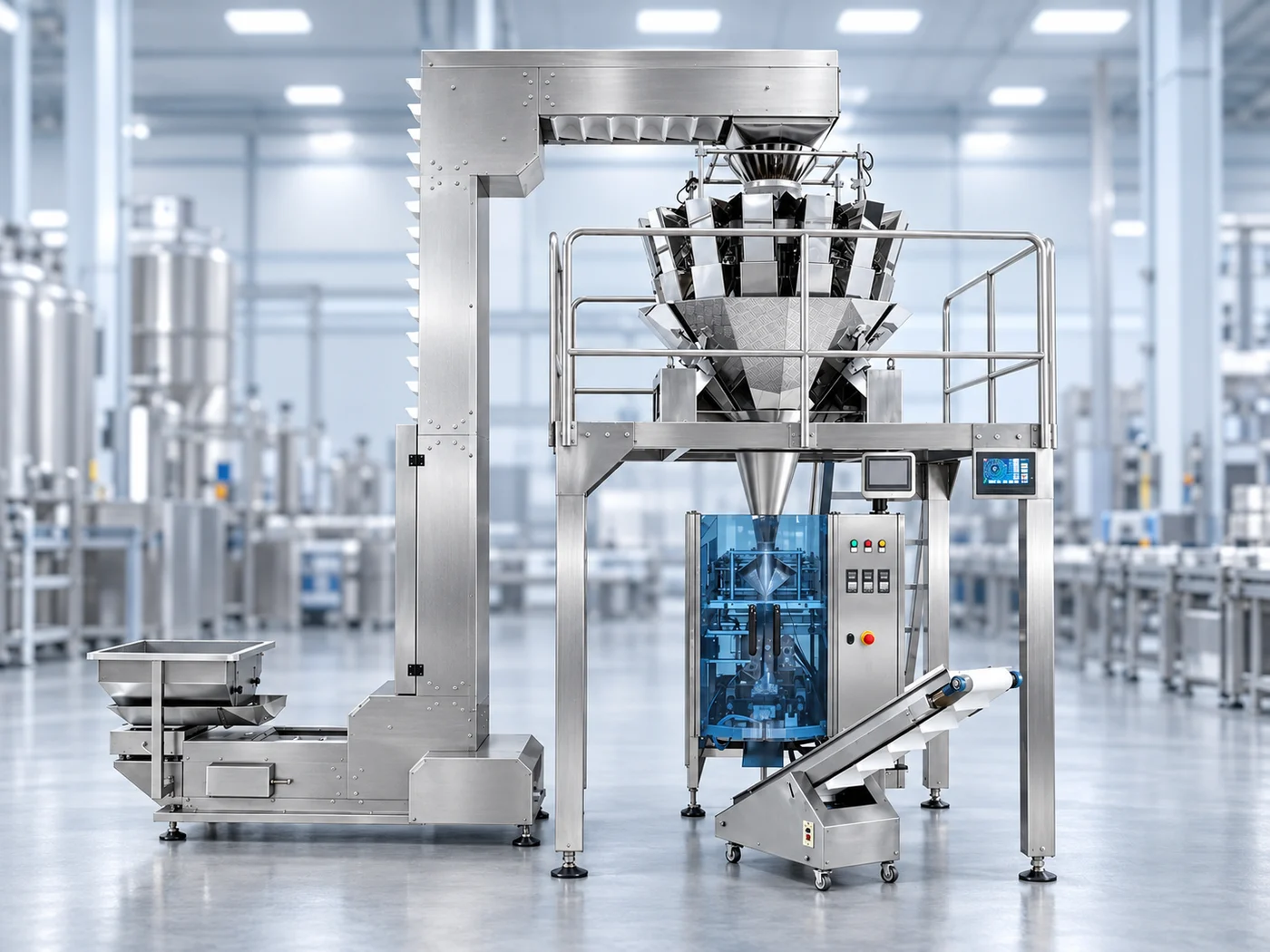
Distributes product across multiple weigh hoppers and combines hopper weights to build a target discharge — useful where combination weighing helps balance target weight, throughput and giveaway.
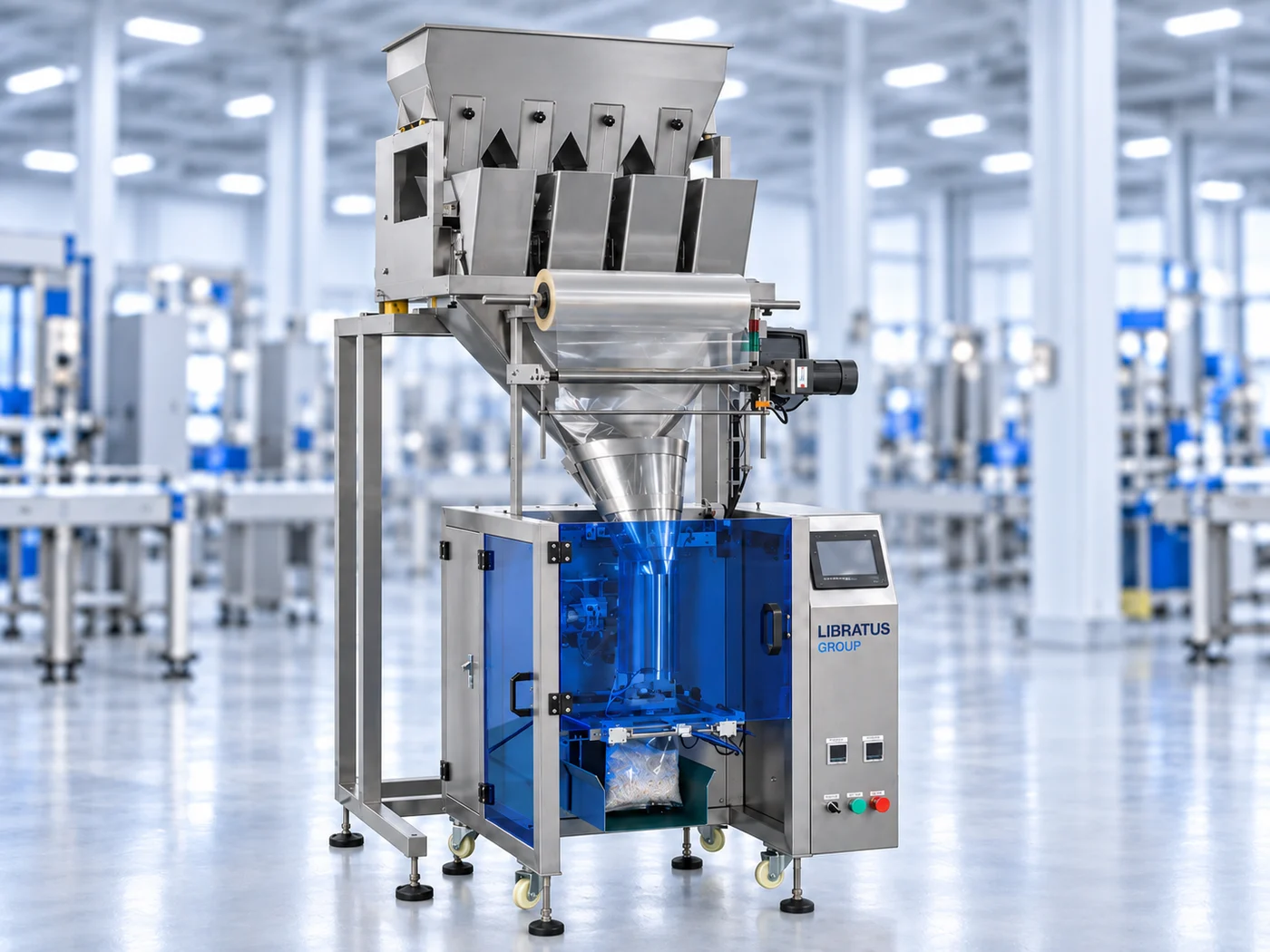
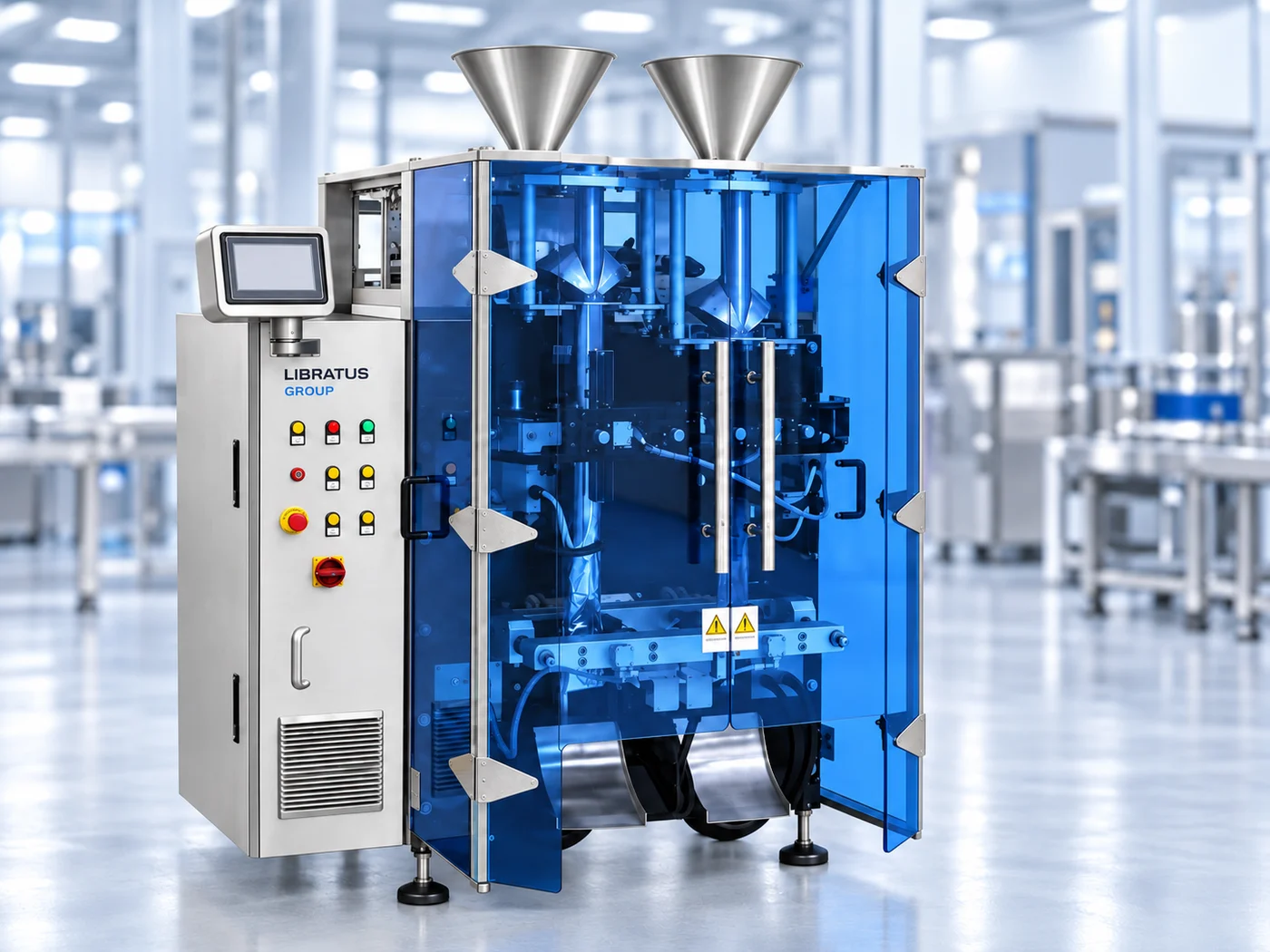
One packaging-machine route for free-flowing granules, alongside premade pouch and rigid-container systems. The weighing method and the pack-forming method are separate engineering decisions.
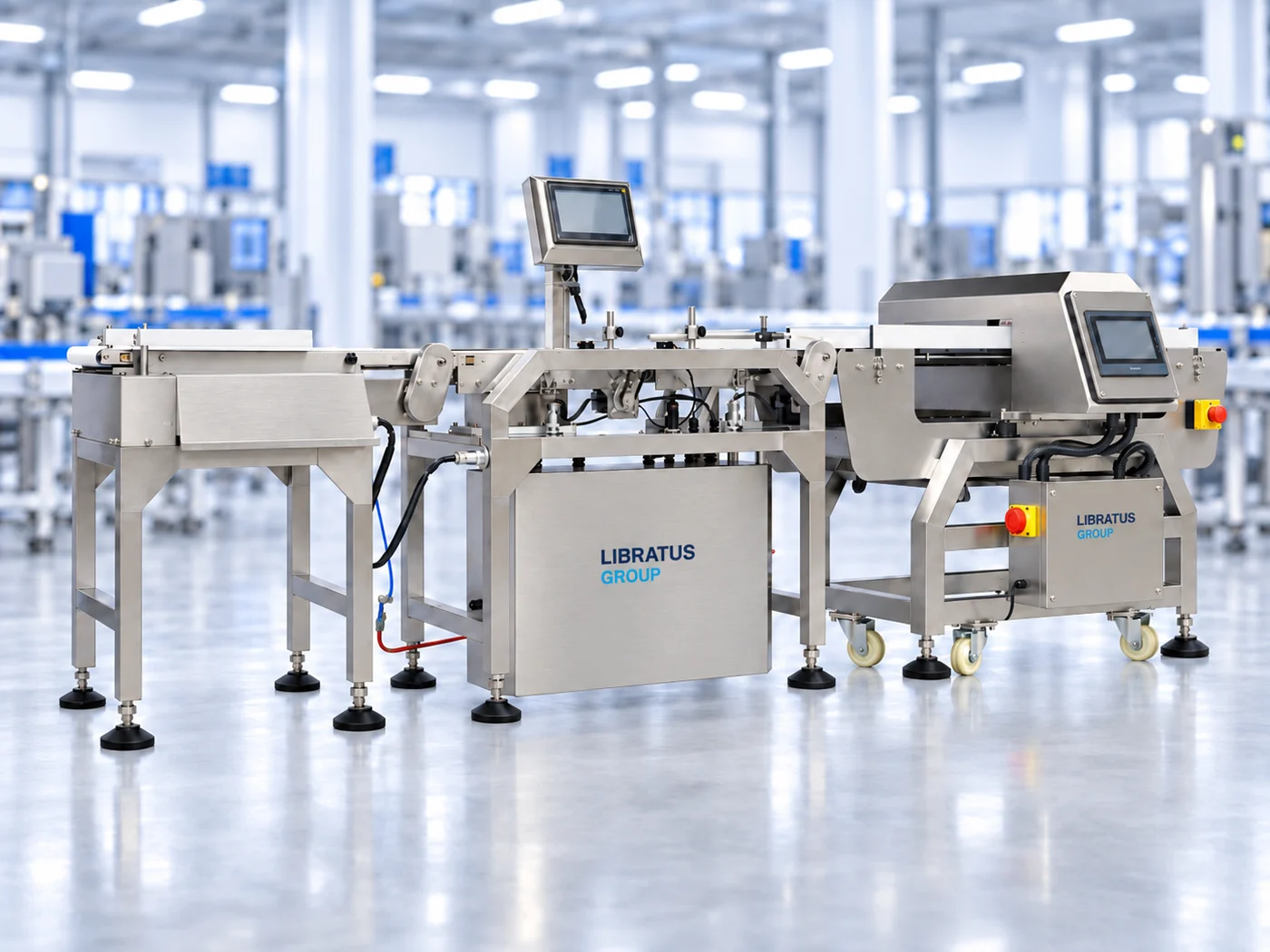
Verifies finished-pack weight downstream where weight verification or process checking is required. A checkweigher does not replace the primary weighing system.
The decision should be driven by the product and production requirement rather than the assumption that more weigh heads means a better machine. Relevant considerations include:
how consistently the product feeds
product size and shape
variation between pieces or particles
target weight
required output
giveaway sensitivity
number of different products or components
cleaning and changeover
line integration
required operational complexity
Deeper application guidance
For engineering review
Linear weighing
Linear weighers can be a strong candidate for genuinely free-flowing granular materials where the product feeds predictably and the application is well matched to linear weighing.
Selection depends on factors including:
product behaviour
target weight
required output
allowable giveaway
feeding consistency
number of products or SKUs
cleaning and changeover requirements
integration with the rest of the line
Linear weighing should not be treated as an inferior form of weighing.
It is a different architecture, and for some applications its relative simplicity can be an engineering advantage rather than a limitation.
Performance still depends on the actual product and selected configuration.
Multihead weighing
Multihead weighers distribute product across multiple weigh hoppers and use combinations of available hopper weights to build a target discharge.
This architecture can be useful where combination weighing helps achieve the required relationship between:
target weight
throughput
giveaway
product variability
number of components where relevant
Specialised configurations may also be appropriate for products requiring different surfaces, timing arrangements, mixing capability or other application-specific features.
That does not make Multihead weighing automatically better than Linear weighing.
The additional weighing and control complexity should provide a genuine benefit for the particular application.
Choosing between Linear and Multihead
The decision should be driven by the product and production requirement rather than the assumption that more weigh heads means a better machine.
Relevant considerations include:
how consistently the product feeds
product size and shape
variation between pieces or particles
target weight
required output
giveaway sensitivity
number of different products or components
cleaning and changeover
line integration
required operational complexity
Libratus works through these factors during specification and selects the weighing architecture around the application.
When another dosing method may be more appropriate
Some materials described as granular may not behave as genuinely free-flowing products.
A material may instead be:
very fine
cohesive
highly compressible
difficult to discharge consistently
sufficiently powder-like that controlled screw dosing becomes more appropriate
In those cases, an Auger filler or another dosing method may be a better candidate than a system that relies on consistent gravity-fed product movement.
The choice follows actual material behaviour rather than the label applied to the product.
Conveying and feeding
Conveying and feeding perform different functions.
Conveying moves material between locations.
Feeding or metering controls how material is supplied to the next process.
Potential conveying methods across the wider category can include:
bucket or Z-type elevation
incline or cleated conveying
belt conveying
enclosed mechanical systems
pneumatic methods where appropriate
The correct approach depends on characteristics including:
particle or piece size
bulk density
flow behaviour
fragility
abrasiveness
dust
oils or moisture
required transfer rate
horizontal distance
elevation
route
cleaning requirements
upstream and downstream equipment
No single conveying method is appropriate for every granular material, and the page should not be interpreted as a universal Libratus offering of every listed technology.
Packaging-machine integration
Depending on the application, granular products may be handled by VFFS baggers , Premade pouch machines , rigid-container systems or other appropriate downstream equipment.
The weighing method and the pack-forming or pack-handling method are separate engineering decisions.
Neither VFFS nor premade pouch machinery is inherently the better or more premium choice. The appropriate format depends on the required package, product and production arrangement.
Where downstream finished-pack weight verification or process checking is required, Checkweighers may form another stage of the line. A Checkweigher does not replace the primary dosing or weighing system.
Cleaning, changeover and product contact
Cleaning requirements depend on the actual product.
Relevant considerations can include:
residue
oils or coatings
allergens where relevant
cross-contamination requirements
product-change frequency
access to contact surfaces
production environment
Product-contact materials and construction also depend on the application.
No granular-product application should automatically be assumed to require:
one stainless-steel grade
a particular hygienic finish
washdown
CIP
a particular IP rating
tool-less removal
These requirements are established during specification.
Performance, giveaway and throughput
There is no universal throughput, accuracy or giveaway figure for free-flowing granules.
Performance depends on the combination of:
actual product behaviour
target weight
product consistency
feeding consistency
weighing architecture
machine configuration
required output
downstream acceptance
Giveaway can be commercially important, particularly for higher-value products, but the appropriate weighing strategy depends on the specific application rather than a generic percentage reduction.
Qualification
What we need from you
Useful application information includes:
product name and description
whether it is granular, crystalline, pelletised, agglomerated or mixed
typical particle or piece dimensions
particle-size distribution where known
bulk density where known
actual flow behaviour
moisture characteristics
oils or coatings where relevant
fragility
abrasiveness where relevant
dust or fines
target fill weight
required throughput
giveaway sensitivity
intended pack or container
pack or container dimensions where known
upstream process or equipment
downstream process or equipment
cleaning and changeover requirements
allergen or cross-contamination considerations where relevant
production environment
destination market
available layout information
photographs or video where useful
If physical assessment is needed, Libratus will advise on the appropriate route during specification.
The documentation supplied is confirmed during specification and depends on the selected machine, destination market, installation/use and customer requirements. See what a technical file typically contains →
Free-flowing granular products appear across several Libratus markets.
Coffee & Tea includes applications such as whole coffee beans and other suitable particulate products.
Grains, Rice & Dry Foods covers many naturally granular products including grains, rice, pulses and related dry foods.
Pet & Animal Products can include suitable kibble, pellets and other granular or discrete products.
Ingredients & Powders can include crystalline, granulated or agglomerated ingredients alongside powders.
Supplements & Nutrition may include granular, pelletised or agglomerated nutritional products in addition to powders and other forms.
Industrial & Non-Food Products can include granular materials whose suitability must be judged from their actual handling properties rather than assumptions based on food-processing equipment.
The product’s physical behaviour remains the starting point regardless of industry.
Tell us what you are packaging, how the material behaves, its typical size and form, your target weight, required output and intended pack or container, along with the equipment immediately before and after this stage.
Libratus will use that information to determine the appropriate weighing, conveying and packaging configuration.