Why one powder can behave very differently from another
"Powder" describes a physical form, not a single packaging application. A fine, cohesive powder and a free-flowing powdered or granular product may behave completely differently on a packaging line — and can require different machinery to achieve the same production objective.
The right equipment starts with how the material actually behaves: how it flows, how its bulk density varies, whether it aerates or settles, how much dust it generates, how it responds to moisture and how it behaves during feeding, dosing and transfer.
Two products described broadly as powders can behave in opposite ways once they reach a hopper.
One may discharge consistently under gravity. Another may bridge above an outlet, form a rat-hole through the centre of the hopper, compact during storage or become increasingly difficult to handle as moisture changes.
Those differences can result from characteristics including particle size and shape, particle-size distribution, cohesiveness, moisture, bulk density and the way the product was processed upstream.
The product name alone is therefore not enough to select the machine.
Key handling challenges
What affects the machinery choice
Important characteristics can include:
particle size and particle-size distribution
bulk density and variation in bulk density
flowability and cohesiveness
aeration and settling behaviour
moisture sensitivity and hygroscopic behaviour
dust generation
oil or fat content
tendency to bridge
rat-hole
cake or compact
adherence to product-contact surfaces
segregation risk in blended products
product degradation during handling
Not every characteristic matters equally in every application. The relevant factors are established during specification.
Flow & feeding
Bridging or arching occurs when material forms a stable obstruction above an outlet and restricts or stops discharge. Rat-holing occurs when material flows through a preferential channel while material outside it remains relatively stagnant. The likelihood depends on the interaction between the material, hopper geometry, outlet, surfaces, storage conditions and feeding equipment. Mechanical or pneumatic flow aids can form part of the solution, but they are application-specific measures rather than universal fixes.
Bulk density & aeration
Bulk density affects both dosing behaviour and the volume a given product weight occupies, and it should not automatically be treated as a fixed characteristic. Handling, moisture, compaction and entrained air can change how much volume a powder occupies — some powders aerate during transfer and settle afterwards, affecting apparent fill level even when the mass in the pack is correct. Where density varies materially, that needs to be considered when configuring the dosing system.
Dust & containment
Dust behaviour can affect housekeeping, product loss, machine interfaces, filtration requirements, seals and the production environment. Enclosed handling can reduce exposure, but enclosing a process does not automatically make it dust-free — containment requirements depend on the particular powder, transfer method, interfaces and installation.
Moisture & oils
Hygroscopic materials may absorb moisture and change in flow behaviour, cohesiveness, bulk density or tendency to cake. Products containing oils or fats can increase adherence to contact surfaces, cause smearing, inconsistent discharge and add cleaning requirements. These characteristics cannot reliably be inferred from a broad product category — they need to be considered for the material actually being handled.
Segregation
Powder blends can contain components with different particle sizes, shapes or densities. Handling, transfer and storage can affect how some mixtures distribute within the process. Where blend uniformity matters, segregation risk should form part of the specification — no method should be assumed to preserve it automatically.
Likely machinery routes
Where to start looking
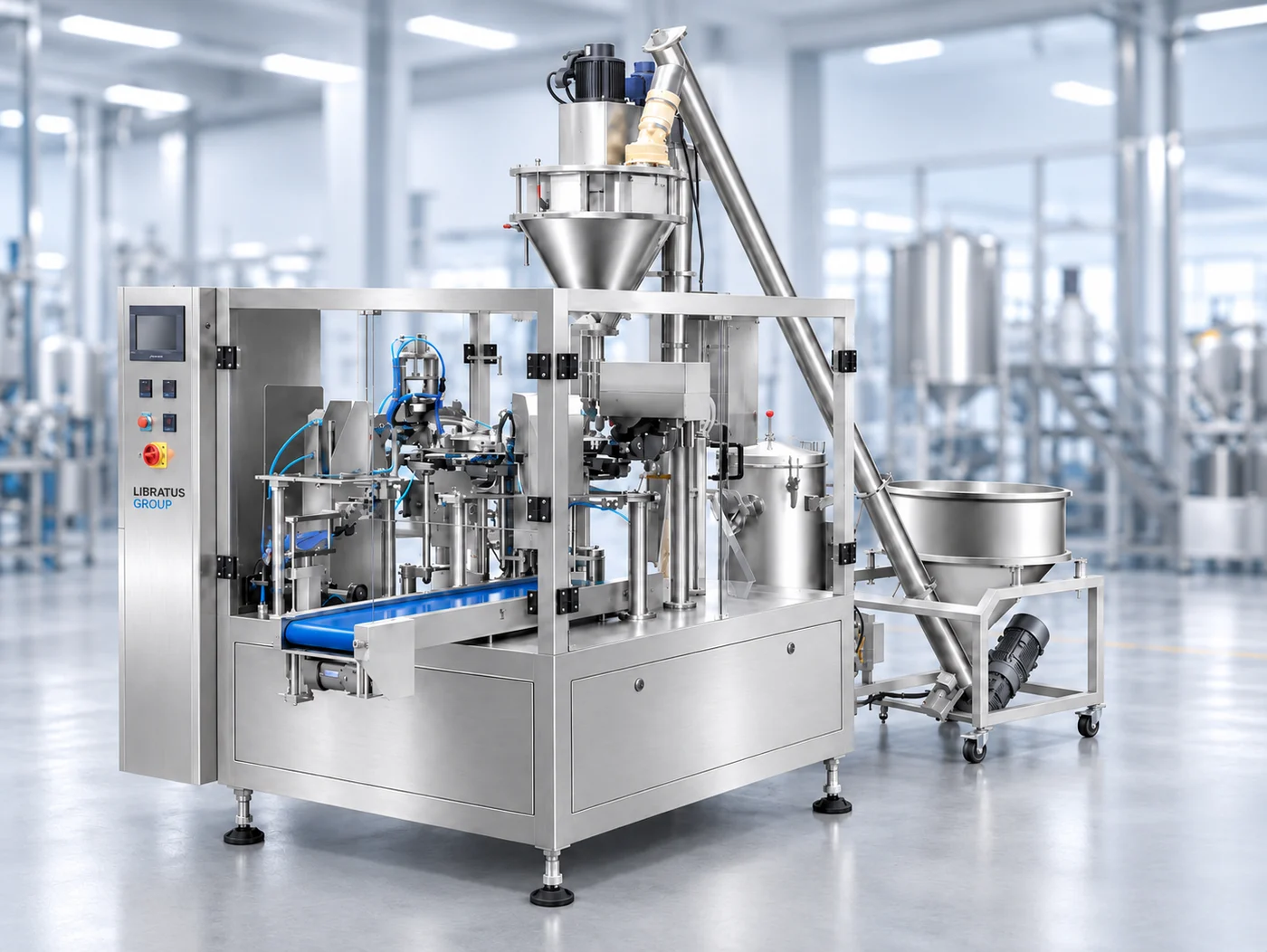
Auger fillers
Can be a strong candidate for fine, cohesive or poorly flowing powders where controlled screw dosing is appropriate — the screw mechanically moves the material rather than relying entirely on gravity flow.
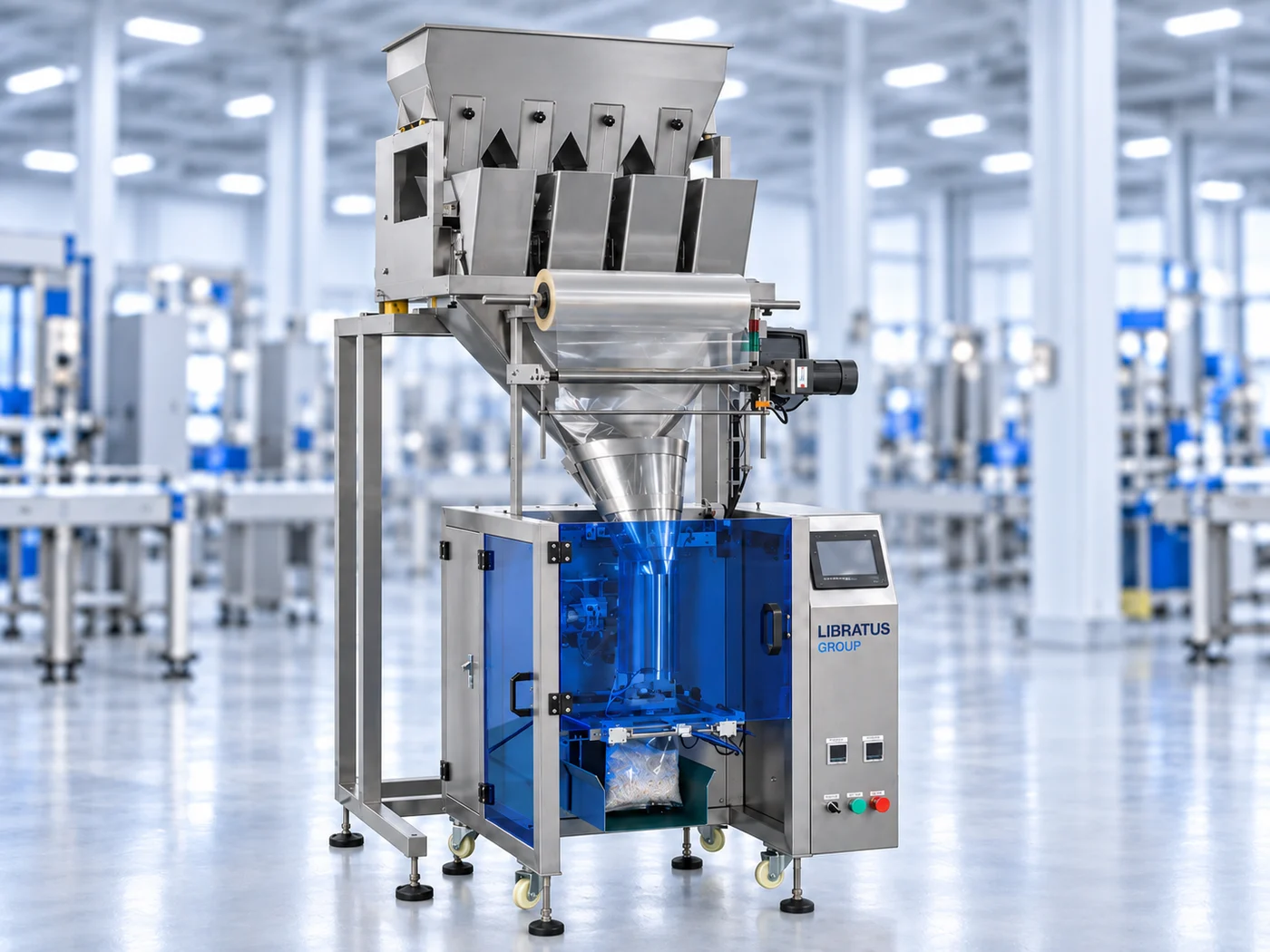
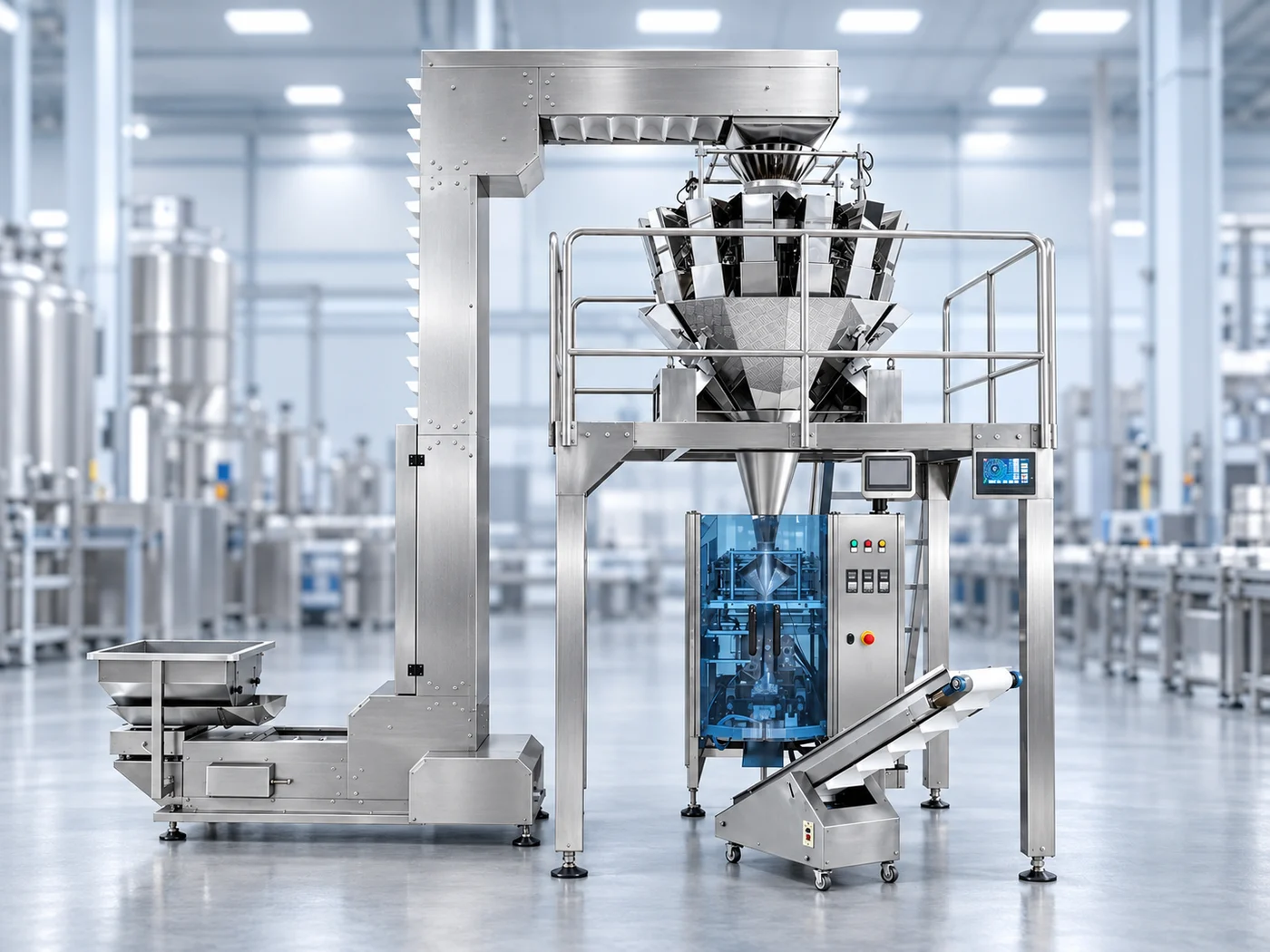
Free-flowing powdered, granular or agglomerated materials may be candidates for weight-based dosing when their handling behaviour allows them to feed consistently.
Because these machines measure mass directly, weight-based systems can also be relevant where variation in bulk density makes purely volumetric dosing less attractive.
Moving powder between process stages is a different engineering task from controlling the quantity supplied to the next process — suitability depends on flow behaviour, bulk density, dust and required transfer rate.
There is no universal rule that says every powder should be filled using the same technology. The choice depends particularly on:
flowability
cohesiveness
density and density variation
particle characteristics
dust behaviour
target weight
required output
pack or container
allowable product handling
integration with the rest of the line
Deeper application guidance
For engineering review
Choosing the dosing or weighing method
There is no universal rule that says every powder should be filled using the same technology.
The choice depends particularly on:
flowability
cohesiveness
density and density variation
particle characteristics
dust behaviour
target weight
required output
pack or container
allowable product handling
integration with the rest of the line
Auger filling
Auger filling can be a strong candidate for fine, cohesive or poorly flowing powders where controlled screw dosing is appropriate.
The screw mechanically moves the material rather than relying entirely on gravity flow.
Performance depends on the relationship between the powder and the selected configuration, including screw/tooling geometry, hopper design, agitation where required, dosing strategy and the product's own flow and compaction behaviour.
Very free-flowing or highly aerated products may behave differently and should not automatically be assumed to suit an auger.
When weight-based systems may be appropriate
Some free-flowing powdered, granular or agglomerated materials may be candidates for weight-based dosing when their handling behaviour allows them to feed consistently into Linear weighers or Multihead weighers .
Because these machines measure mass directly, weight-based systems can also be relevant where variation in bulk density makes purely volumetric dosing less attractive.
That does not make a Linear or Multihead weigher automatically preferable to an Auger filler.
Fine, dusty, cohesive or difficult-flowing materials can create different feeding and weighing challenges.
The appropriate method is determined from the actual product, target weight, throughput requirement and line arrangement.
Conveying and feeding
Moving powder between process stages is not the same engineering task as controlling the quantity supplied to the next process.
Conveying moves material between locations.
Feeding or metering regulates material delivery into downstream equipment.
Potential conveying approaches across the wider category include vacuum or other pneumatic systems and enclosed mechanical methods. Their suitability depends on characteristics including:
flow behaviour
bulk density
particle size
dust
abrasiveness
moisture or oil
distance
elevation
route
required transfer rate
cleaning and containment requirements
No single conveying method is appropriate for every powder.
Pack-format and packaging-machine integration
The dosing or weighing method must ultimately integrate with the chosen packaging format.
Depending on the application, that may include VFFS bagging , premade pouch machinery , rigid-container handling or other downstream equipment where appropriate.
The dosing method and the pack-forming or pack-handling method are separate engineering decisions. Both need to be specified around the same product and production requirement.
Where downstream weight verification or process checking is required, Checkweighers may form another stage of the line. A Checkweigher verifies the finished pack; it does not replace the primary dosing or weighing system.
Cleaning, changeover and product contact
Cleaning requirements depend on factors including:
residue characteristics
frequency of changeover
allergens where relevant
cross-contamination requirements
access to product-contact areas
whether dry or wet cleaning is appropriate
the production environment
Product-contact materials are also application-specific.
Material selection may depend on product chemistry, corrosion risk, cleaning regime, food-contact requirements where applicable, customer requirements and destination market.
A powder application should not automatically be assumed to require one particular stainless-steel grade, surface treatment, IP rating or cleaning method.
Hazardous-area considerations
Some powders can create combustible-dust hazards under particular conditions, but the presence of a powder does not by itself establish a hazardous-area classification.
The assessment depends on the actual material, its relevant properties, how the process handles it and the installation.
Where the material or installation creates a hazardous-area requirement, the equipment configuration and conformity route are established for the actual application and destination market.
A hazardous-area zone should not be assigned from the broad product category alone.
Performance depends on the application
There is no meaningful universal throughput or filling-accuracy figure for "powders".
Performance depends on the combination of:
material behaviour
dosing or weighing technology
target weight
feeding consistency
machine configuration
pack or container
required output
upstream equipment
downstream equipment
Performance requirements are therefore established for the actual application rather than taken from a generic powder specification.
Qualification
What we need from you
Useful application information includes:
product name and description
whether it is a powder, granule, agglomerate or mixture
particle characteristics, where known
bulk density, where known
flow behaviour
moisture sensitivity or known hygroscopic behaviour
dust behaviour
oil or fat content, where relevant
known tendency to bridge, cake or compact
target fill weight
required throughput
pack or container type
pack or container dimensions, where known
upstream process or equipment
downstream process or equipment
cleaning and changeover requirements
allergen or cross-contamination considerations, where relevant
production environment
destination market
available layout information
photographs or video where useful
If physical assessment is needed, Libratus will advise on the appropriate route during specification.
The documentation supplied is confirmed during specification and depends on the selected machine, destination market, installation/use and customer requirements. See what a technical file typically contains →
Powder handling appears across several Libratus markets.
Ingredients & Powders is particularly relevant where dry powdered ingredients form the core production material.
Supplements & Nutrition includes many applications involving nutritional, protein and powdered supplement products, alongside other material forms.
Coffee & Tea may include ground coffee and other powdered or finely processed products where material behaviour affects dosing and packaging selection.
The physical form of the product remains the starting point for machine selection regardless of industry.
Tell us what you are packaging, how the material behaves, the target weight, required output and intended pack or container, along with the equipment immediately before and after this stage.
Libratus will use that information to determine the appropriate dosing, weighing, conveying and packaging configuration.