Libratus GroupGet a quote

Industries / Coffee & tea

Weighing, filling and bagging machinery for coffee roasters and tea packers

Libratus designs and manufactures the weighing, filling, sealing and conveying machinery used to pack whole bean coffee, ground coffee, soluble and blended beverage powders, and loose-leaf tea. We specify each machine around the product and the pack, not around a category label.

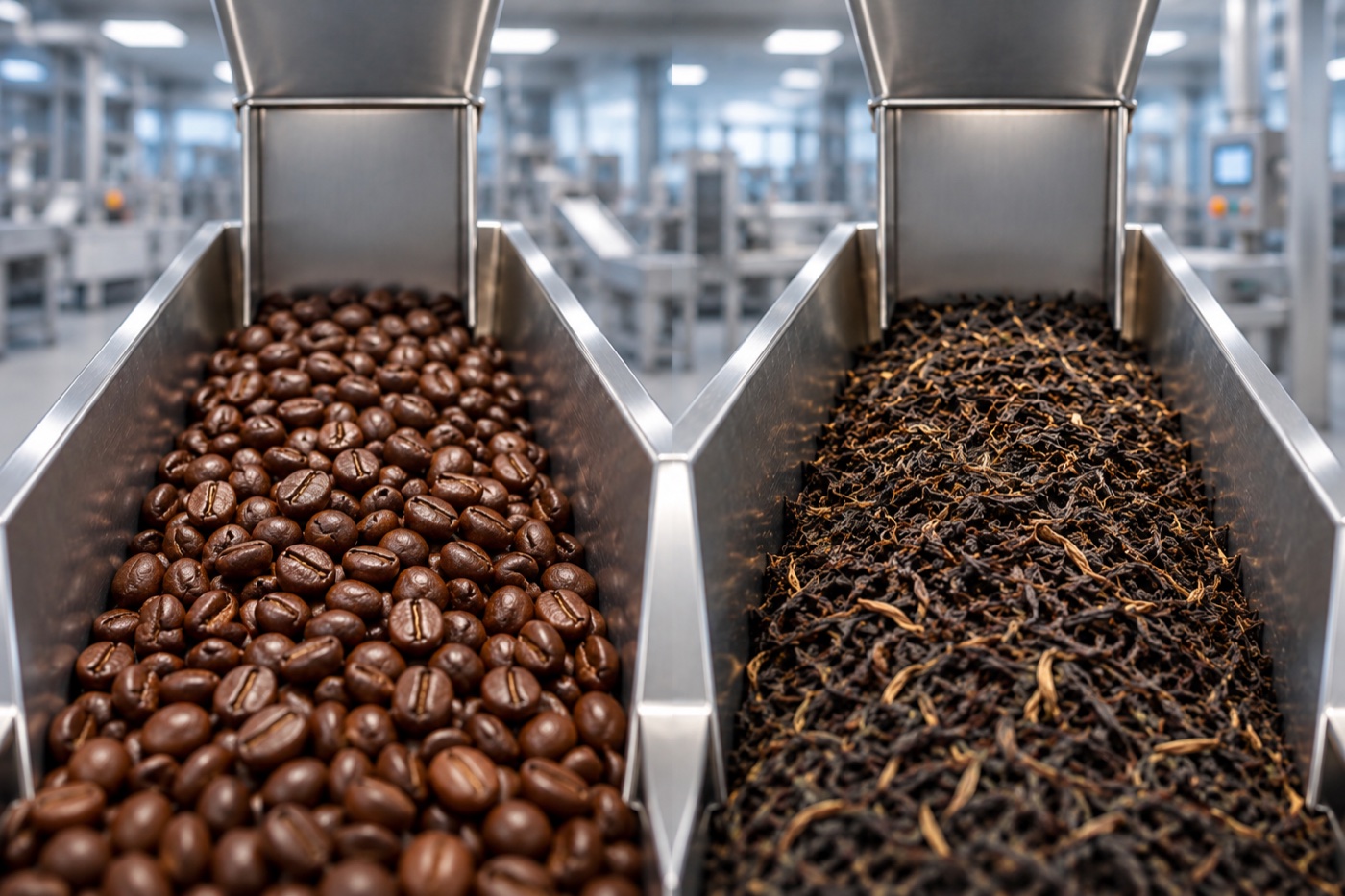
Coffee beans and tea leaves in stainless-steel feeding channels

Sector context

For many growing coffee businesses, packing becomes the constraint before roasting does. Batch capacity can be added in a single equipment purchase. The packing bench scales by adding people, and past a certain volume that becomes difficult: shifts run long, weights drift, giveaway climbs, and lead times to wholesale customers become harder to hold.

This page explains how weighing and filling equipment is selected for coffee and tea products, why beans, ground coffee, soluble powder and leaf tea can require different dosing methods within the same factory, and what information we need in order to recommend a machine rather than guess at one.

If you already know your products, target weights, pack formats and required output, send those details and we will tell you what suits and what does not.

Where roasting capacity outgrows the packing bench

Many roasters and tea packers pack manually to begin with: a bench scale, a scoop, a bench or foot-operated heat sealer, and premade bags. That arrangement is genuinely appropriate at low volume and should not be replaced before it needs to be.

It usually stops being appropriate for identifiable commercial reasons rather than a general desire to automate:

Wholesale accounts change the weight tolerance.

Café and grocery customers receive many bags at once and often notice inconsistency across them. Underweight packs generate complaints and credit notes, and the usual defence is to overfill. At current green coffee costs, systematic overfilling can be one of the more expensive habits a roaster carries.

SKU count can grow faster than volume.

Origins, blends, roast levels, grind types, whole bean versus ground, retail 250 g, wholesale 1 kg, foodservice bulk, plus sample or single-serve formats. The packing problem becomes a changeover problem as much as a throughput problem.

Direct-to-consumer and subscription volume often arrives in peaks.

Weekly or fortnightly dispatch cycles concentrate packing into short windows, which is where manual packing tends to fail first.

Soluble and mixed beverage powder work has different economics again.

Producers packing instant coffee, white coffee, 3-in-1 and similar sachet products are typically running high pack counts at small target weights, where manual filling is rarely viable.

Labour and volume push in the same direction from different sides.

For some operations the trigger is labour: packing roles are hard to fill or hold, absence disrupts dispatch, and manual handling is a genuine concern. For others it is straightforward volume growth, where the order book has outrun what a semi-automatic line can deliver. The business case usually rests on whichever of the two you are actually facing, and it is worth being clear about that before you specify equipment.

The common trigger is not ambition. It is usually a specific packing failure: a shift that no longer fits, a weight complaint, a lost wholesale account, or an order that could not be accepted.

Product behaviour

Four coffee and tea products, four different dosing problems

The word “coffee” does not describe a material. These do.

Roasted whole beans.

Generally free flowing and straightforward to handle, but bulk density varies with roast level, origin, moisture and batch, so a dosing method that measures volume rather than weight can drift as the product changes. Beans can chip and break under aggressive handling, and visible chipping in a clear-window bag is a quality complaint waiting to happen. Dark roasts develop surface oil, which can affect flow and leave residue. Freshly roasted coffee also continues to release CO2, which is why rest time before packing is a production decision as well as a quality one.

Ground coffee.

Fine, aerated immediately after grinding, and it settles. The same mass can occupy noticeably different volume depending on how recently it was ground and how it was transferred. It generates dust, and it does not behave like a free-flowing granular product, which changes the appropriate dosing method.

View auger fillers

Soluble coffee and blended beverage powders.

Agglomerated instant granules generally flow well. Spray-dried soluble powder is much finer and can pick up moisture. Blended products containing creamer, sugar, malt or botanicals are cohesive to varying degrees and can segregate between blending and filling, which puts blend uniformity as well as fill weight at risk.

Loose-leaf tea and tea blends.

Low bulk density, so a small target weight occupies a large volume and needs generous pack and hopper geometry. Long or irregular leaf can bridge above outlets. Leaf breakage reduces perceived grade. Blends with visible inclusions such as flower, fruit or spice can segregate under vibration, and a pack that looks unrepresentative is a customer complaint even when the weight is correct.

The practical consequence is that a roaster packing beans and ground coffee on one site frequently needs two different dosing technologies, rather than one machine asked to do both badly.

Machinery routes

Machinery relevant to coffee and tea packing

Understand the problem, narrow the technology, then discuss it with us. Libratus confirms final machine selection during specification.

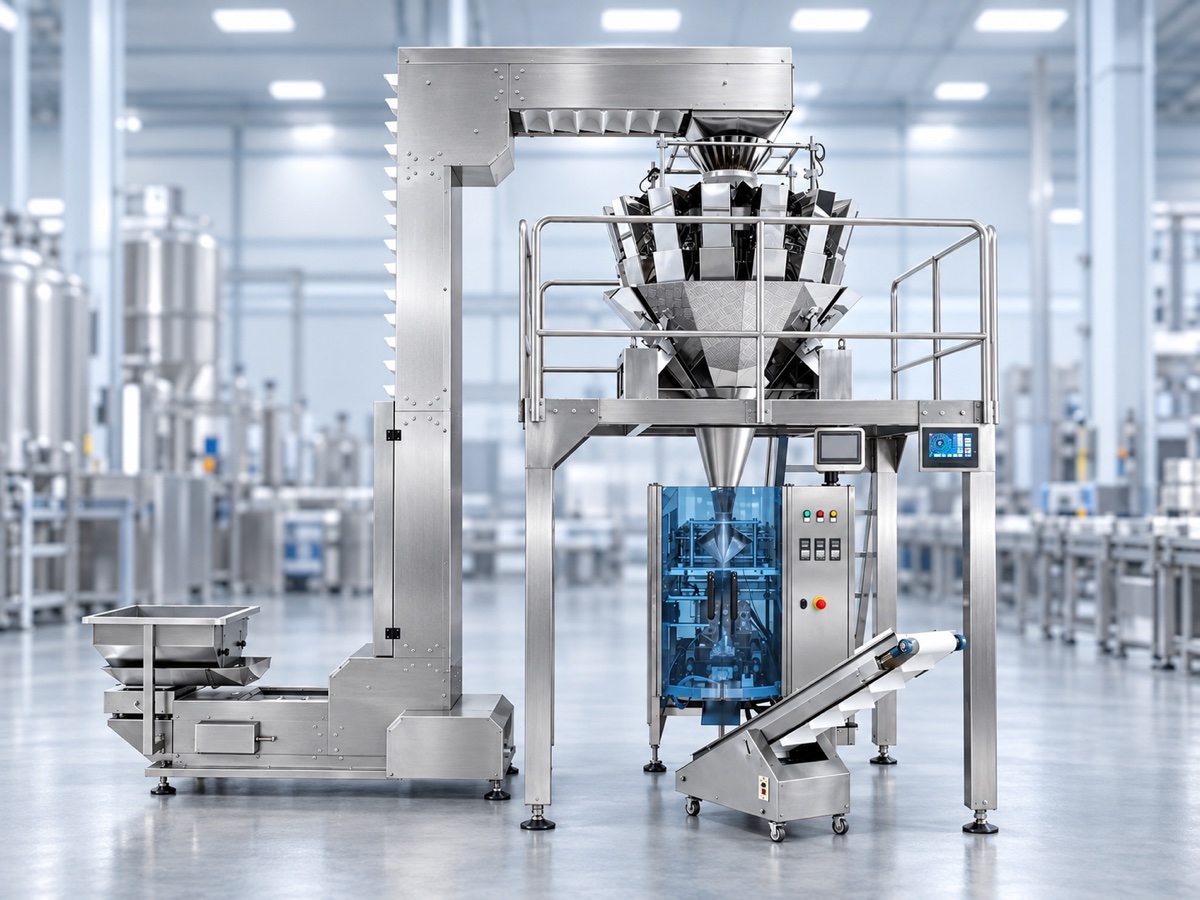
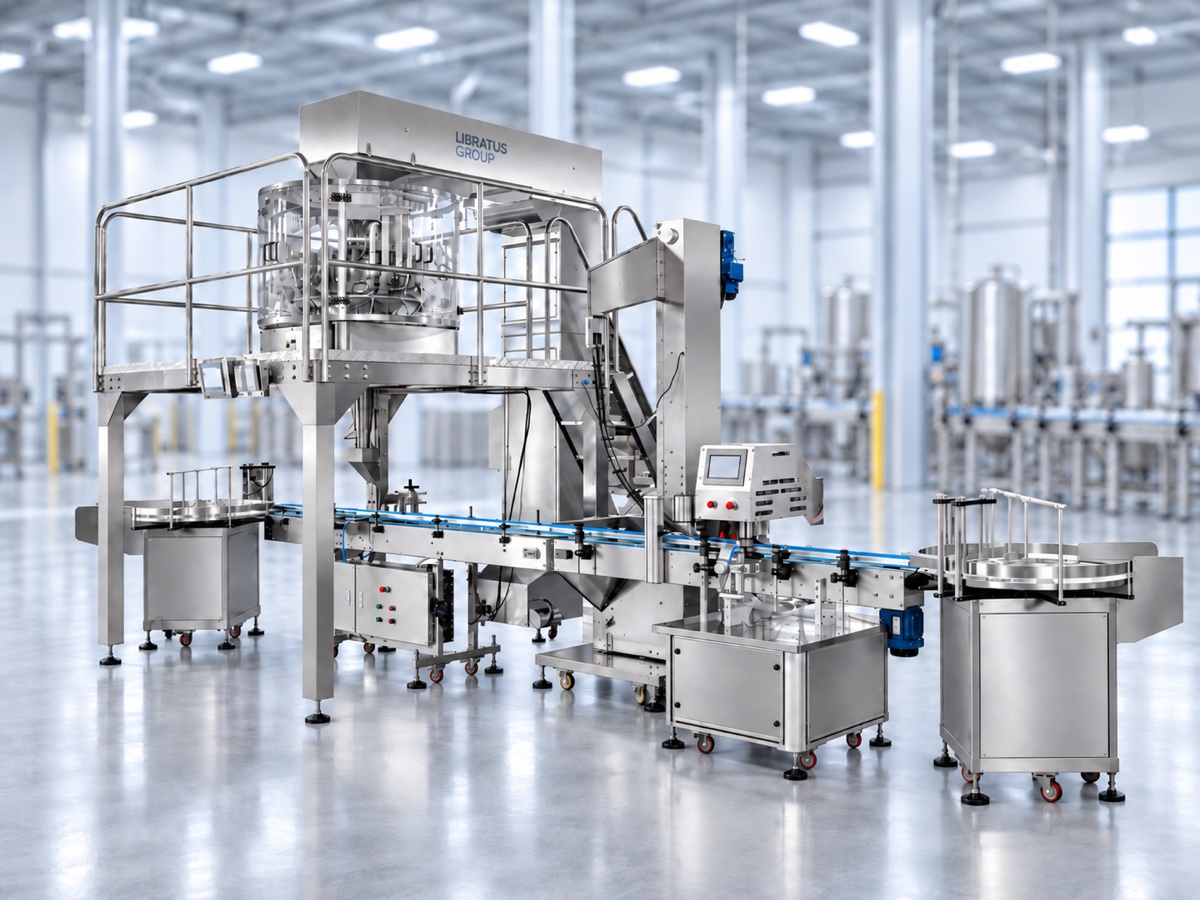
Multihead weigher above a vertical bagging machine, with feed elevator and supporting platform

Multihead weighers

Multihead weighers dose free-flowing products to a target weight by combining the closest available set of hopper weights.

Selection detail for Multihead weighers

On products that feed well, this approach can hold pack weight closely and keep giveaway low at higher speeds, and it handles a range of target weights without mechanical rebuild. They are usually worth considering where throughput and weight control both matter, and they suit whole beans and many leaf teas. Suitability depends on how the specific product feeds, which is a question for specification rather than assumption.

View multihead weighers
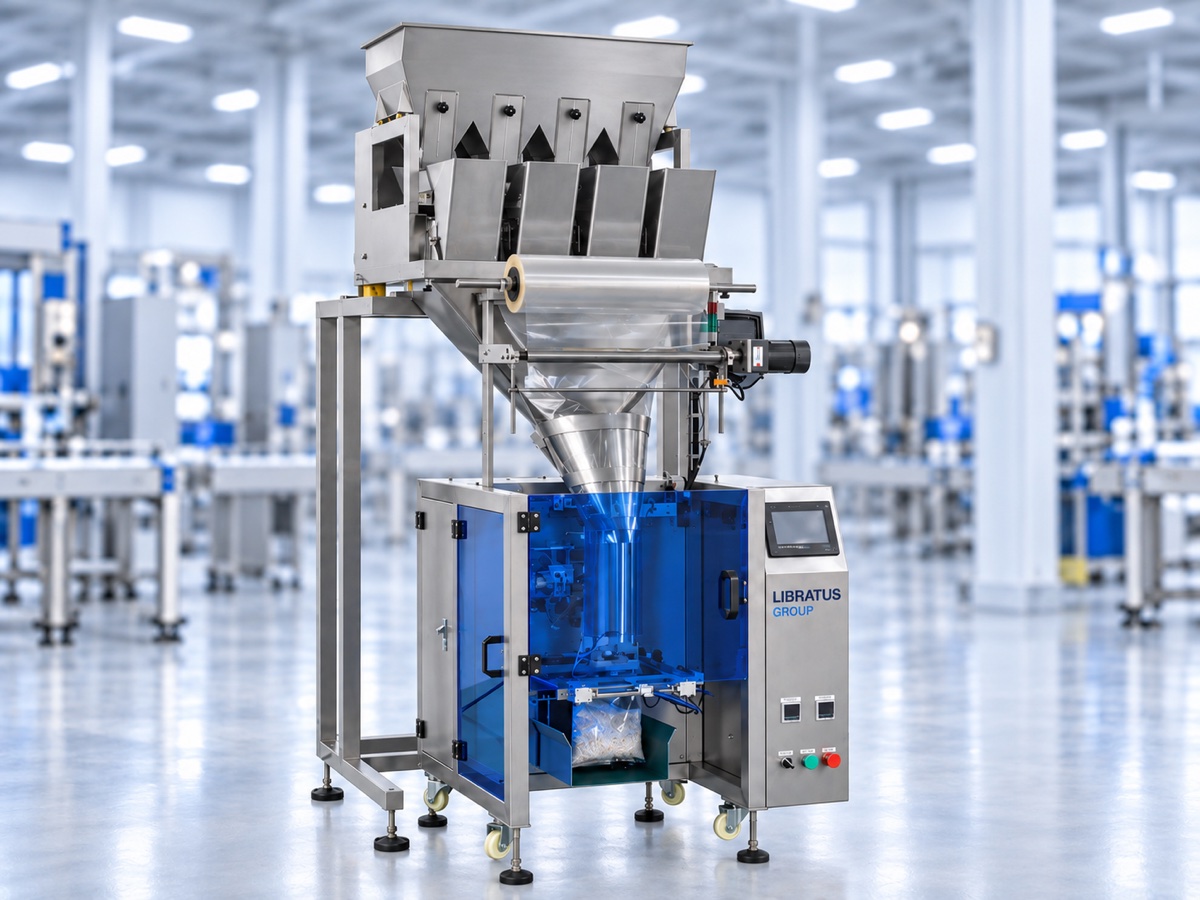
Linear weigher mounted above a vertical bagging machine

Linear weighers

Linear weighers use vibratory feeders and weigh buckets.

Selection detail for Linear weighers

For whole beans, and for teas where the leaf tolerates vibratory feed, they can be a lower-cost route to gravimetric filling at moderate output. For a producer stepping off manual weighing for the first time, a linear weigher is often the most straightforward first move, because it addresses weight consistency without committing to a full line.

View linear weighers
Auger powder filling system with feed hopper and conveyor

Auger fillers

Auger fillers meter product by controlled screw rotation and are commonly appropriate for fine, cohesive or less free-flowing powders, which in this sector typically means ground coffee and finer soluble or blended beverage powders.

Selection detail for Auger fillers

Whether auger dosing is the right choice for a particular product, and what screw and agitation arrangement suits it, depends on how that powder actually behaves. For coarser or well-agglomerated products, other approaches may serve better. This is one of the areas where a sample is worth more than a datasheet.

View auger fillers
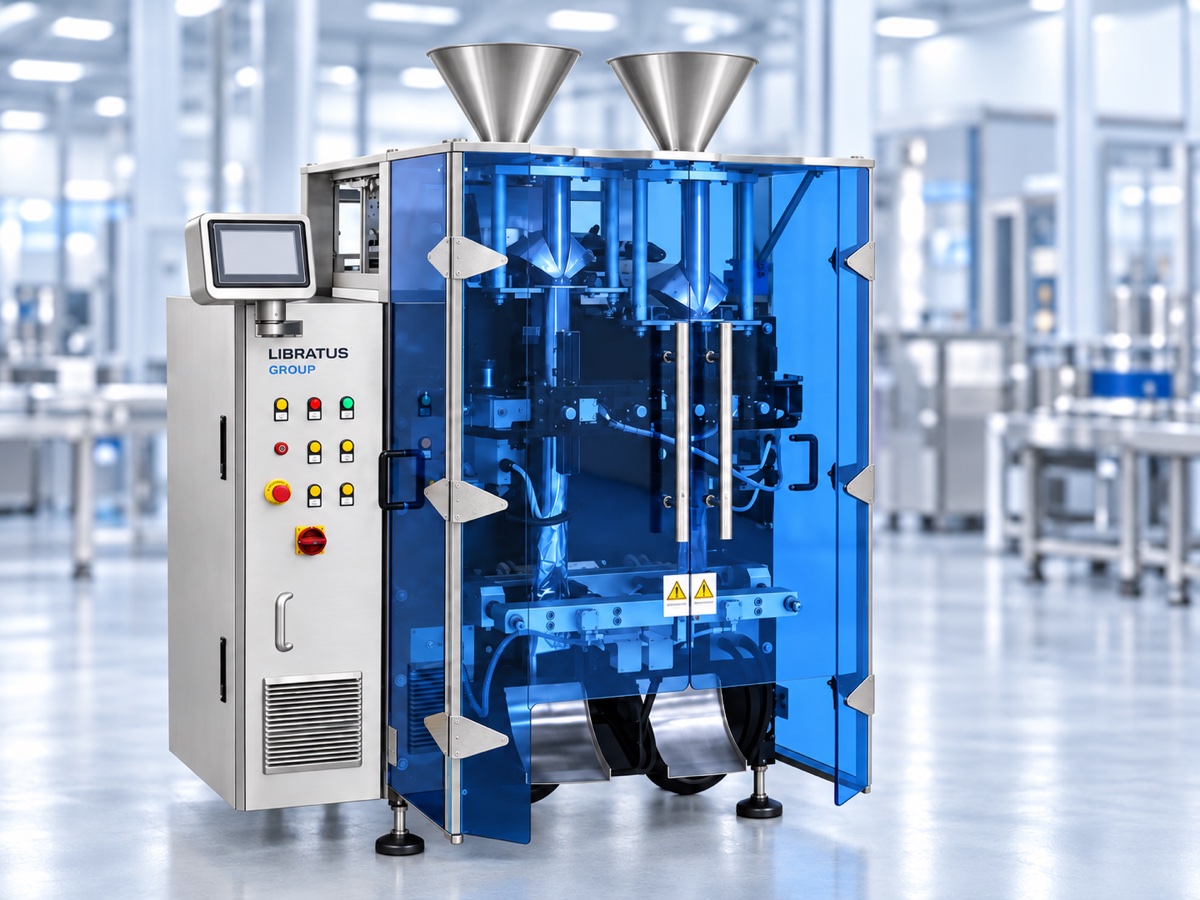
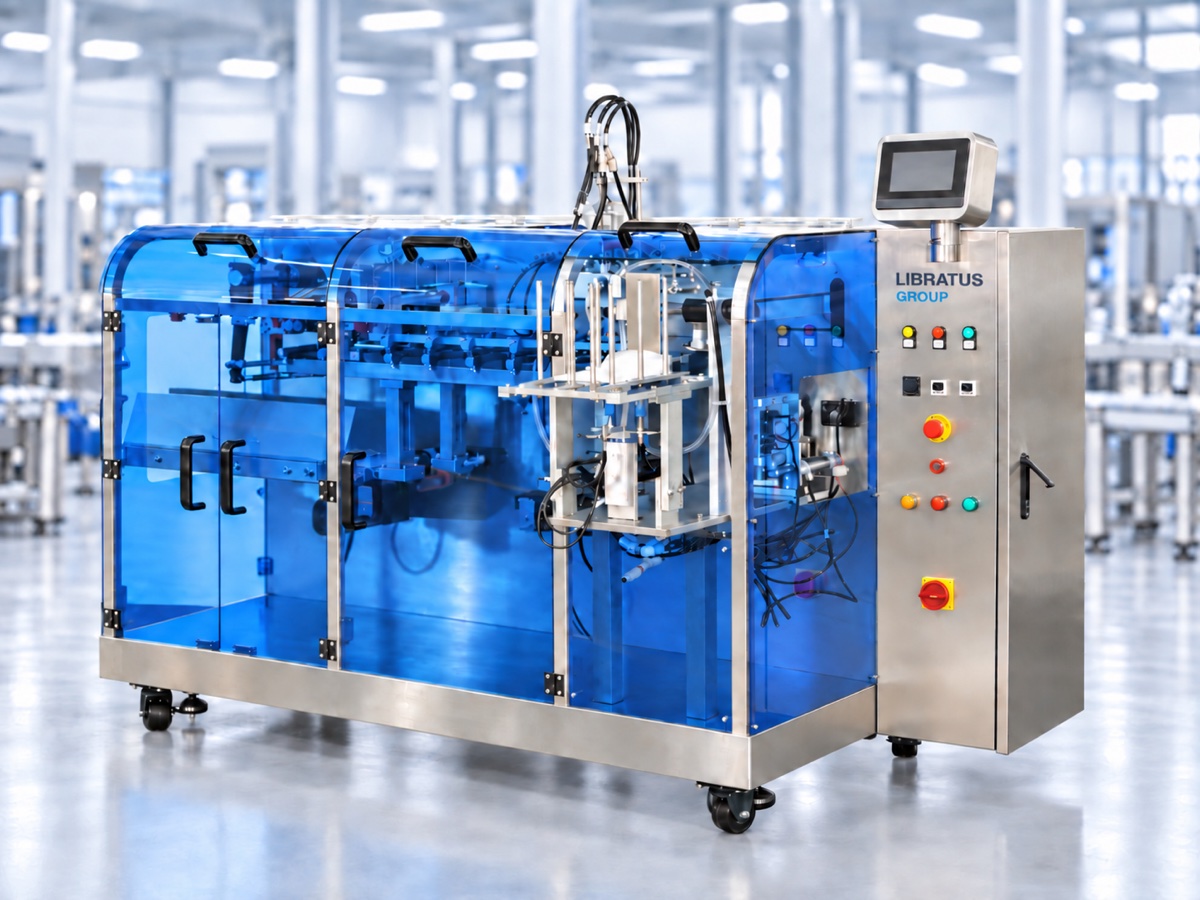
Vertical form-fill-seal bagging machine with guarded access doors

VFFS baggers

VFFS baggers form bags from roll film, then fill and seal them.

Selection detail for VFFS baggers

They suit high pack counts, small-format roll-film packs and sachets for soluble products, and larger roll-film bags for ground or whole bean coffee. A weigher or auger filler sits above the bagger and does the dosing. Small-format packs vary considerably in what they demand of the machine, so tell us the pack dimensions and style you have in mind rather than the format name alone.

View VFFS baggers
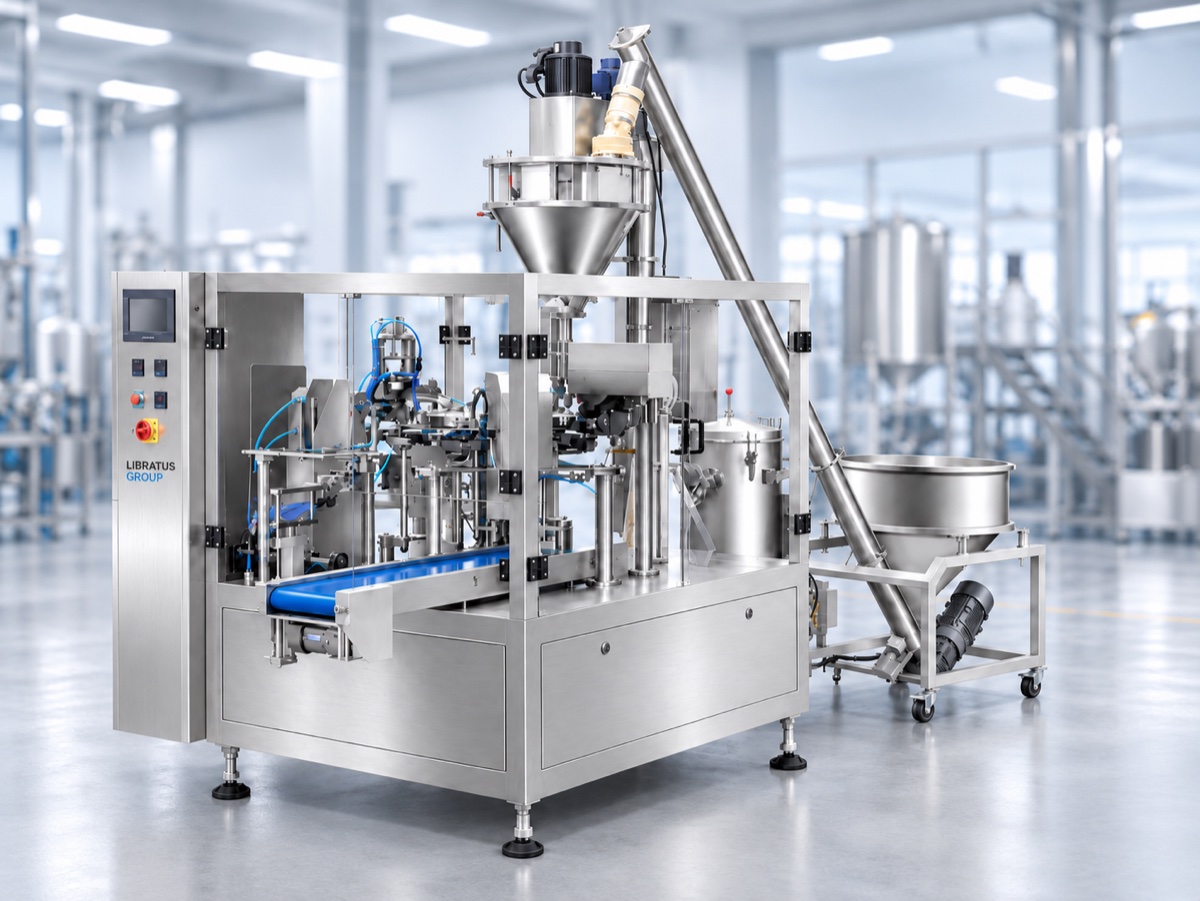
Rotary premade pouch filling and sealing machine

Premade pouch machines

Premade pouch and doypack machines fill and seal bags that are already made, which matters in coffee because premade bags carry print, zips, and in many cases pre-fitted degassing valves. Valve fitment is a pack-format decision that should be settled before machine specification, and we will confirm at enquiry stage which parts of that arrangement sit inside our scope.

View premade pouch machines
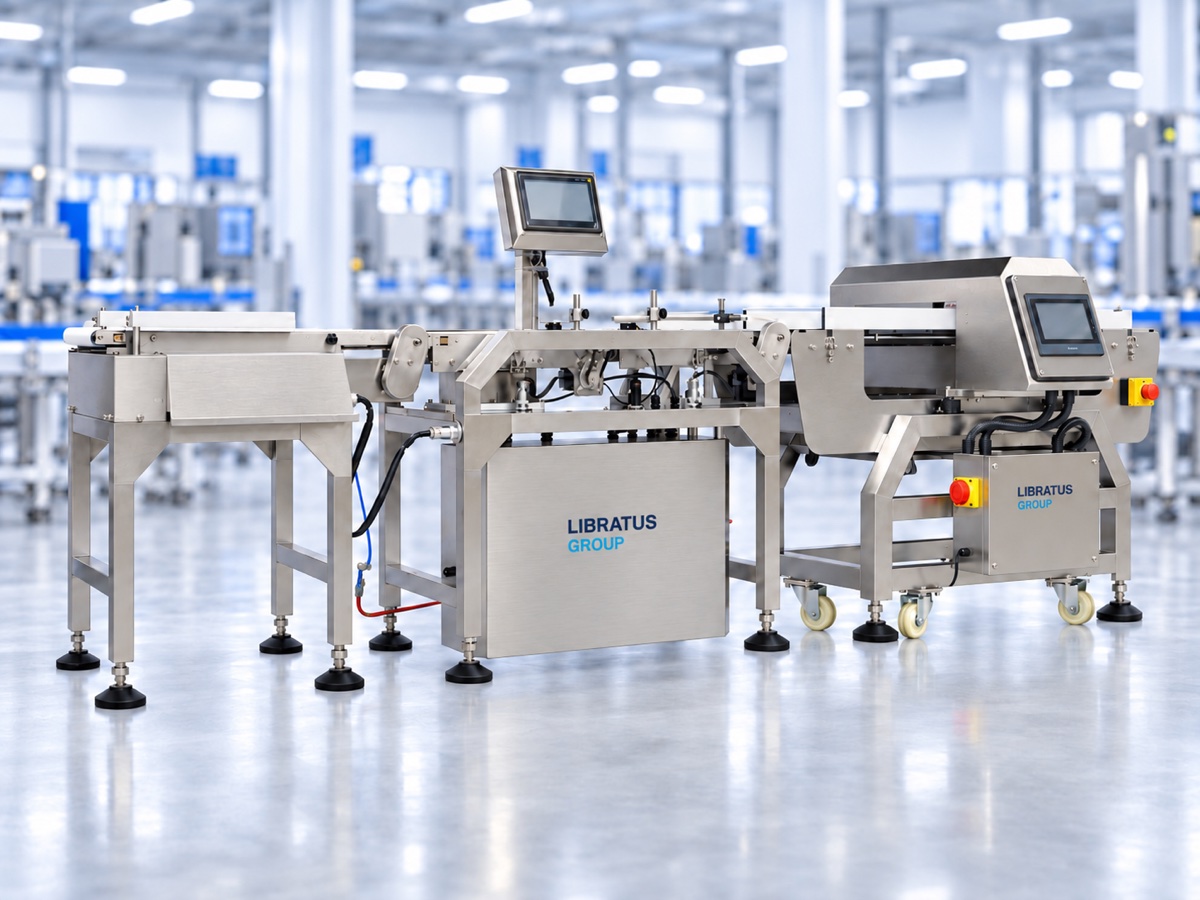
Combined checkweighing and metal-detection system with conveyor

Checkweighers

Checkweighers weigh completed packs and can reject those outside a set weight range.

Selection detail for Checkweighers

Two things make them worth considering. First, fill control: knowing what your packs actually weigh is what allows you to reduce deliberate overfill with evidence rather than guesswork, which on a high-cost product is where the money is. Second, catching the outliers before they reach a wholesale customer. Where you need weight records rather than just rejection, say so at specification, because that determines how the system is configured.

View checkweighers
Conveyors and product-handling equipment integrated with a packaging line

Conveying systems

Conveying systems move product from a roaster discharge, destoner, bin or grinder into the weigher or filler hopper. This is often the part of the line left manual, and it can be the real bottleneck: a weigher fed by someone tipping buckets can only run as fast as the buckets arrive.

View conveying systems

Selection factors

How the filling approach is decided

Six inputs, in roughly this order of influence.

1. Product behaviour.

Free-flowing granular products such as whole beans, and many leaf teas, generally suit weighing, where each pack is dosed to a measured weight. Fine, aerated or cohesive products such as ground coffee and finer soluble powders more often suit auger dosing, where a controlled screw meters product and consistency depends on keeping powder condition stable rather than on free flow.

View multihead weighers

2. Target weight and the spread of target weights.

A line handling 200 g to 1 kg across many SKUs is a different specification from one running a single 250 g pack. Weighing systems generally handle a wide target range with less mechanical change than a fixed volumetric arrangement.

3. Required sustained output.

Sustained packs per minute across a real shift, including changeovers and bag loading, is the number that matters. Peak figures rarely survive contact with a production schedule.

4. Pack format.

Premade valve bags, side-gusset bags, stand-up pouches, roll film, sachets and tins each impose different requirements on the machine below the weigher or filler.

5. Giveaway economics.

At high raw material cost, tightening fill consistency can have a measurable payback, and that payback is often what justifies a weigher over a cheaper volumetric method.

6. Changeover and automation level.

A roaster with thirty SKUs and short runs may be better served by a simpler, faster-to-change configuration than by a more automated line that punishes frequent changeover. Buying more automation than the SKU pattern supports is a common and expensive error.

Pack formats

Pack formats and line configuration

Coffee and tea are unusual in how much the pack dictates the line.

Premade valve bags remain the default for much retail whole bean and ground coffee. A typical configuration is hopper and conveying, weigher or auger filler, premade pouch machine, then checkweigher.

View premade pouch machines

Roll-film bags can reduce packaging cost per unit at higher volume and suit VFFS. Degassing valve application on roll film is an additional consideration and should be resolved during specification.

View VFFS baggers

Sachets and small-format single-serve packs for soluble coffee, white coffee and mixed beverage powders are typically roll-film work with auger dosing, at high pack counts and small target weights. If you have a specific single-serve format in mind, including narrow stick-style packs, raise it at enquiry so we can confirm which machine configurations support it before anything is specified.

View VFFS baggers

Tins, jars and bulk foodservice packs are filled by weigher or auger depending on the product. Closing and capping equipment is a separate question and we will be explicit about scope.

Downstream weight checking is worth considering from the outset rather than later, because retrofitting it usually means moving equipment that has already been positioned.

View checkweighers

What we need from you

What to establish before specifying equipment

Bring these to an enquiry and the conversation moves directly to machine selection.

  • Which products, specifically: whole bean, ground and which grind, soluble, leaf tea, blended powder.
  • Roast level range, and whether dark or oily roasts are in scope.
  • Whether coffee is rested before packing, and for how long.
  • Bulk density for each product, or a representative sample we can assess.
  • Target fill weights across all SKUs, and the tolerance you work to.
  • Pack formats and dimensions, including whether bags are premade, valved, zipped or roll film.
  • Required sustained output in packs per minute or kilograms per hour, and shift pattern.
  • How you pack today, and which part of it fails first.
  • How product will reach the machine hopper.
  • Number of SKUs and changeovers per shift.
  • Available floor area and, for VFFS and weigher combinations, available head height.
  • Power supply and whether compressed air is available.
  • Who will operate and maintain the machine day to day.

Bulk density and head height are frequently the missing pieces, and either can invalidate an otherwise sensible specification.

Read the coffee bag packing guide

Documentation

Documentation

Machine documentation is worth settling during specification rather than after delivery. What you need depends on your destination market, your own safety and quality systems, and in some cases on what your customers or insurers ask you to produce.

Tell us at enquiry stage what documentation your operation requires and which market the machine is going into, and we will confirm what is supplied with the machine you are considering. Our Documentation page sets out how we handle this.

Enquiry

Tell us the product and the pack

Send the products, target weights, pack formats and required output, and we will tell you which weighing or filling approach fits, which does not, and why. If a simpler machine solves the problem, we will say so.

We would rather specify one machine correctly than sell you a line you do not yet need.

All industries

Fields marked are required.

Prototype preview: enquiries are not sent. Use the live enquiry form