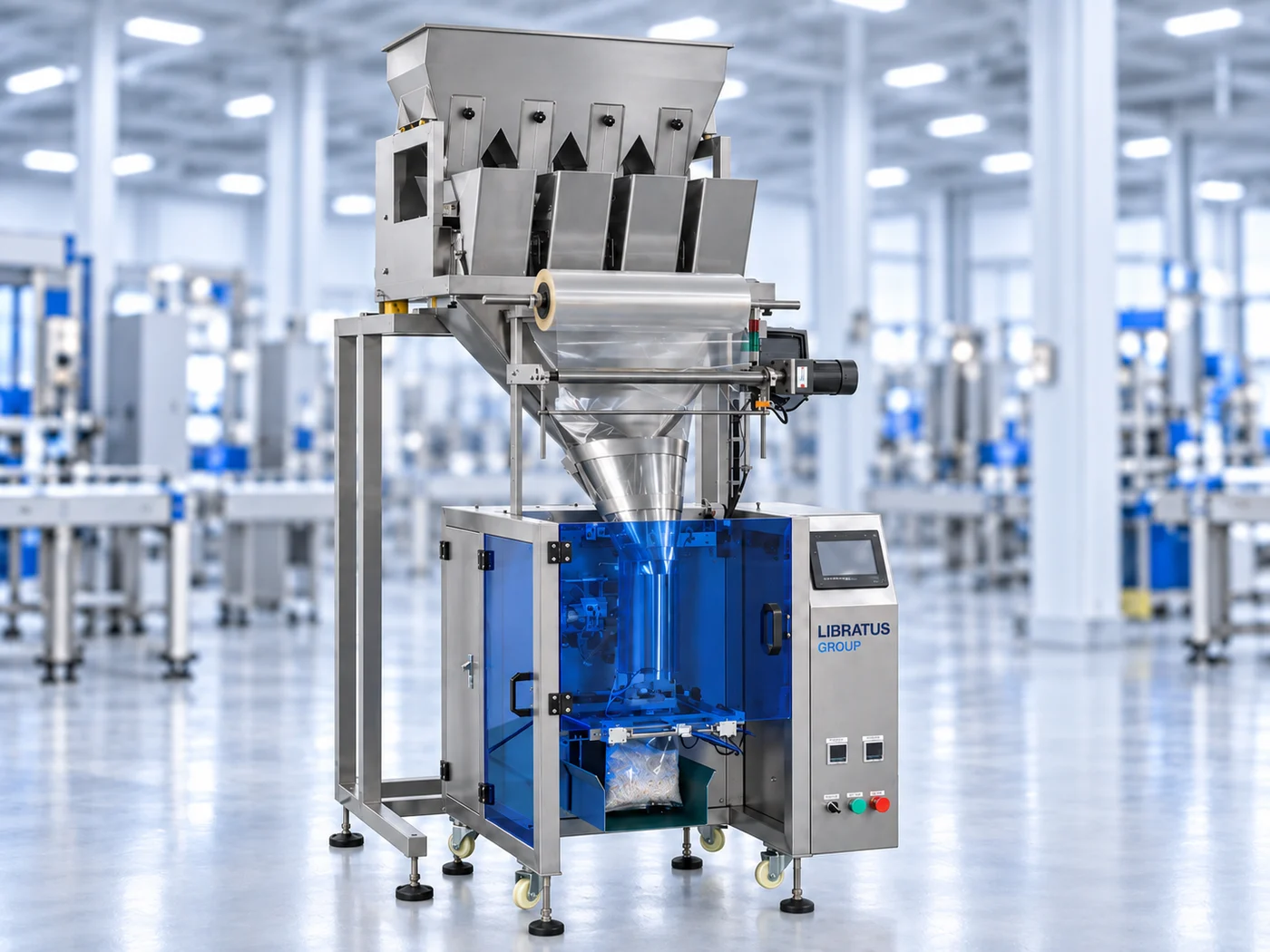
Linear weighers
One to four heads, granules and whole pieces, bench through floor-standing.
Explore capabilities: Linear weighers Get a quote
Bagging and sealing
A vertical form fill and seal (VFFS) machine forms bags from rollstock, receives a dose from a weigher or filler, and seals each pack. Bag format and output depend on your product, film and line setup.
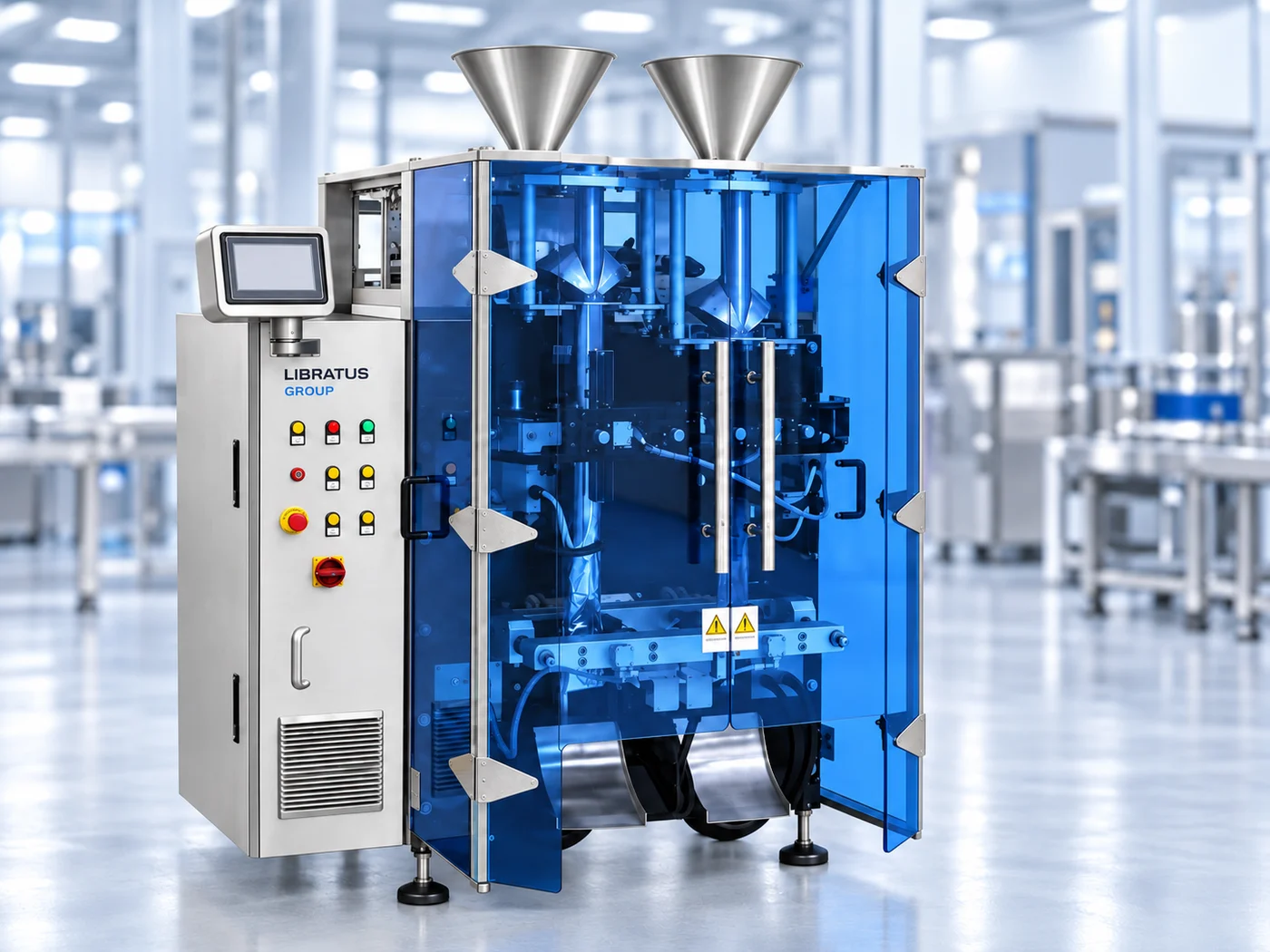
Single-machine configurations from USD 35,200
Systems built to USD 105,000
All figures USD, indicative, and confirmed by quotation. Other currencies converted at an indicative rate.
How it works
A VFFS (vertical form, fill and seal) bagger forms the pack in-line, directly from a roll of film, as part of the automated packaging process. Film unwinds and passes over a forming assembly, which shapes it into a tube around the fill path. The overlapping edges are sealed along their length to close the tube, and a set of transverse jaws seals across the tube at intervals — closing the top of the bag below while forming the bottom of the next.
Product is dosed into the open tube between these seal cycles, coordinated with a separate weighing or filling system upstream. The bagger forms and seals the pack; it does not itself determine product weight — that is set by the dosing system it works with.
VFFS can produce strong, high-quality branded retail packaging. What the machine can achieve physically is set by the forming architecture selected — some VFFS systems are built to reliably support more structured formats, including stand-up, flat-bottom, quad-seal, or zipper/reclose configurations, where the machine, forming set, and film support them.
That said, because a premade pouch's geometry and construction are established by a converter before it ever reaches a filling machine, highly structured pouch shapes or specific closure constructions can sometimes be more straightforward to achieve that way than to form reliably in-line. This is a practical trade-off to weigh against your pack design, not a limitation on what VFFS can print or brand.
VFFS suits free-flowing and semi-free-flowing products packed into flexible bags, particularly where forming from rollstock supports the production strategy.
VFFS is not the right answer for every flexible-pack application. A premade pouch approach may be preferable where:
Selection note
Suitability depends on product flow and settling behaviour, pack design, seal integrity and commercial requirements; each configuration must be assessed, and neither VFFS nor premade pouch is universally faster or cheaper.
Configuration
A VFFS system is configured around your specific requirements, including:
Depending on the application, a VFFS line may draw on: a forming set matched to bag style and film width; film handling and tension control; the sealing arrangement; a coding interface; gas flush; zipper/reclose equipment where supported; a bag support or settling device; a discharge interface; and the dosing interface to the chosen weigher or filler.
Intermittent- and continuous-motion architectures both exist in the wider VFFS category — which is applicable, and which features are available, is confirmed at specification stage rather than fixed in advance.
VFFS equipment can be configured around a range of bag styles — including pillow, gusseted, and, on suitably specified systems, more structured formats such as flat-bottom, quad-seal, or zipper/reclose constructions — where the selected machine, forming set, and film support them. Bag format is a configuration decision made at specification stage, not a fixed property of VFFS as a category.
The film and the final bag format are engineering inputs. Successful pack formation and sealing depend on the film's laminate construction, sealant layer, and thickness; the sealing arrangement and bag format selected; operating conditions; and product behaviour at the seal area — product entering the seal area can compromise seal formation.
Material choices, including any recyclable or mono-material structures under consideration, need to be tested and confirmed against the selected machine, product, and pack format before being relied on.
Output and pack quality are a function of the film's behaviour on the forming set, the bag size and style, the dose, the dosing system's own cycle time, the sealing arrangement, the machine's motion architecture, and any added steps such as zipper handling, gas flush, or coding. There is no single speed figure that applies across VFFS as a category — realistic output is established once the application is defined.
Qualification
The documentation supplied is confirmed during specification and depends on the selected machine, destination market, installation/use and customer requirements.
To specify the right VFFS configuration, we typically need:
If physical assessment is needed, Libratus will advise on the appropriate route during specification.
Line integration
VFFS Baggers are typically specified alongside:
The bagger forms and seals the pack; the weigher or filler determines product weight.
Not the right fit?
Related machines
One to four heads, granules and whole pieces, bench through floor-standing.
Explore capabilities: Linear weighers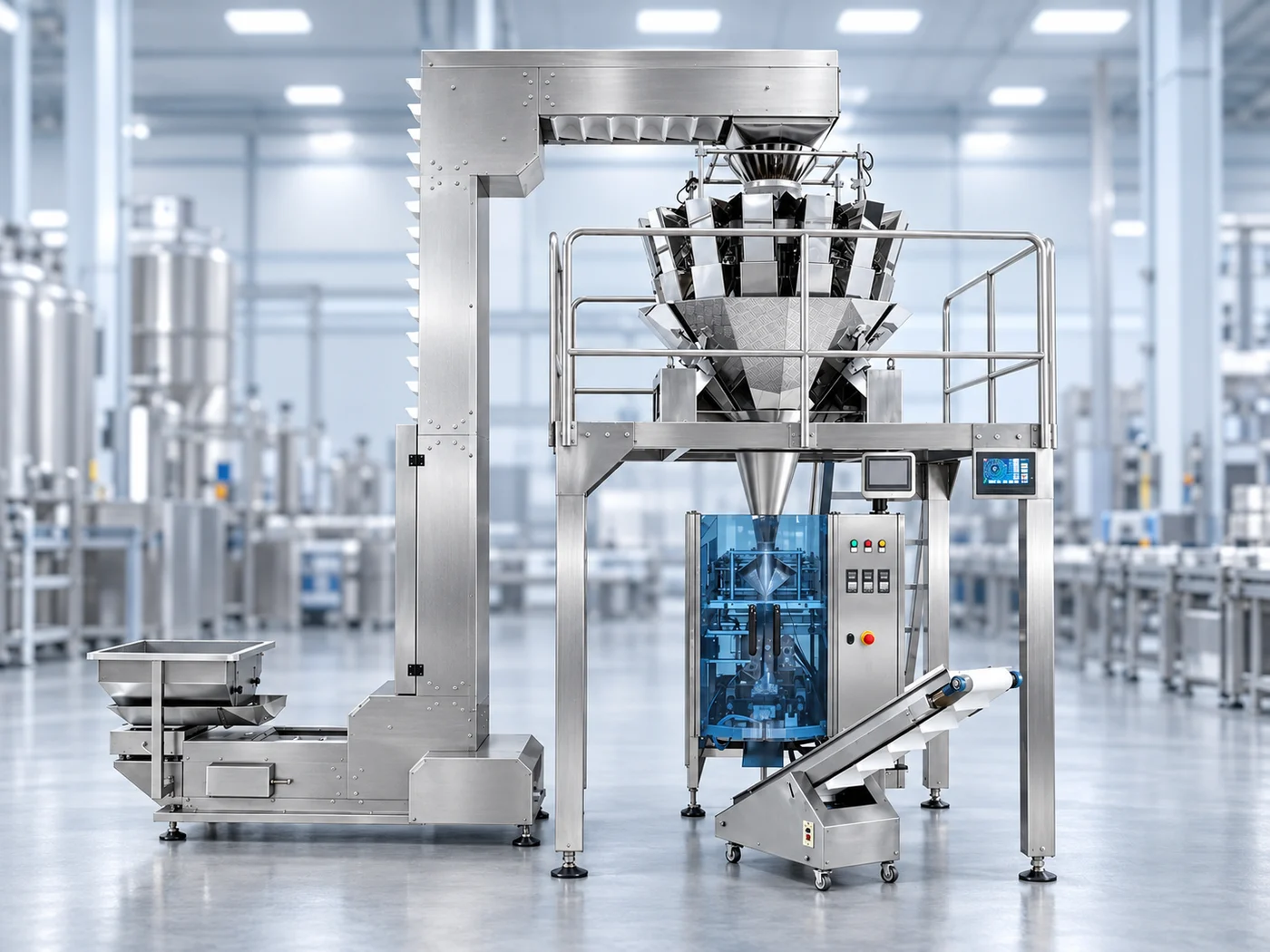
Ten to thirty-two head combination weighing at speed with minimal giveaway.
Explore capabilities: Multihead weighers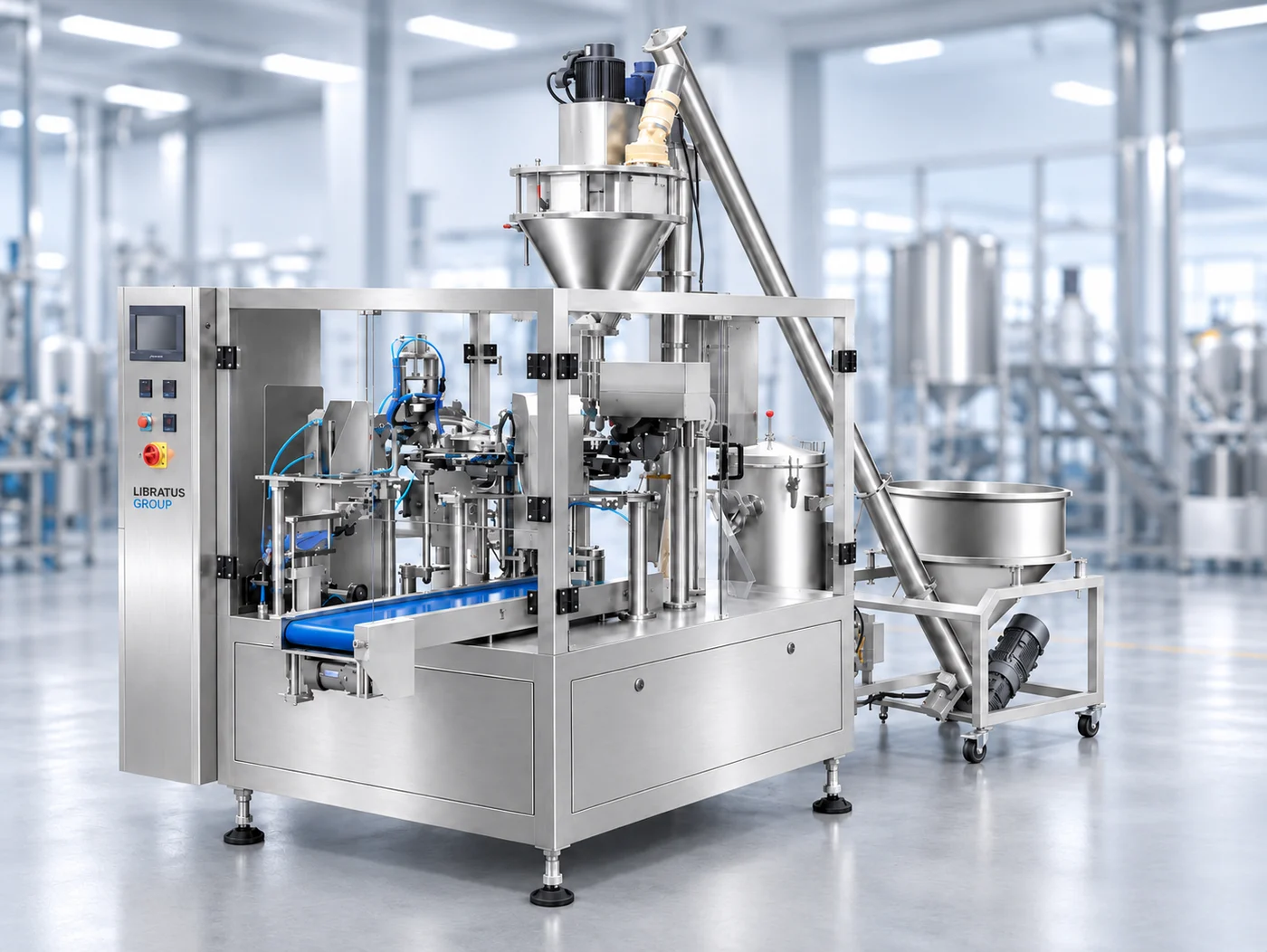
Volumetric and gravimetric dosing for powders a weigher cannot handle.
Explore capabilities: Auger fillers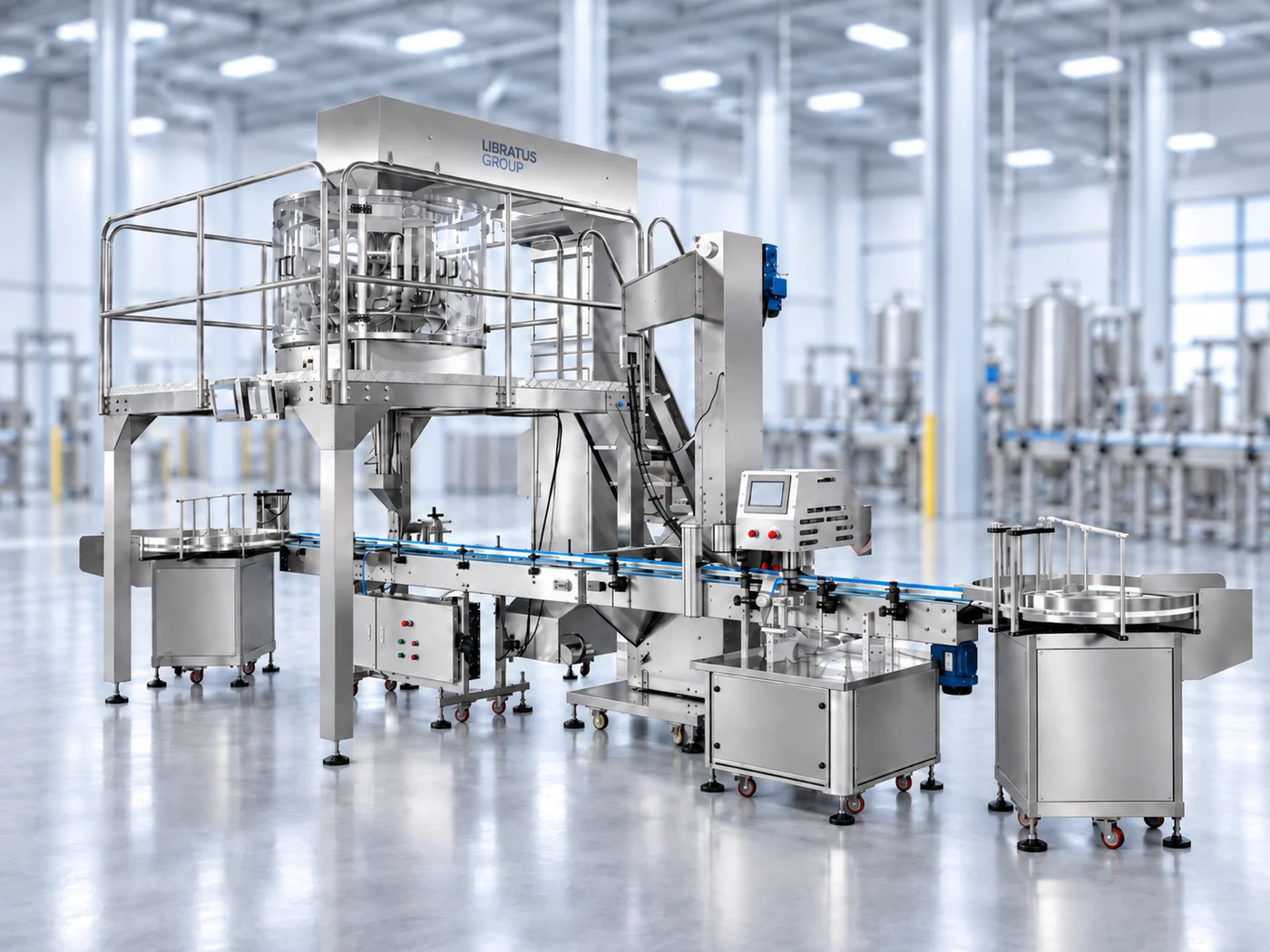
Enclosed dust-free transfer of powders, granules and whole pieces.
Explore capabilities: Conveying systems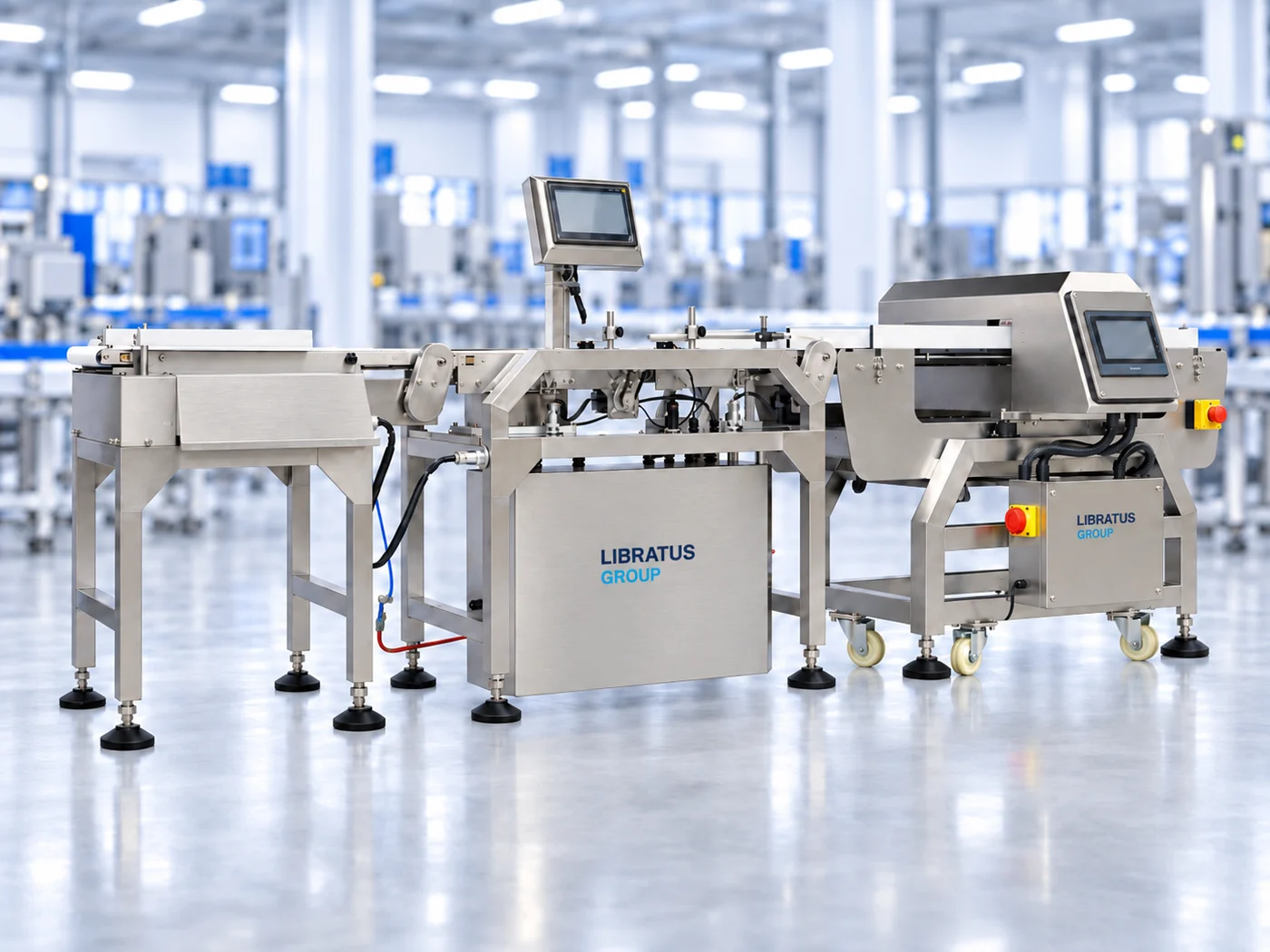
In-line weight verification and metal detection, standalone or combined, integrating upstream and downstream.
Explore capabilities: Checkweighing and metal detectionIndustries
A relevant industry for coffee and tea products packed into flexible bags.
View Coffee & Tea →A relevant industry where product and pack format suit VFFS.
View Supplements & Nutrition →A relevant industry for grains, rice and dry ingredients.
View Grains, Rice & Dry Foods →A relevant industry for pet food packed into flexible bags.
View Pet & Animal Products →Considered where product and pack format allow.
View Snacks & Confectionery →Suitable frozen applications considered where product and pack format allow.
View Frozen & IQF Products →Fit is assessed case by case.
View Ingredients & Powders →Fit is assessed case by case.
View Industrial & Non-Food Products →Enquiry
Tell us about the product, required pack format, target fill and output, and Libratus will help determine whether VFFS is the appropriate packaging method and configuration.
Back to the machine range