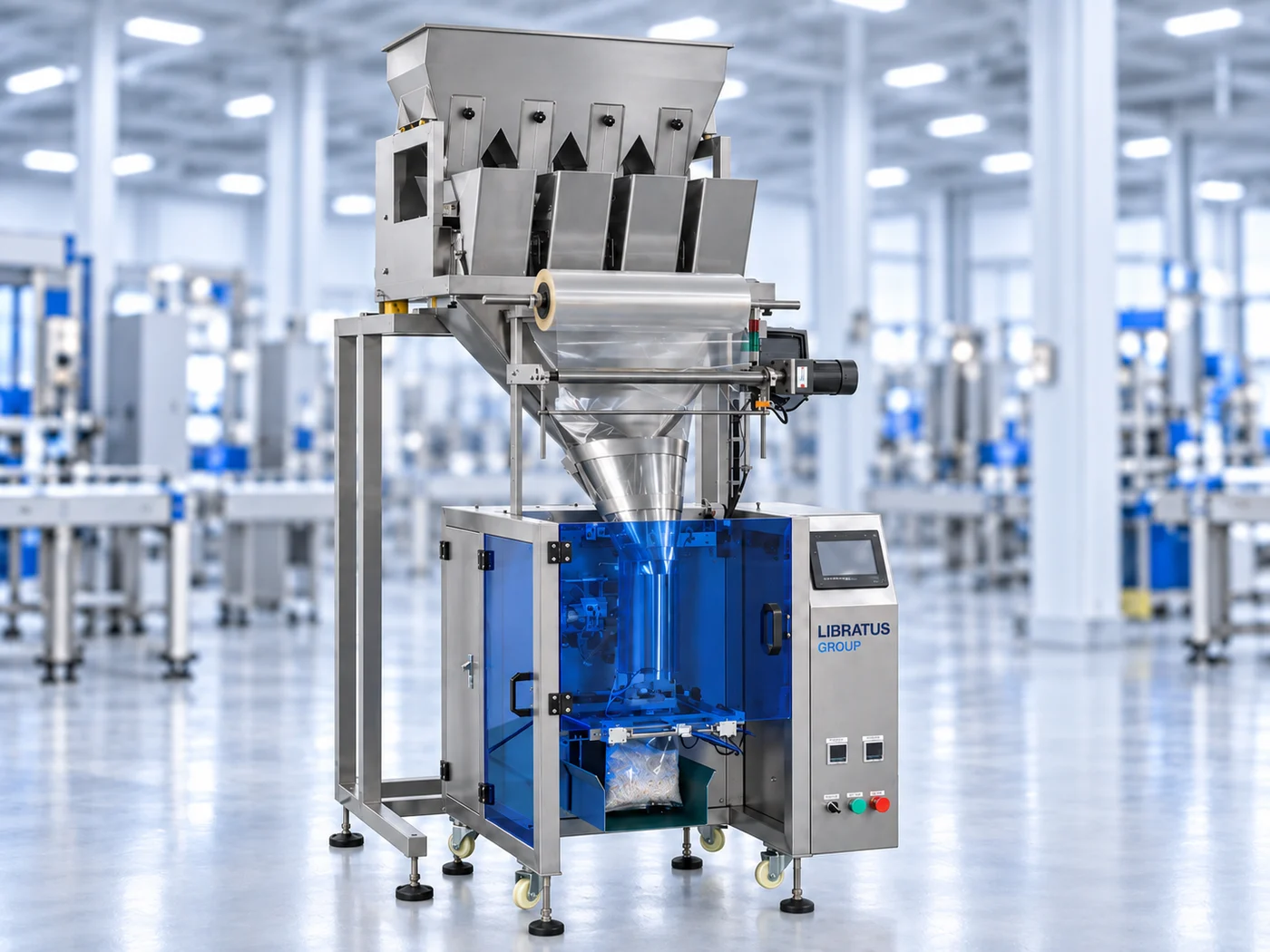
Linear weighers
One to four heads, granules and whole pieces, bench through floor-standing.
Explore capabilities: Linear weighers Get a quote
Inspection
In-line weight verification and metal contamination detection for packaged products — as a standalone checkweigher, a standalone metal detector, or an integrated combination system, configured around your pack, your line and the risks you need to control.
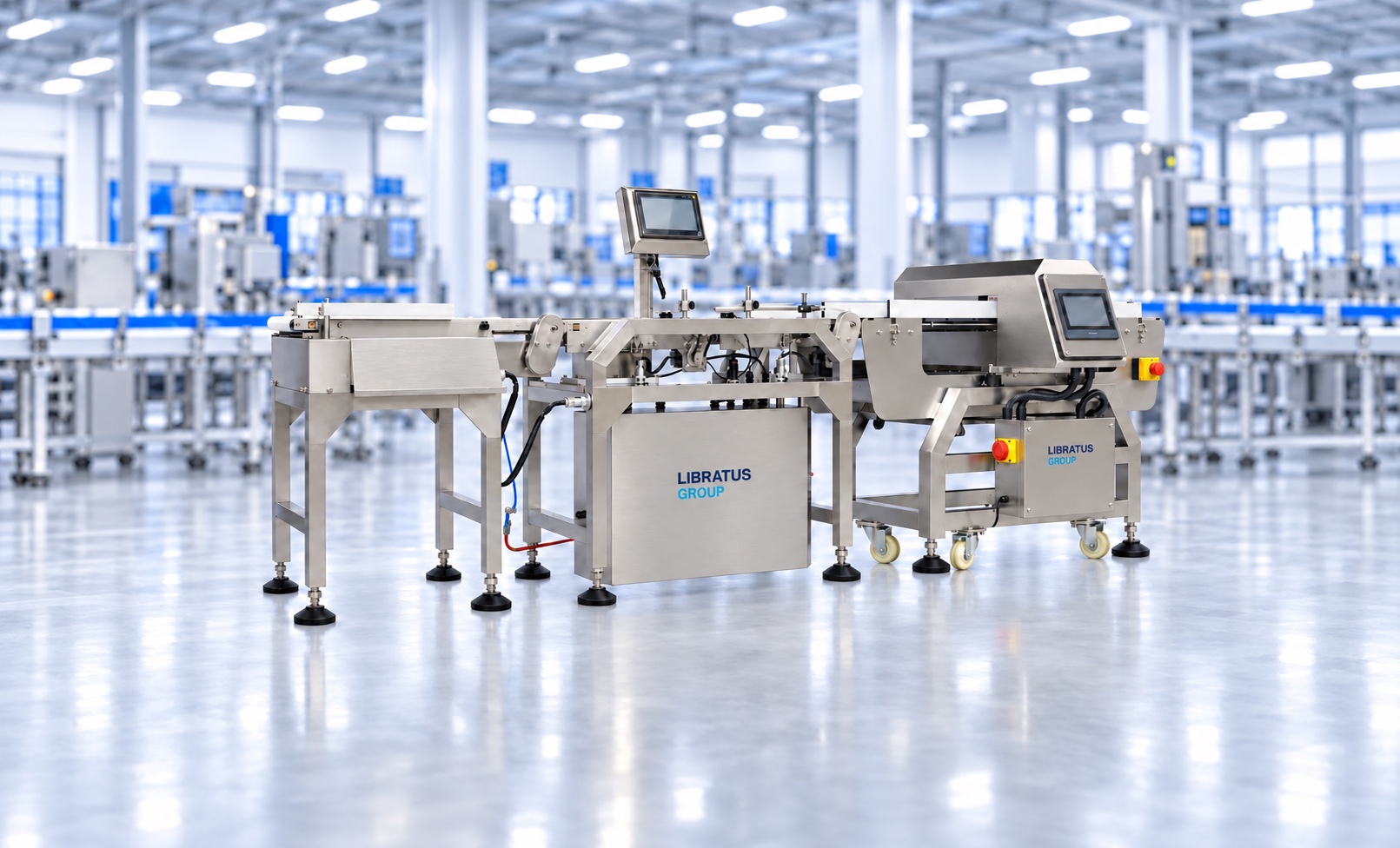
Single-machine configurations from USD 12,800
Systems built to USD 30,000
All figures USD, indicative, and confirmed by quotation. Other currencies converted at an indicative rate.
How it works
A checkweigher verifies pack weight while the pack keeps moving. As product travels along the line, it passes over a dedicated weighing section, where the weight is measured and compared against configured criteria. Depending on the result, the pack proceeds normally, is flagged, or is removed from the line by the selected reject method.
This is a verification stage, not a filling stage. A checkweigher tells you whether a pack meets the weight you've set — it doesn't put product into the pack. Where the upstream filler and the checkweigher are configured with compatible control links, weight data can also be used to support process monitoring or adjustment. Where that link doesn't exist, the checkweigher's role is detection: identifying packs that fall outside your criteria so they don't continue downstream unnoticed.
A metal detector checks product for metal contamination as it passes through, without opening or altering the pack. It's a separate function from weight verification: a checkweigher tells you whether a pack is the right weight, a metal detector tells you whether it contains something it shouldn't.
Sensitivity isn't a single figure that applies everywhere. It depends on the type of metal involved — ferrous, non-ferrous and stainless steel are not equally easy to detect — and on the product itself, since some products, particularly those with higher moisture or salt content, can produce a signal that has to be distinguished from a genuine contaminant. The aperture the product needs to pass through also affects sensitivity and has to be sized to the pack rather than fixed as a default.
Packaging material also matters. Metallised film can sometimes be handled with suitable metal-detection technology, although achievable sensitivity depends on the application. Aluminium foil or aluminium trays are a different case and may require a specialist ferrous-in-foil approach or another inspection technology such as X-ray. The appropriate method is established against the actual product and pack format at specification stage.
None of this is decided from the product category alone — it's worked through against your actual product, pack and contamination risk at specification stage.
A number of production lines combine checkweighing and metal detection at a single point in the process rather than running them as two separate machines. Where this fits, the case for it is mainly about footprint and control: the two functions can share a frame and a conveyor section, and depending on the configuration, may be run from a single interface rather than two. A shared reject point can also be used, though some configurations keep weight faults and metal-contamination rejects separate so the two can be tracked and investigated independently.
Whether a combination system, two standalone units, or a single standalone unit is the right fit depends on your line layout, available space, and how independently the two functions need to be managed. This is established at specification stage against your actual line — not assumed from the product type.
Checkweighers and metal detectors are used across packaged-product lines in food and non-food production.
The specification is assessed against the pack, product, production line and inspection requirement.
Selection note
No single criterion rules a format in or out; the criteria are assessed together against the line and product.
Configuration
A checkweigher, a metal detector, or a combination of the two is specified around your product and your line, not chosen from a fixed catalogue. Areas we work through with you typically include:
The practical value of a checkweigher is straightforward: it reduces the chance that a pack outside your weight criteria continues through the rest of the line and into distribution. Over a production run, that verification also produces a useful picture of process performance — whether the line is running consistently on target, or drifting toward the high or low end of tolerance.
What a checkweigher does not do by itself is correct the cause of that drift. Detecting a weight variation and correcting the filler that caused it are two different functions. Some line architectures link a checkweigher's weight data back to the upstream filler to support automatic adjustment — a genuine capability, but one that depends on the specific filler and control system involved, not something every checkweigher provides as standard. Where closed-loop feedback is part of what you need, it's addressed at the specification stage against your actual upstream equipment.
It's worth being precise about this, because it's often assumed incorrectly: passing a checkweigher does not, by itself, mean a pack or a production line is legally compliant for trade.
Process-verification checkweighing — checking pack weight against your own internal criteria — is a different matter from applications subject to legal metrology: regulated measuring instruments used as the basis for a declared trade quantity. Legal-metrology status depends on the specific instrument, its intended use, and the requirements of the destination market — including, where relevant, frameworks such as the international OIML R 51 recommendation for automatic catchweighing instruments, and national trade-measurement regimes such as the Average Quantity System used across Australia and New Zealand.
Where your application involves a regulated measuring purpose — where the checkweigher's reading forms part of your legal declared-quantity compliance — the required metrology status, approvals and conformity route need to be established for the selected machine, its intended use, and your destination market. This is confirmed during specification, not determined in general terms on a website page.
Metal detection sits outside this framework. It isn't a measuring instrument and isn't subject to trade-measurement approval in the way a checkweigher can be. Compliance expectations around metal detection are typically set by your site-specific food-safety plan, customer or retailer requirements, and internal quality systems rather than declared-quantity regulation. These requirements vary by application and are confirmed against the actual project. Where a combination system is specified, the checkweighing and metal-detection functions are assessed on their own terms even when they sit in one frame.
Once a pack is identified as outside tolerance — whether by weight, by contamination, or both — it needs to be handled in a way that suits the product and the line. Common approaches include:
The right method depends on product weight, fragility, pack rigidity, line speed and the space available around the inspection point. Not every application calls for automatic physical rejection — some processes are better served by an alarm or stop function that alerts an operator instead. Which approach fits your line, and whether weight faults and contamination need separate reject points, is established at specification stage.
There's no single accuracy, sensitivity, speed or weighing-range figure that applies across every installation, and treating one as universal would be misleading.
For checkweighing, real-world performance is shaped by nominal product weight and pack dimensions, conveyor speed and available weighing time, product spacing and pack stability, and vibration or other environmental disturbance. It's also worth distinguishing between related but different measures: resolution (the smallest increment displayed), repeatability (how consistent readings are for the same item), and accuracy (how close a reading is to a known true weight). A machine can have fine resolution without necessarily holding tight accuracy under your specific line conditions.
For metal detection, sensitivity is shaped by the metal type being screened for, the product's own composition, the packaging material, and the aperture the product needs to pass through. As with checkweighing, this is verified against your actual product and installation rather than quoted as a fixed number in isolation.
Qualification
The documentation supplied is confirmed during specification and depends on the selected equipment, destination market, installation/use and customer requirements.
Where your application involves a regulated measuring purpose, the metrology documentation that applies is determined as part of that same specification process, against the specific machine, use and market — rather than assumed in advance. Where metal detection is part of the configuration, applicable requirements are similarly confirmed against the project, site standards and customer requirements.
To specify the right checkweigher, metal detector, or combination configuration, it helps to know:
If physical assessment is needed, Libratus will advise on the appropriate route during specification.
Line integration
Checkweighing and metal detection typically sit downstream of filling, forming and sealing equipment as a verification stage. In a common arrangement, a linear weigher, multihead weigher or auger filler establishes the fill weight, a VFFS bagger or premade pouch machine forms, fills and seals the pack, and the inspection stage then verifies the finished pack — by weight, by contamination, or both. Conveying equipment connects these stages where the layout requires it.
Not the right fit?
Related machines
One to four heads, granules and whole pieces, bench through floor-standing.
Explore capabilities: Linear weighers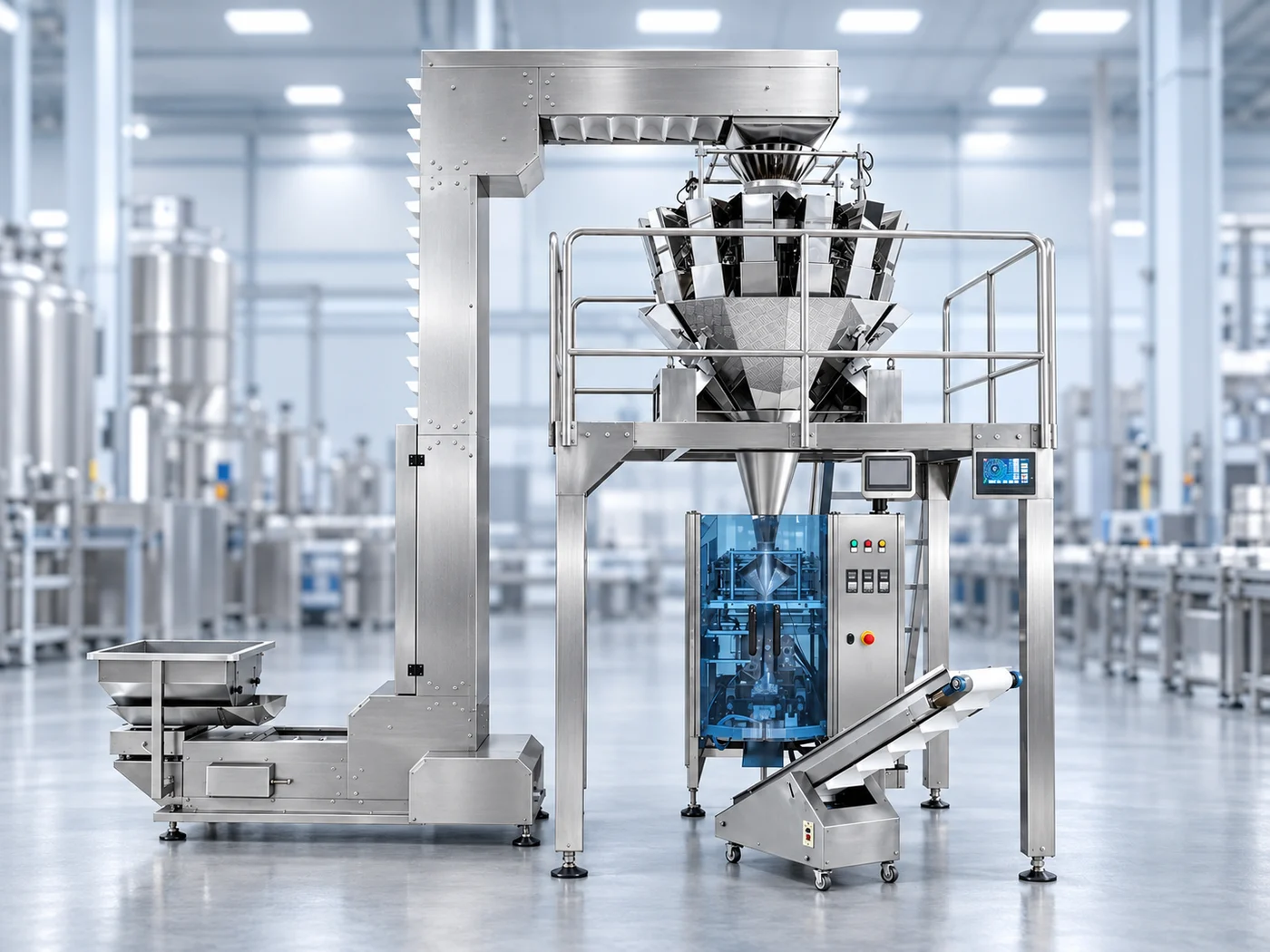
Ten to thirty-two head combination weighing at speed with minimal giveaway.
Explore capabilities: Multihead weighers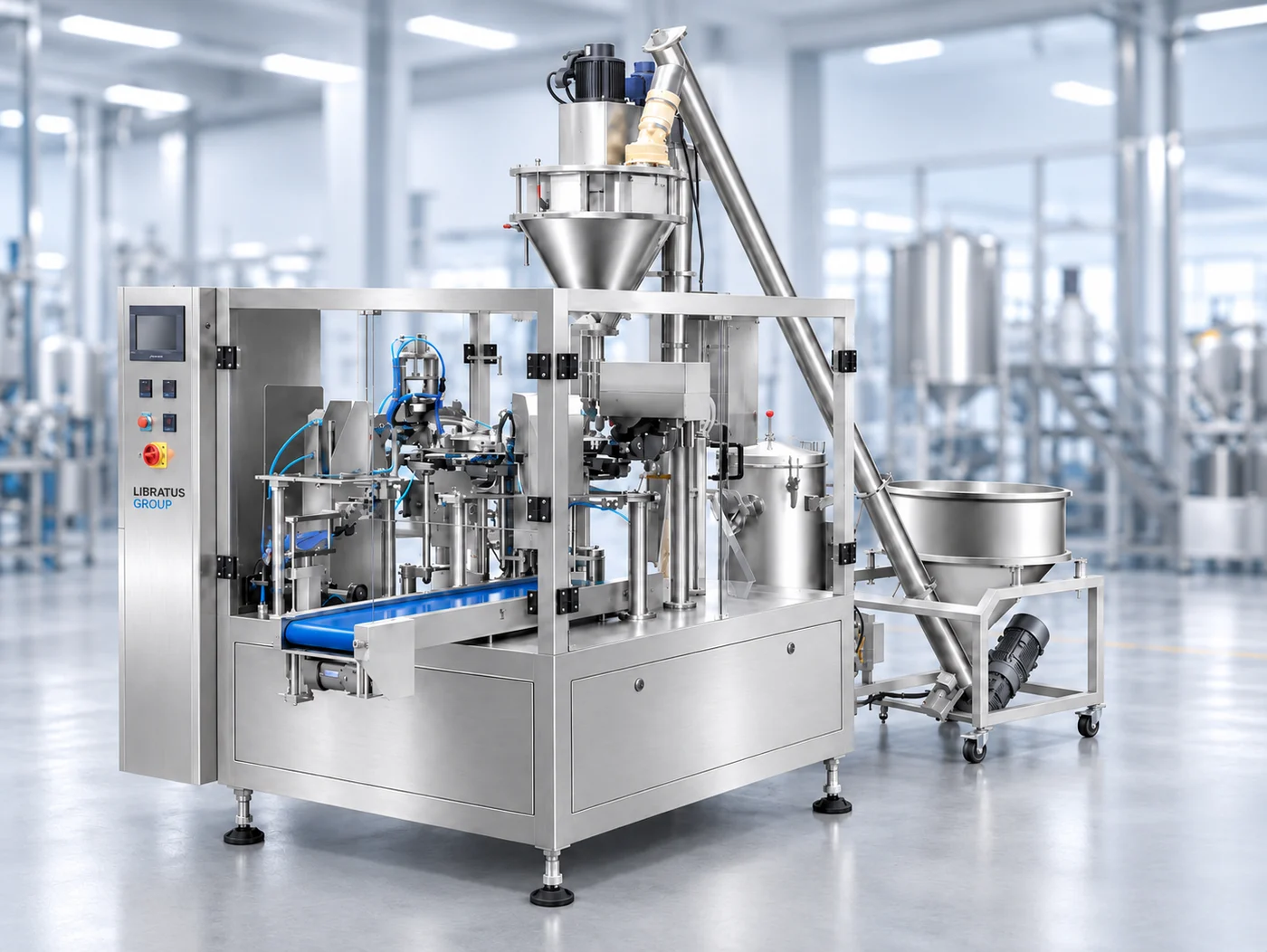
Volumetric and gravimetric dosing for powders a weigher cannot handle.
Explore capabilities: Auger fillers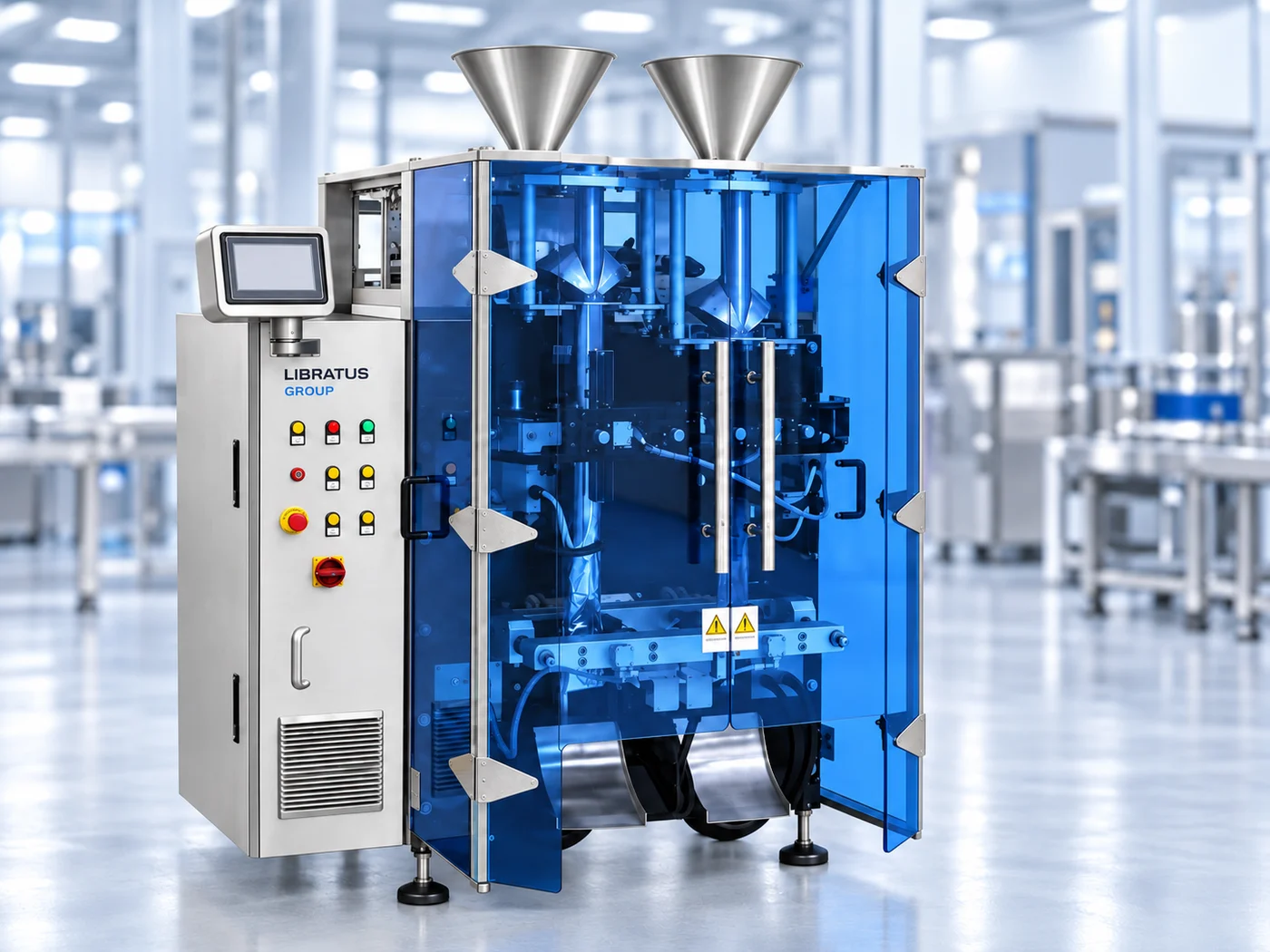
Form-fill-seal for pouches, quad-seal and flat-bottom bags.
Explore capabilities: VFFS baggers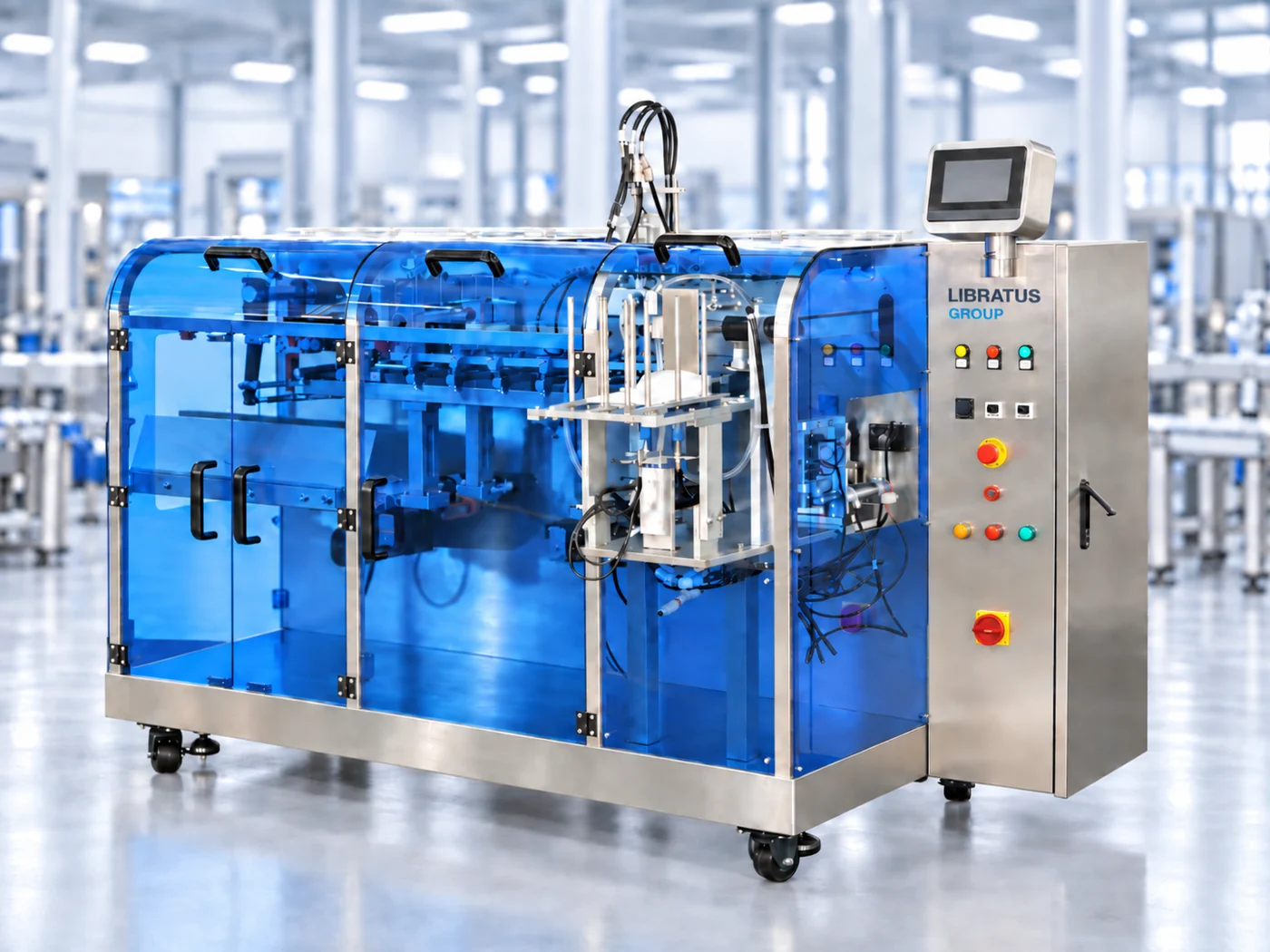
Mini doypack through eight-station rotary, gas flush and vacuum.
Explore capabilities: Premade pouch machines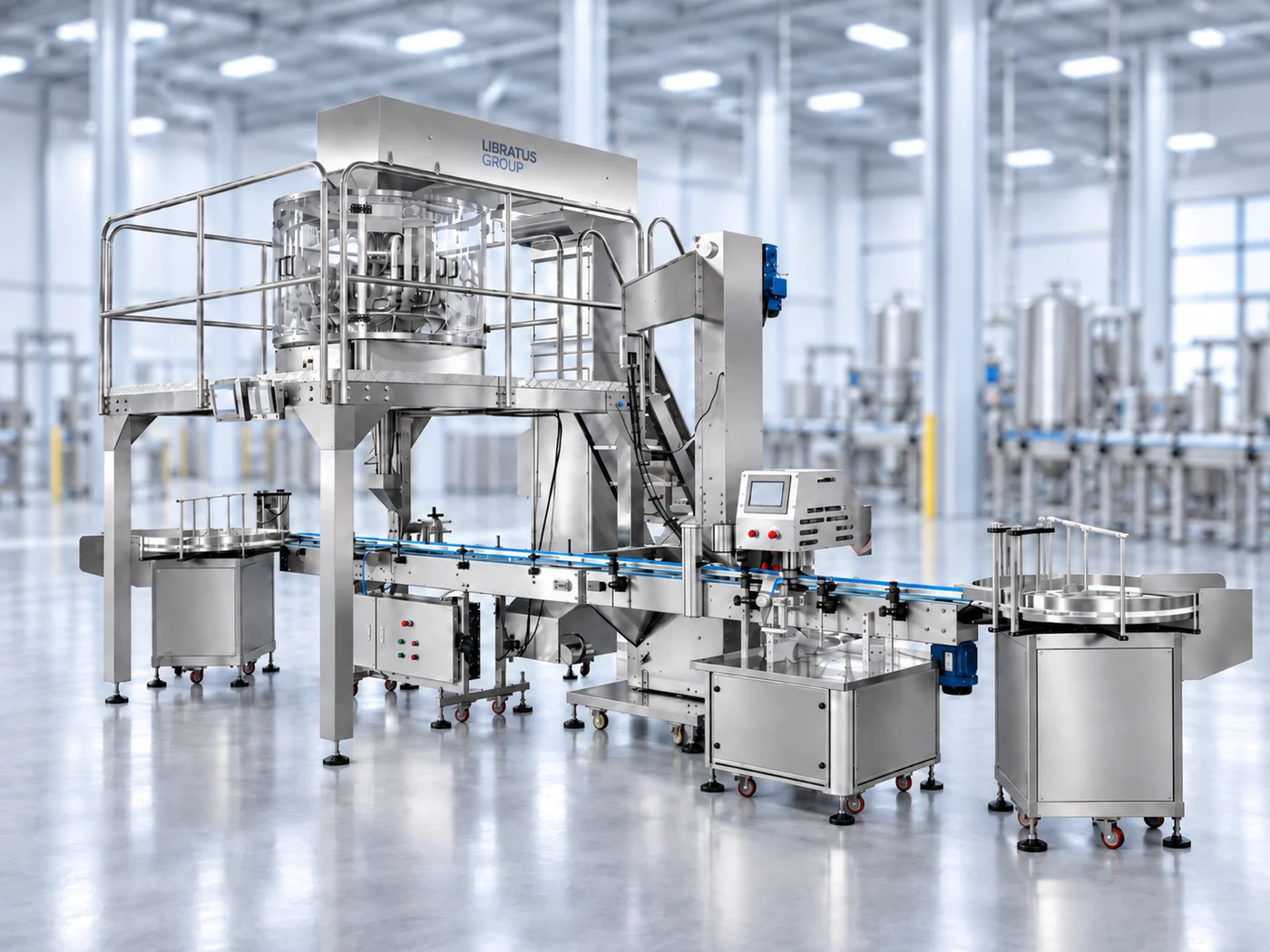
Enclosed dust-free transfer of powders, granules and whole pieces.
Explore capabilities: Conveying systemsIndustries
Checkweighing and metal detection have genuine application across a wide range of packaged-product sectors, though the case for each — and the configuration it needs — varies by product and process:
Not every product within these industries needs — or suits — checkweighing or metal detection; suitability comes down to pack type, line speed, product characteristics and what you're trying to verify.
Enquiry
Every checkweigher, metal detector or combination system we specify starts with your product and your line — not a fixed model number. Tell us about your pack, your throughput, your contamination risk and where the equipment needs to sit in your process, and we'll work through the configuration with you.
Back to the machine range