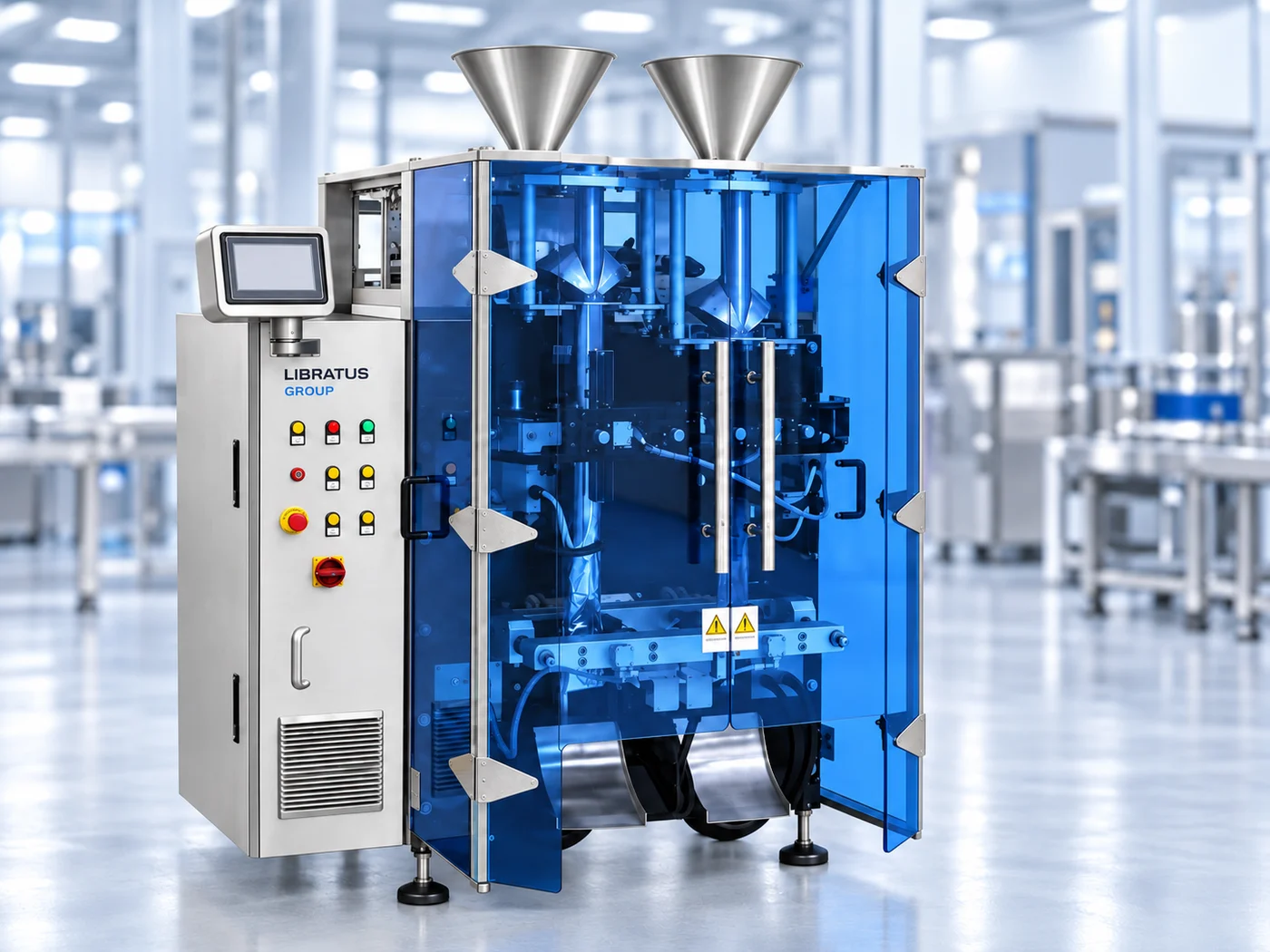
VFFS baggers
Form-fill-seal for pouches, quad-seal and flat-bottom bags.
Explore capabilities: VFFS baggers Get a quote
Weighing
Multihead weighing distributes product across multiple weighing channels, each holding a partial portion. The control system combines these partial weights to form the target portion. This approach can be valuable where required throughput, product variability or giveaway control justify the additional complexity of combination weighing over sequential per-channel weighing.
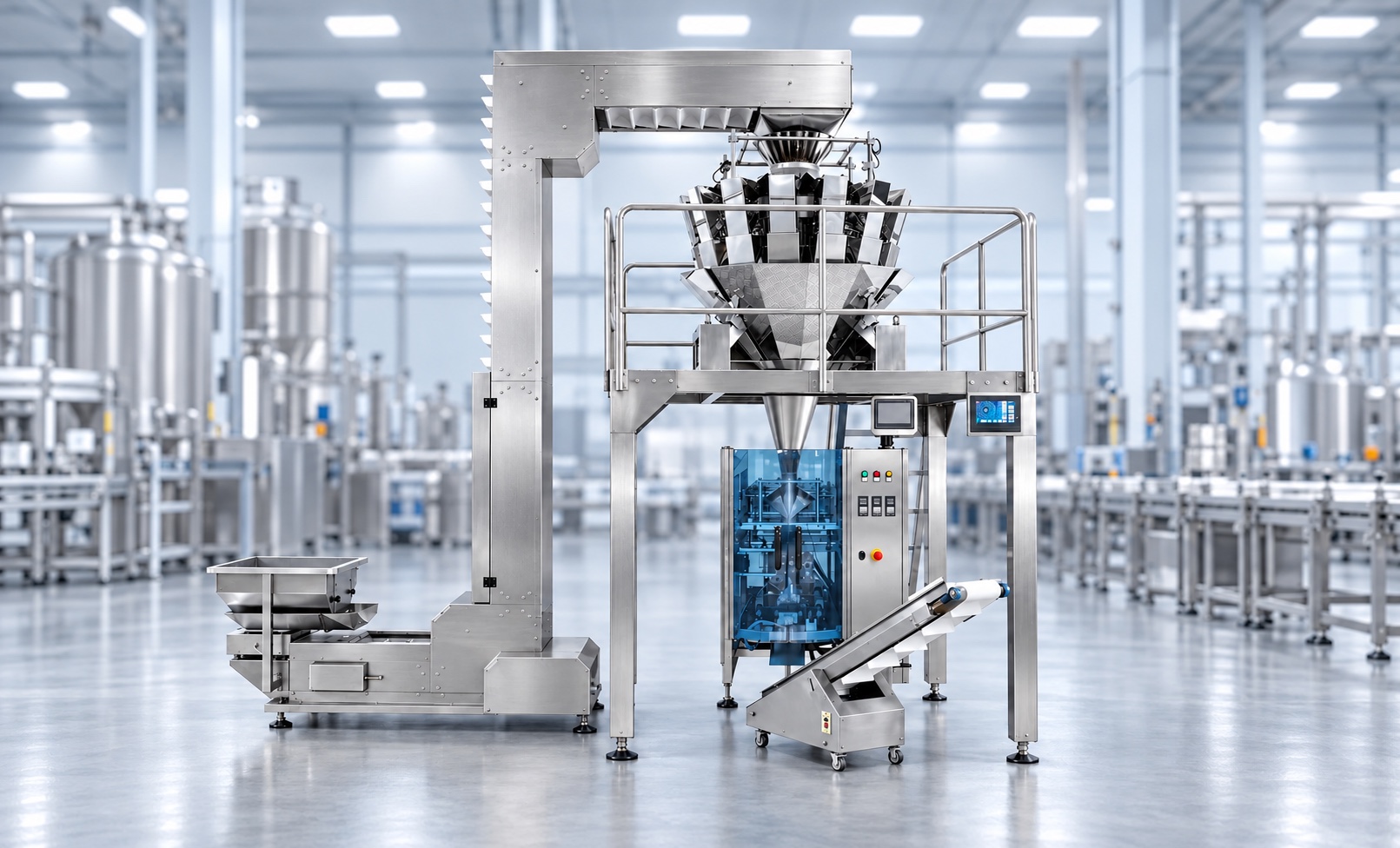
Compact ten-head configurations from USD 22,400
Systems built to USD 140,000
All figures USD, indicative, and confirmed by quotation. Other currencies converted at an indicative rate.
How it works
A Multihead Weigher distributes product from a central feed point across a ring of individual feeding channels. Each channel holds a partial portion in its own weigh hopper, measured by a dedicated load cell.
Rather than dosing a single stream directly to target, the control system continuously evaluates the available hopper combinations against the configured target weight and criteria, and selects the combination that best matches.
The selected hoppers discharge together to form the portion; the emptied hoppers refill and rejoin the next calculation cycle.
This combination logic is the structural difference from Linear weighing: instead of each channel weighing individually toward its own complete target portion, several partial loads are held simultaneously and the appropriate combination is selected.
Multihead systems involve more transfer points than a Linear system — from the distribution plate to the staging hopper, weigh hopper and collection chute.
Drop height, feeder amplitude, hopper surface and discharge path all affect how a product is handled through the machine, and each can influence the configuration selected.
Fragile, sticky, irregular and frozen products may be accommodated with appropriately specified configurations.
Typical products include snacks and confectionery; nuts and dried fruit; coffee beans; grains and suitable granular products; pet food; frozen and IQF pieces, subject to configuration; and other suitable whole-piece or granular products.
Linear weighing may meet the requirement with a simpler machine architecture where:
Selection note
Product examples are illustrative: suitability depends on behaviour through the feed system and weigh hoppers. Speed, accuracy and giveaway benefits remain application- and configuration-dependent.
Configuration
A Multihead system is configured around your specific requirements, including:
Accuracy, repeatability, throughput, giveaway and usable weight range are determined by the specific configuration selected — including head count, hopper capacity, product characteristics and target weight.
Libratus does not publish generic model performance figures as a family-wide specification because achievable performance varies meaningfully with product and configuration.
These parameters are confirmed during specification for the application.
Qualification
The documentation supplied is confirmed during specification and depends on the selected machine, destination market, installation/use and customer requirements.
To specify the right Multihead configuration, we typically need:
If physical assessment is needed, Libratus will advise on the appropriate route during specification.
Line integration
Multihead Weighers commonly integrate with:
Not the right fit?
Related machines
Form-fill-seal for pouches, quad-seal and flat-bottom bags.
Explore capabilities: VFFS baggers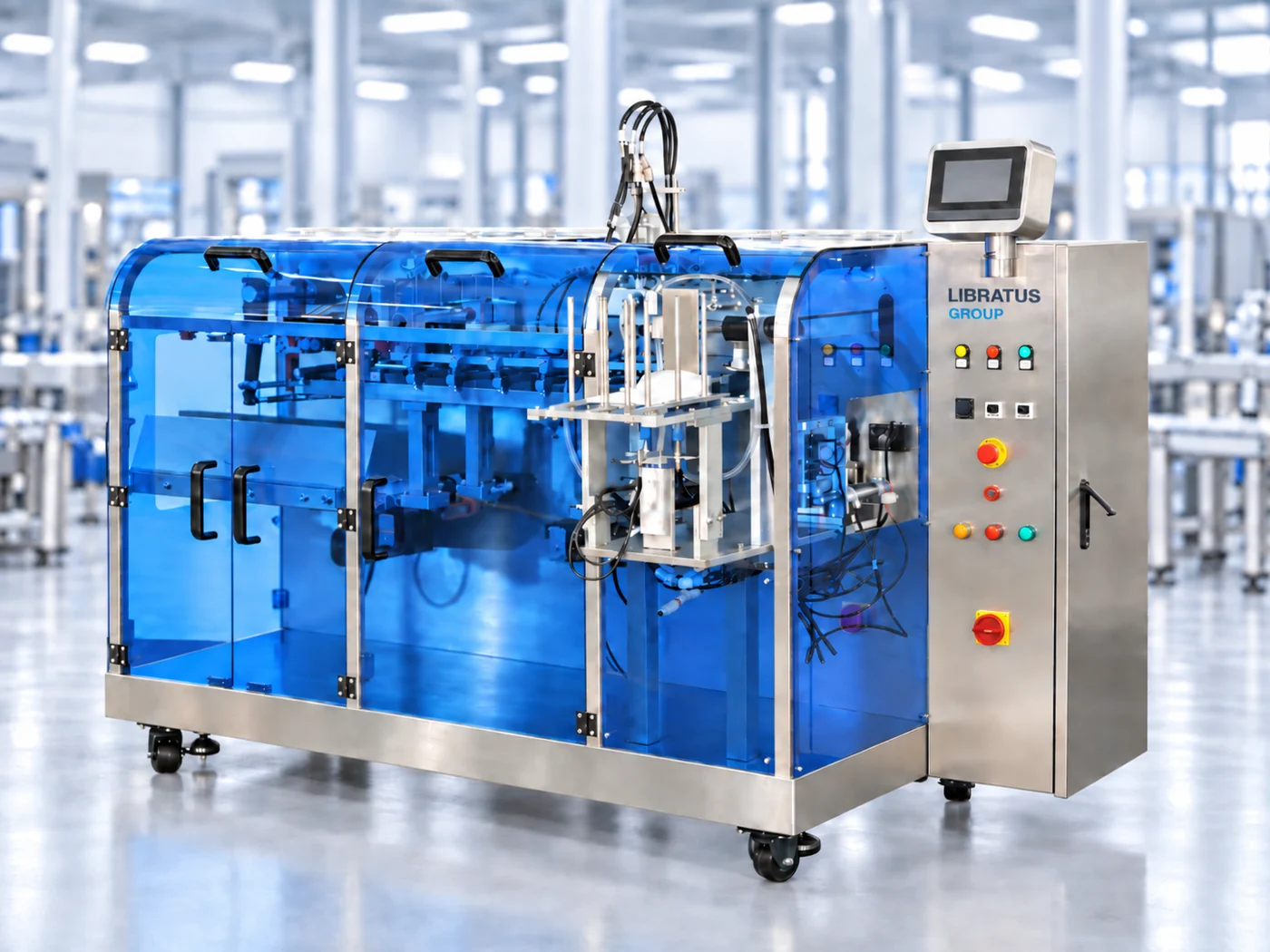
Mini doypack through eight-station rotary, gas flush and vacuum.
Explore capabilities: Premade pouch machines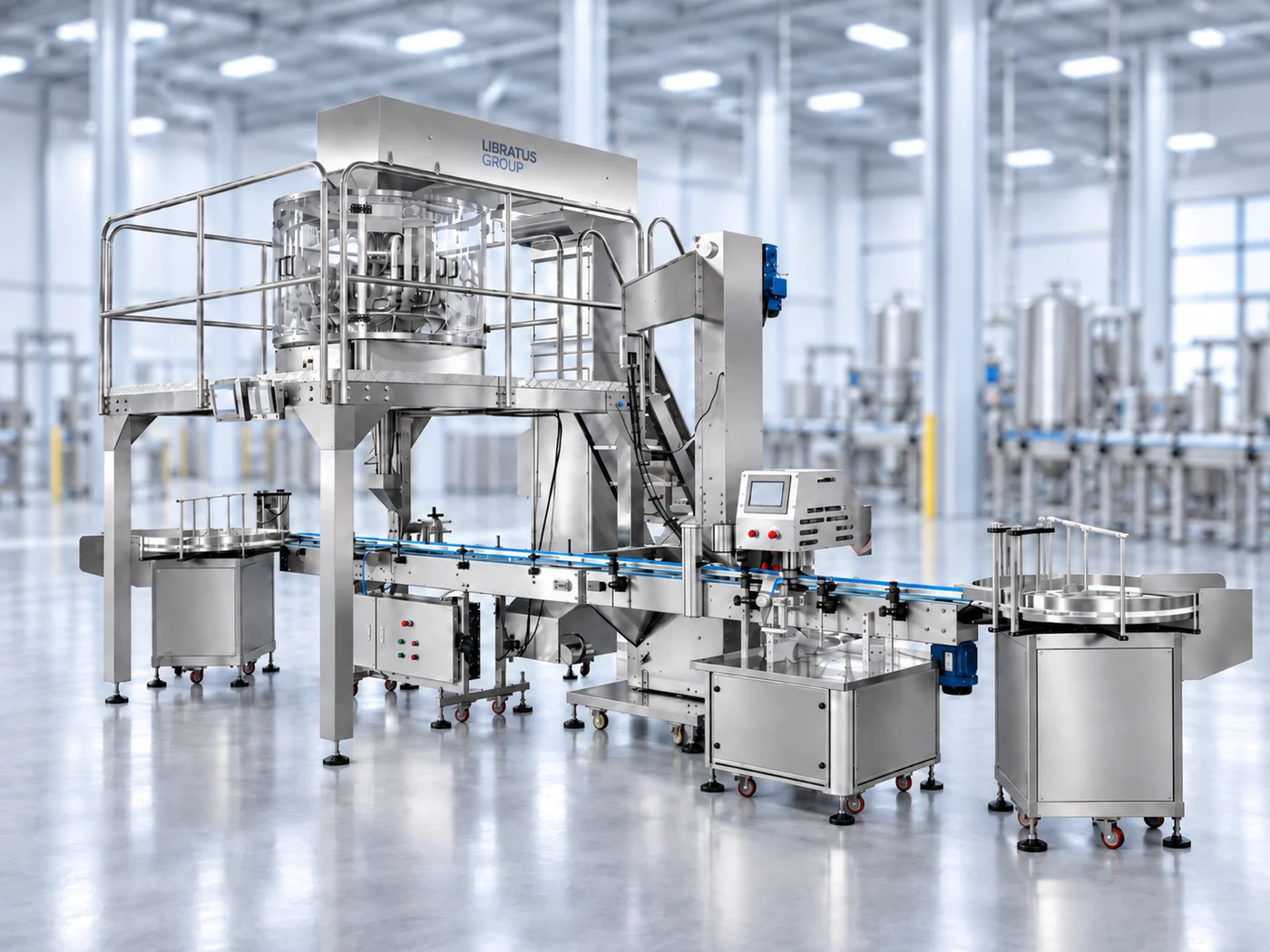
Enclosed dust-free transfer of powders, granules and whole pieces.
Explore capabilities: Conveying systems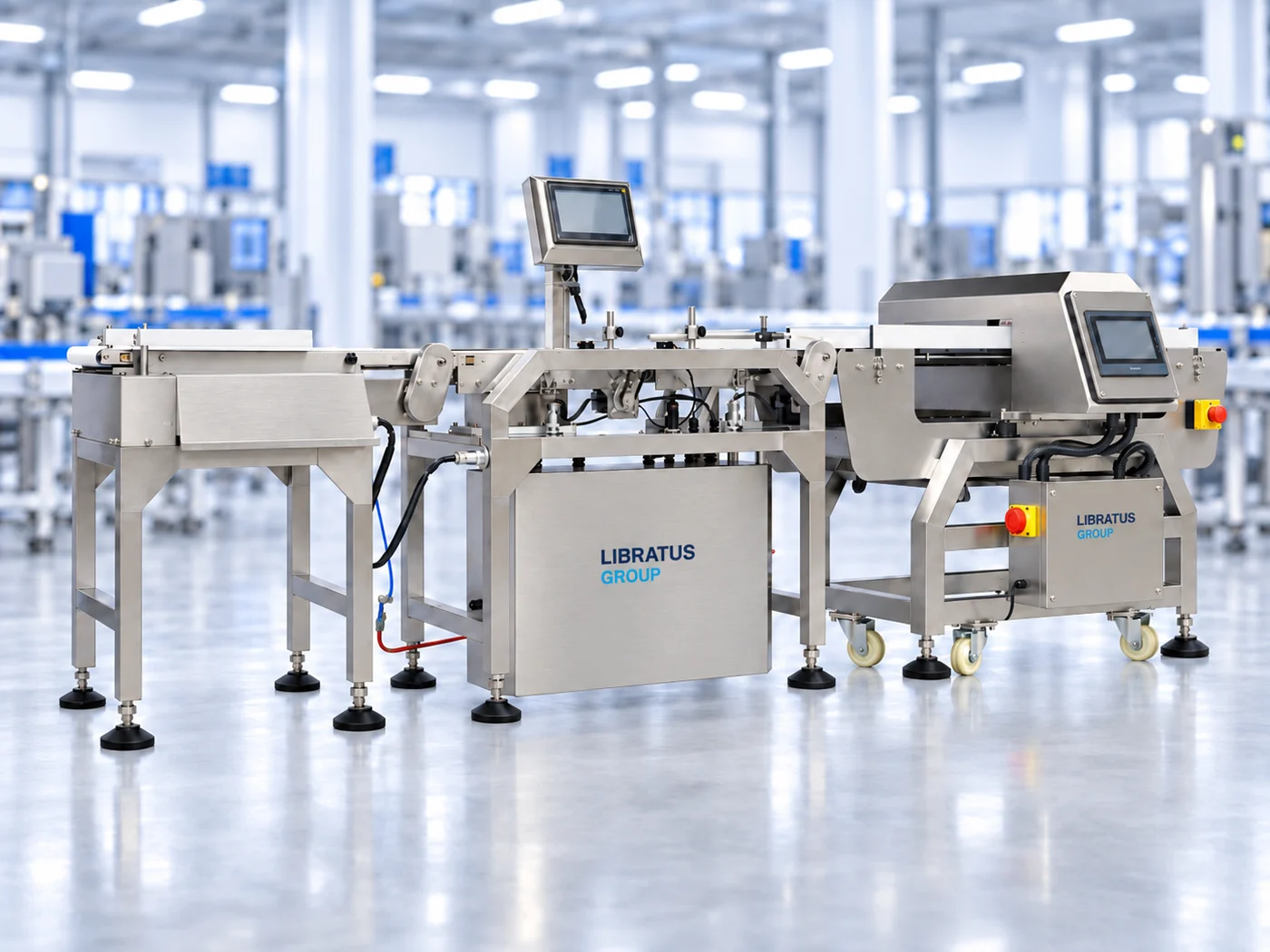
In-line weight verification and metal detection, standalone or combined, integrating upstream and downstream.
Explore capabilities: Checkweighing and metal detectionIndustries
A primary connection for coffee beans and suitable tea products.
View Coffee & Tea →A primary connection for snacks, confectionery, nuts and dried fruit.
View Snacks & Confectionery →A primary connection for suitable granular grain and rice products.
View Grains, Rice & Dry Foods →A primary connection for pet food.
View Pet & Animal Products →A primary connection for frozen and IQF pieces, subject to configuration.
View Frozen & IQF Products →A connection where the specific product is suitable.
View Supplements & Nutrition →A connection only where the material genuinely behaves as a weighable granular or coarser product.
View Ingredients & Powders →A conditional connection, where product geometry, abrasion and feeding behaviour are confirmed during specification.
View Industrial & Non-Food Products →Enquiry
Tell us about your product, target weight, required output and any multi-component or high-throughput requirements. Request a quote and we'll confirm whether combination weighing is the appropriate method for your line.
Back to the machine range