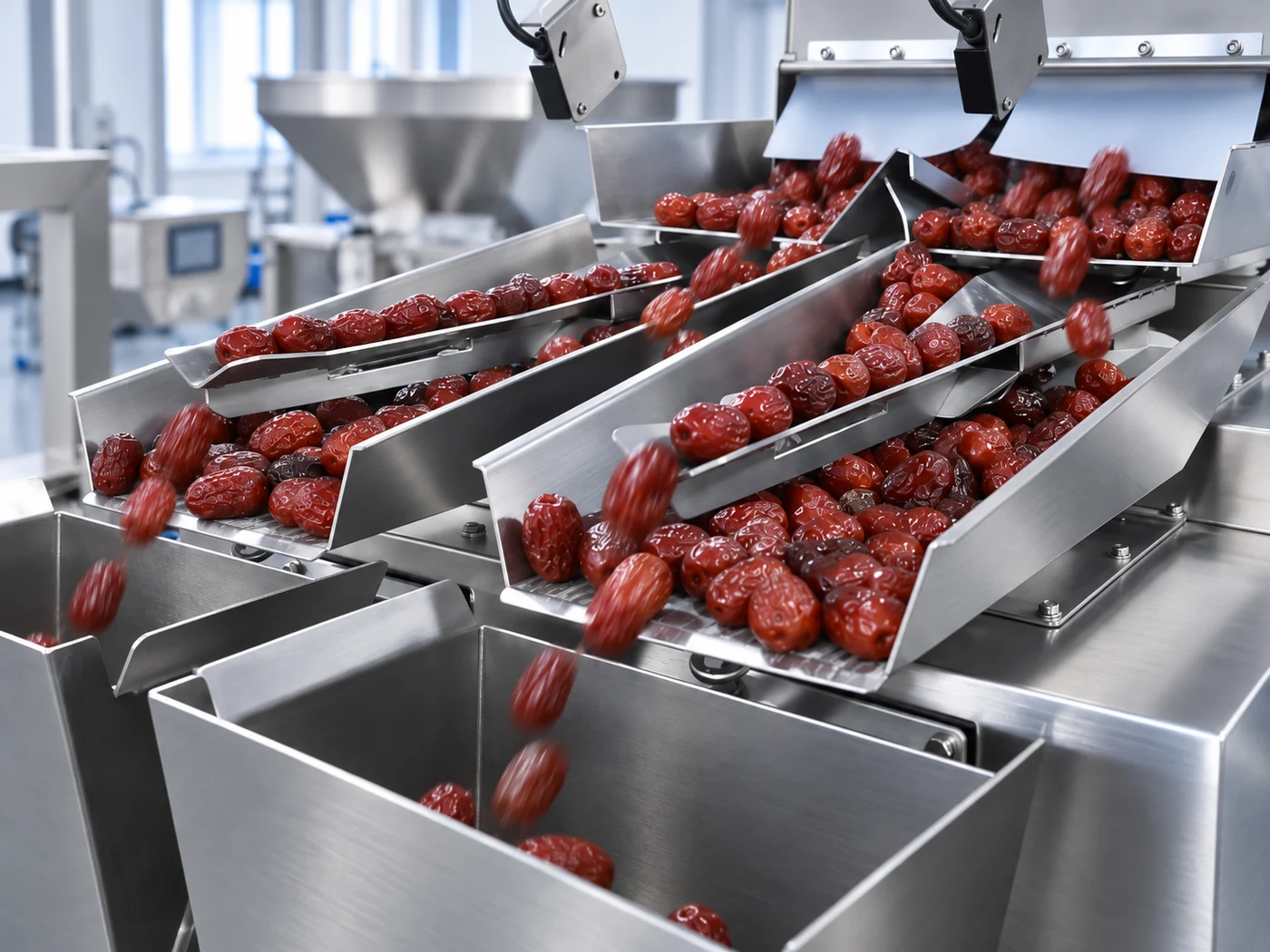
"Whole pieces" describes a physical form, not a single handling behaviour.
A wrapped sweet, biscuit, frozen food piece, pet treat, dried-fruit piece or coated tablet may all be handled as individual pieces, but they can move, weigh and pack very differently.
The appropriate machinery depends on what each product actually does through feeders, hoppers, conveyors and packaging equipment — including its dimensions, shape, piece-weight variation, fragility, surface condition and feeding behaviour.
Whole pieces are products handled as discrete individual units rather than as fine powders or loose granular bulk.
The important engineering variables are not the category names themselves.
They are the characteristics of the individual pieces and how those pieces behave together during feeding, weighing and transfer.
Why piece behaviour matters more than piece category
Two products within the same broad whole-piece category can require very different machine configurations.
Selection therefore follows the actual product and application rather than the product name alone.
Typical products in this group
Peanuts
Cashews
Almonds
Hazelnuts
Macadamias
Pistachios
Mixed nuts
Dried fruit
Raisins
Confectionery
Gummies
Chocolate
Biscuits
Crackers
Potato chips
Extruded snacks
Puffed snacks
Popcorn
Croutons
Pasta
Noodles
Bakery pieces
Pet treats
Jerky
Frozen vegetables
Frozen dumplings
If your product isn't listed, it almost certainly behaves like one that is. Send it and we'll tell you which machine handles it.
Key handling challenges
What affects the machinery choice
Relevant factors can include:
individual piece dimensions
shape
piece-weight variation
fragility
brittleness
stickiness
oils or coatings
moisture
tendency to nest or interlock
feeding consistency
temperature where relevant
target weight
target count where relevant
required output
Selection therefore follows the actual product and application rather than the product name alone.
Dimensions & piece-weight variation
Piece dimensions and shape affect how product moves through feeders, hoppers and discharge paths — compact, regular pieces can behave differently from elongated, curved, flat or irregular pieces, or pieces that overlap, nest or interlock. Piece-weight variation is a separate consideration: products with similar dimensions can still differ significantly in mass from piece to piece, which can influence the appropriate weighing architecture and how close the system can operate to the required target.
Fragility & breakage
Relevant factors include drop height, feeder action, vibration, hopper geometry, discharge, transfer points, impact between pieces or against equipment surfaces, product accumulation and repeated handling. The handling path can be specified to reduce unnecessary mechanical stress, but no configuration should be assumed to guarantee zero breakage, cracking, fines or product damage — any handling claim stays tied to the actual product and configuration.
Sticky, oily & coated surfaces
Stickiness, oil, coatings and moisture may influence feeder movement, hopper discharge, product release, buildup on contact surfaces, weighing consistency, cleaning and changeover. Different feed, surface and discharge configurations may be appropriate — no one surface treatment, feeder type or hopper design should be assumed to solve every sticky-product application.
Nesting & interlocking
Elongated, curved and irregular pieces may overlap, nest, hook together or interlock, and can arrive at a feeder in unstable orientations — affecting separation, feeding and discharge. Where relevant, the feed and weighing arrangement needs to account for this rather than assuming every piece will arrive separately and predictably.
Frozen & temperature-sensitive
Low product temperature, condensation, frost or ice, surface moisture, stickiness and brittleness can all change how a frozen piece behaves, along with cleaning requirements and effects on machinery. Not every frozen product behaves the same way — piece size, surface condition, coating, temperature and production conditions all need considering for the actual application.
Likely machinery routes
Where to start looking
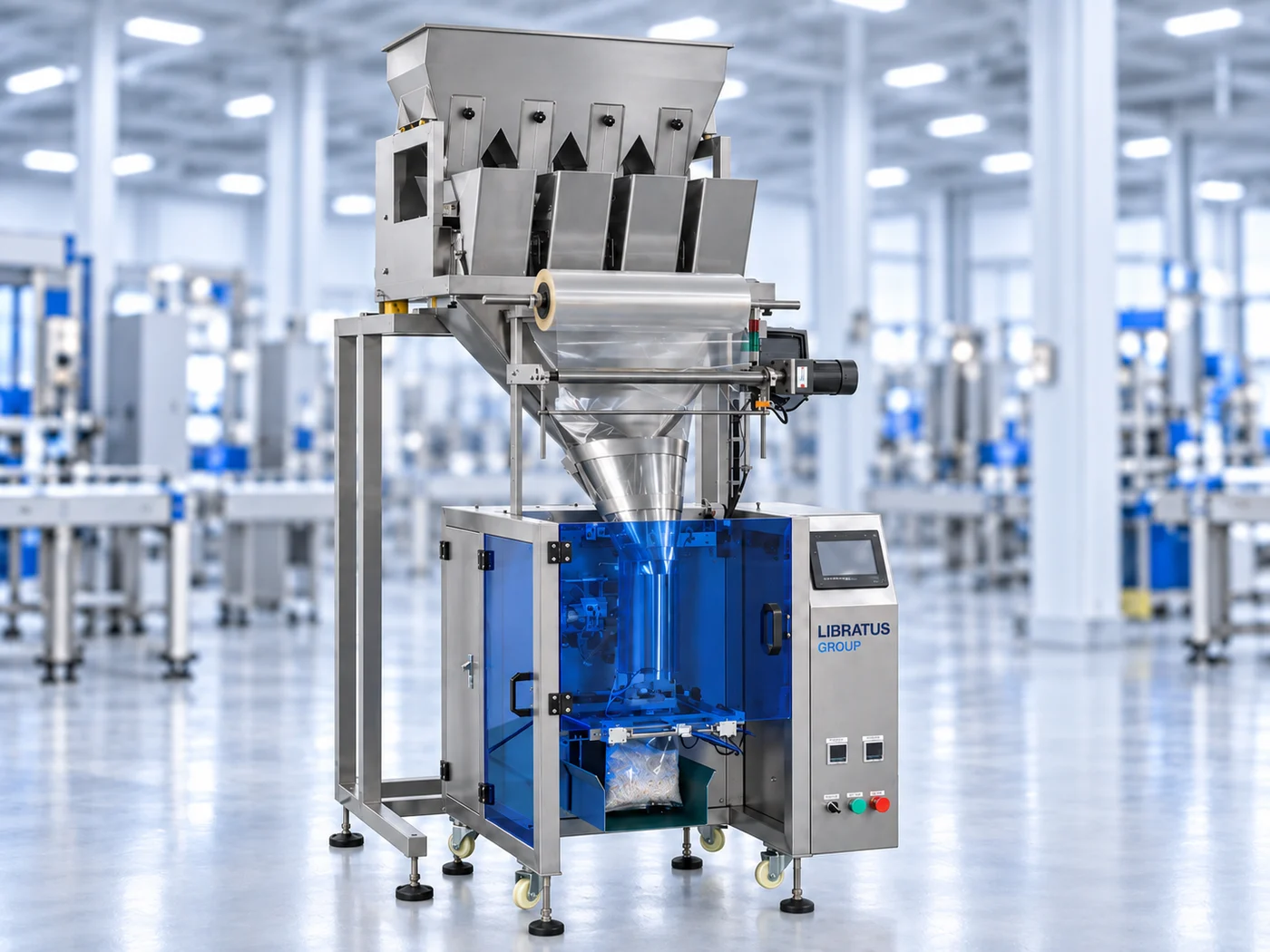
Linear weighers
Can be suitable for whole-piece products where the material feeds consistently and the application is well matched to a linear weighing architecture — not an inferior or low-end approach.
Useful where piece-to-piece weight variation means combination weighing helps meet the target weight or count with acceptable giveaway. Fragile, sticky, irregular and frozen products may be accommodated with appropriately specified configurations.
Moves pieces between locations rather than controlling how they're presented to the next stage — selection depends on piece dimensions, stability, orientation, fragility and required transfer rate.
One downstream packaging route alongside premade pouch and rigid containers or trays. Neither is inherently the more premium choice — the format follows product protection, presentation and target fill.
An alternative pack-forming route to VFFS — mini doypack through eight-station rotary — chosen on pack format and presentation rather than the weighing method.
Can be used downstream to verify finished-pack weight and support process monitoring. A checkweigher does not replace the primary weighing or dosing stage.
The decision between Linear and Multihead weighing should be based on factors such as:
individual piece-weight variation
dimensions and shape
feeding consistency
fragility
stickiness
target weight
required output
giveaway sensitivity
cleaning/changeover requirements
operational complexity
downstream integration
Deeper application guidance
For engineering review
Linear weighing
Linear weighers can be suitable for whole-piece products where the material feeds consistently and the application is well matched to a linear weighing architecture.
Selection depends on factors including:
product dimensions and shape
piece-weight variation
feeding behaviour
target weight
required output
allowable giveaway
fragility
cleaning and changeover
integration with the rest of the line
Linear weighing should not be regarded as an inferior or low-end approach.
It is a different architecture and can be the appropriate engineering choice where combination weighing does not provide a meaningful benefit for the application.
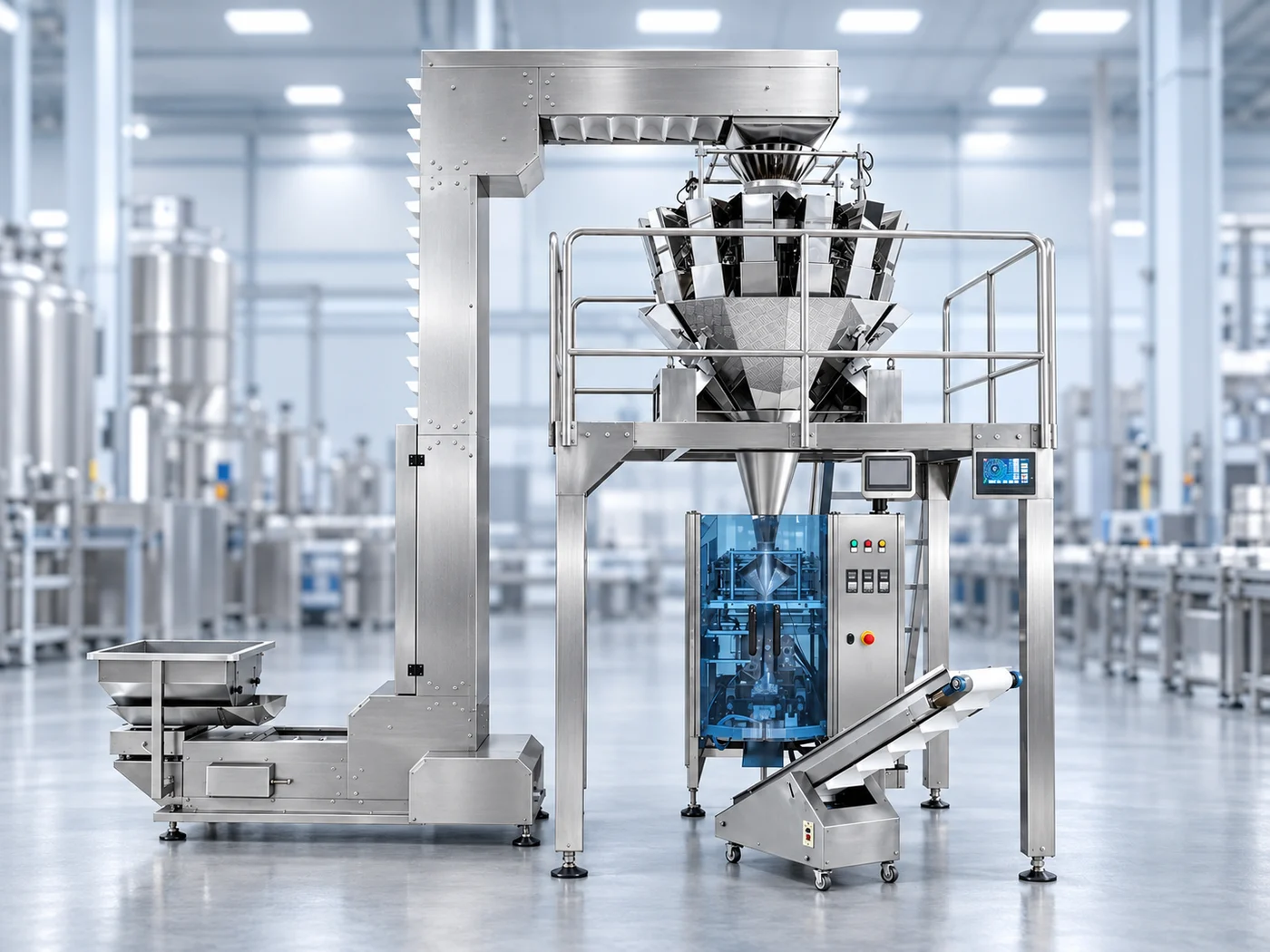
Multihead weighing
Multihead weighers distribute product across multiple weigh hoppers and select combinations of available hopper weights to build the required discharge.
This architecture can be useful where variation between individual pieces means combination weighing offers an advantage for the target weight, required output or giveaway objective.
Fragile, sticky, irregular and frozen products may be accommodated with appropriately specified configurations.
That suitability is not automatic.
Feeding method, hopper configuration, surfaces, transfer geometry and product movement all need to be matched to the actual application.
A greater number of weigh heads does not by itself make a system better.
The appropriate configuration depends on the product and production requirement.
Choosing the weighing method
The decision between Linear and Multihead weighing should be based on factors such as:
individual piece-weight variation
dimensions and shape
feeding consistency
fragility
stickiness
target weight
required output
giveaway sensitivity
cleaning/changeover requirements
operational complexity
downstream integration
Neither architecture is the default for all whole-piece products.
The correct approach is established from the combination of product behaviour and production requirement.
Weight versus count
Some applications are controlled primarily by:
target net weight
target piece count
or a combination of both objectives
Where individual pieces vary in weight, a fixed count does not necessarily produce a fixed net weight.
Likewise, a fixed net weight does not necessarily produce the same number of pieces in every pack.
The relevant commercial and regulatory requirement should therefore be established during specification.
Where dedicated counting technology is required, the appropriate method is determined for the application rather than assumed from the whole-piece category.
Conveying and presentation
Conveying and feeding perform different functions.
Conveying moves pieces between locations.
Feeding or metering controls how product is presented to the next stage.
Potential conveying methods across the wider category can include:
belt conveyors
incline or cleated conveyors
bucket or Z-type elevation
indexing or controlled-transfer arrangements
other suitable mechanical systems
Selection depends on factors including:
piece dimensions
stability
orientation
fragility
stickiness
required transfer rate
horizontal distance
elevation
transfer geometry
accumulation requirements
upstream equipment
downstream equipment
Where fragile products are involved, drop heights, transfer points and changes in product movement should form part of the specification.
No single conveyor architecture is appropriate for every whole-piece application, and the page should not be interpreted as a universal Libratus offering of every listed technology.
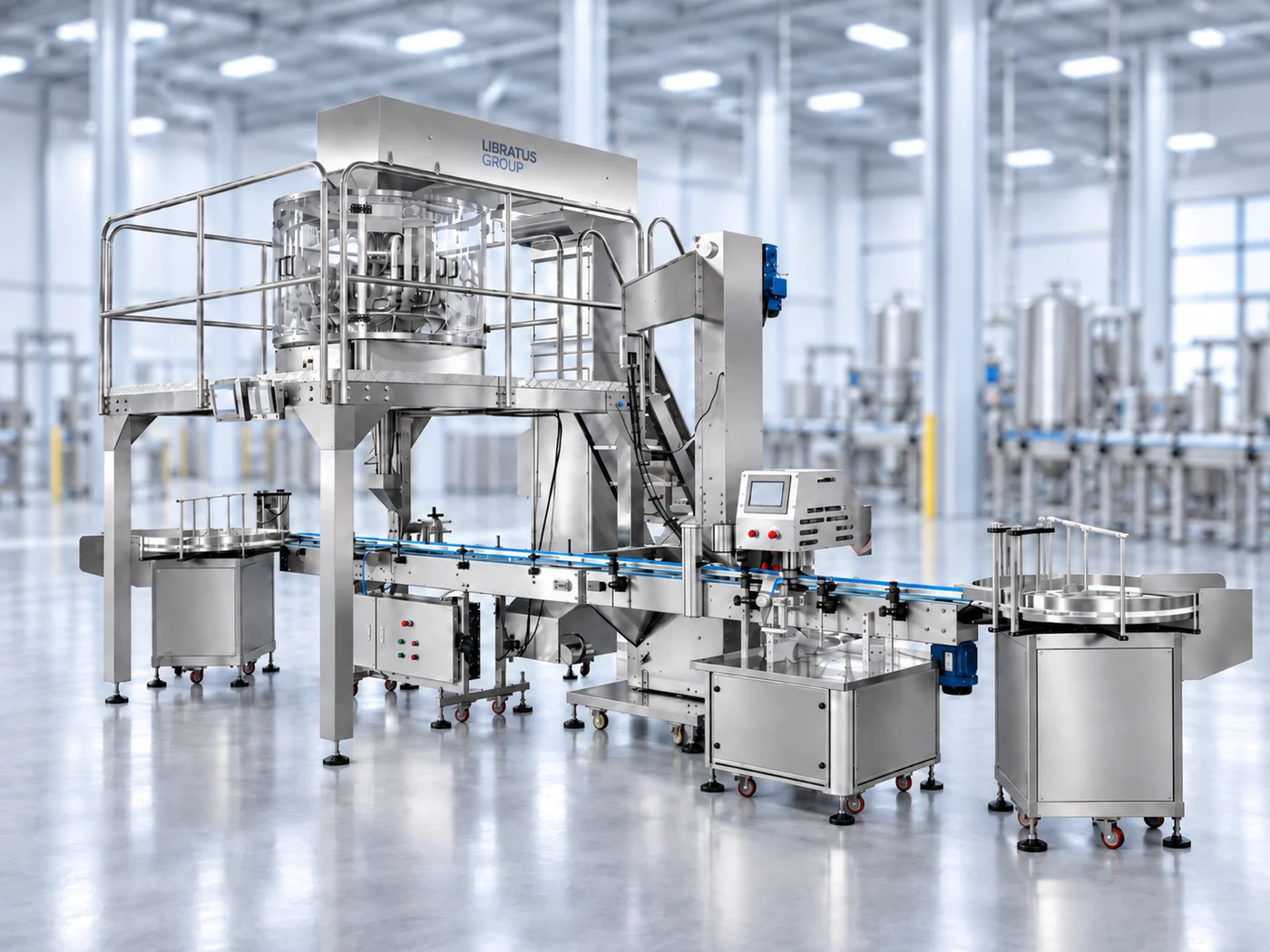
Packaging-machine integration
The weighing or dosing system must integrate with the required pack format.
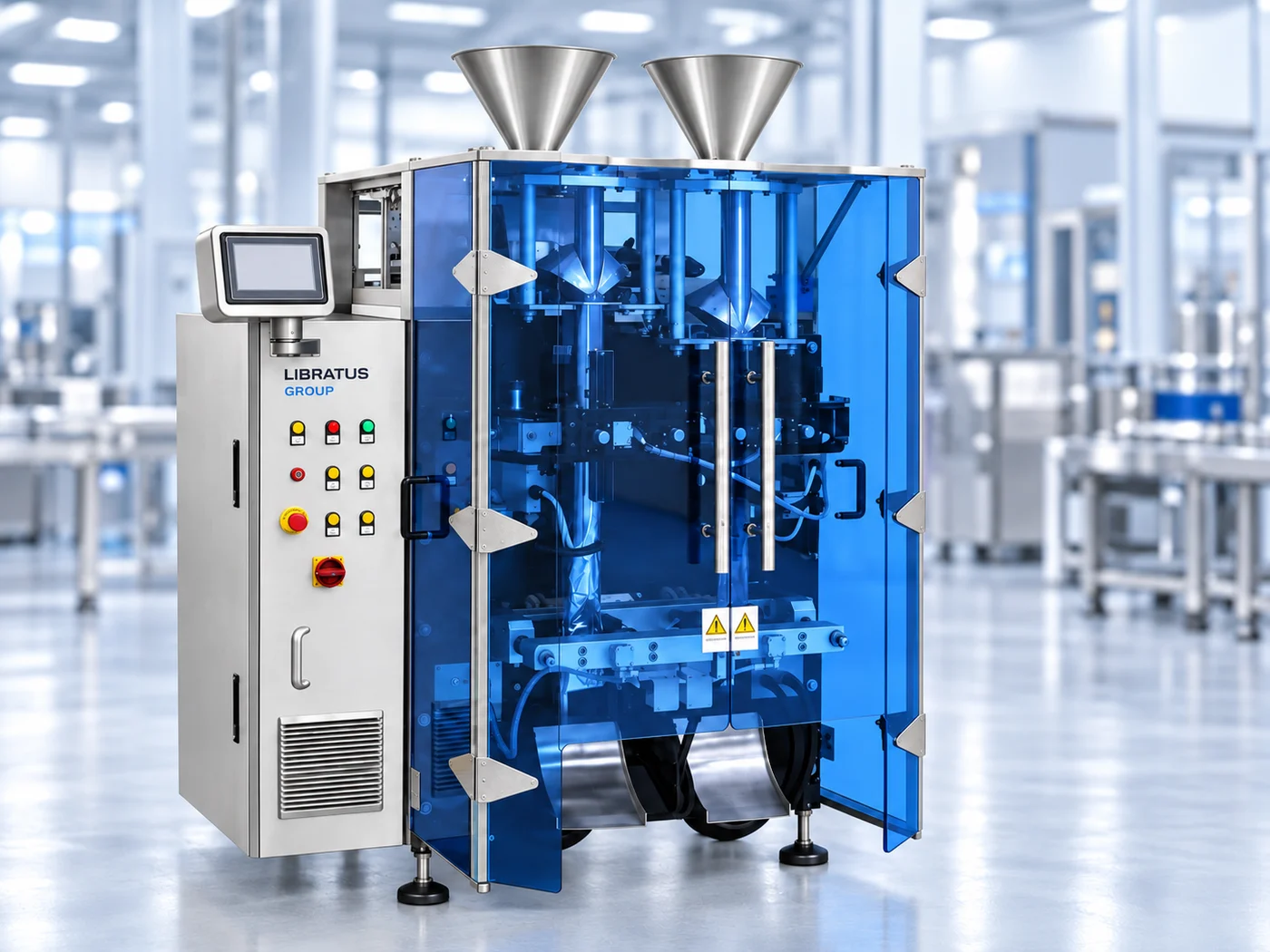
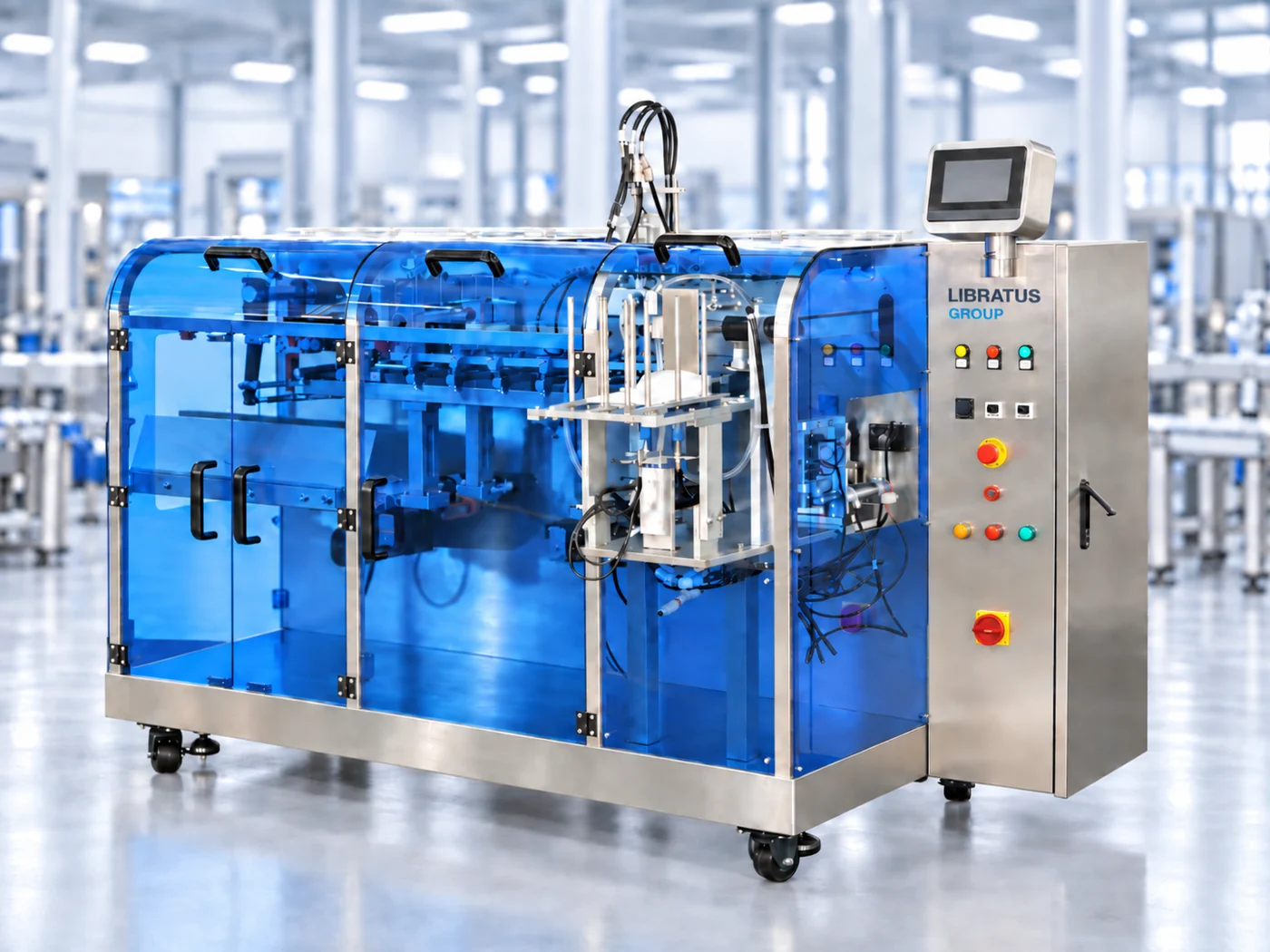
Depending on the application, this may include VFFS baggers , Premade pouch machines , rigid containers, trays or other appropriate downstream handling.
The weighing decision and the pack-format decision are separate engineering choices.
Neither VFFS nor premade pouch machinery should be treated as inherently superior or more premium.
The correct format depends on:
product protection
pack dimensions
presentation
target fill
downstream handling
production arrangement
Cleaning, changeover and product contact
Cleaning requirements depend on the product and production environment.
Relevant considerations can include:
crumbs
fines
coatings
oils
seasoning
residue
allergens where relevant
cross-contamination
product-change frequency
access to product-contact areas
dry or wet cleaning requirements
Product-contact materials and construction are also application-specific.
No whole-piece application should automatically be assumed to require:
one stainless-steel grade
one surface finish
washdown
CIP
a particular IP rating
tool-less removal
These requirements are established during specification.
Checkweighing
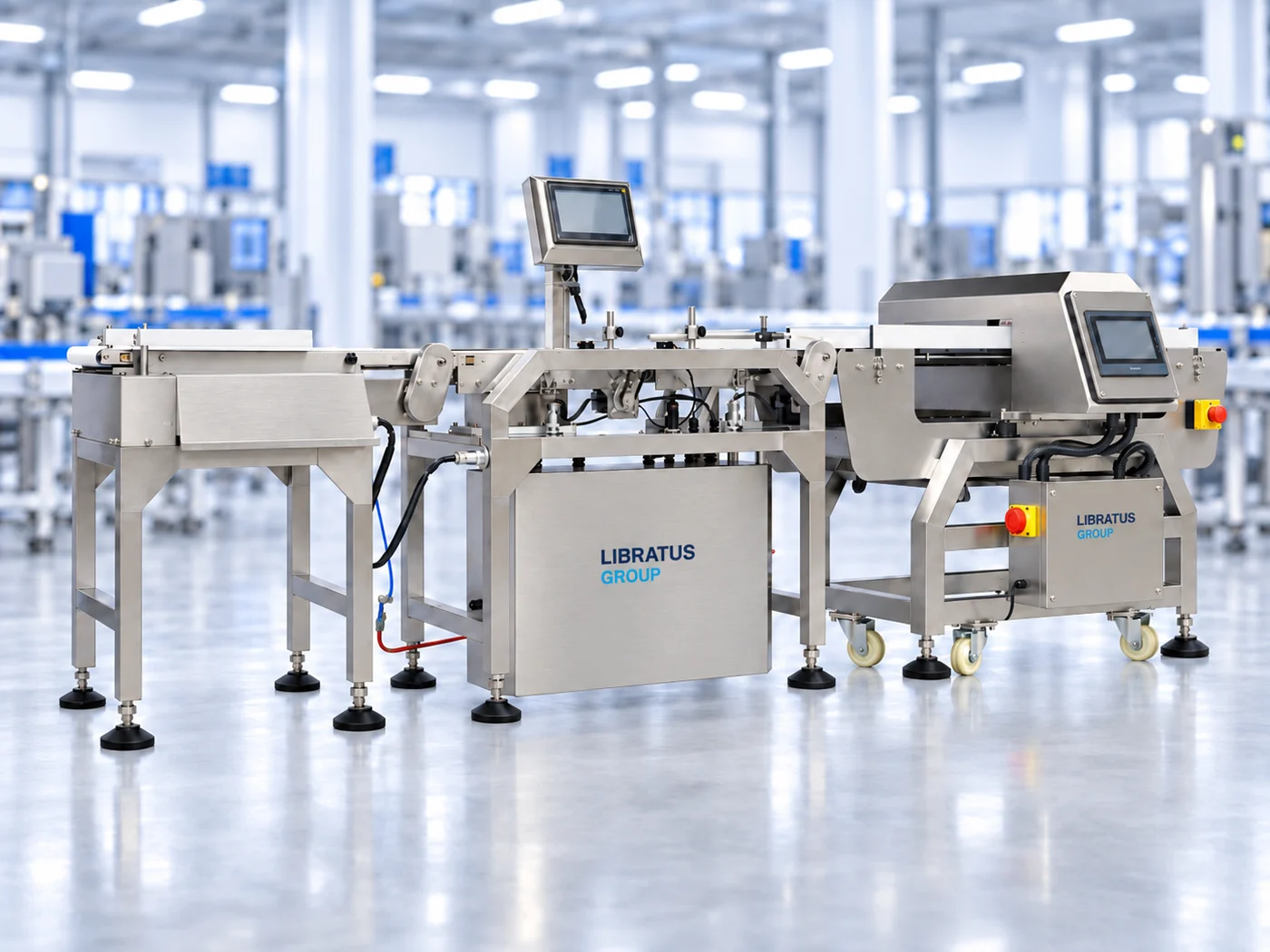
A Checkweigher can be used downstream to verify finished-pack weight and support process monitoring.
Where specifically configured, weight information may also support correction or feedback elsewhere in the line.
A Checkweigher does not replace the primary weighing or dosing stage.
Whether checkweighing is required, and any applicable metrology requirements, depend on the application and destination market.
Performance and giveaway
There is no universal speed, accuracy, giveaway or product-size figure for whole-piece products.
Performance depends on the combination of:
individual piece-weight variation
piece dimensions
product shape
feeding consistency
fragility
stickiness
target weight
target count where relevant
required output
weighing architecture
machine configuration
downstream acceptance
Combination weighing can be valuable where selecting between multiple available portions helps meet the required target with acceptable giveaway.
The actual commercial benefit depends on the product and application and should not be represented by one universal percentage.
Qualification
What we need from you
Useful application information includes:
product name and description
typical piece dimensions
piece shape
individual piece-weight range where known
degree of variation
fragility
stickiness
oils or coatings
moisture
whether the product is frozen, chilled or ambient
fines or crumb generation
tendency to nest or interlock
target fill weight
target count where relevant
required throughput
giveaway sensitivity
intended pack or container
pack or container dimensions where known
upstream equipment
downstream equipment
conveying or elevation requirements
cleaning and changeover requirements
allergen or cross-contamination considerations where relevant
production environment
destination market
available layout information
photographs or video where useful
If physical assessment is needed, Libratus will advise on the appropriate route during specification.
The documentation supplied is confirmed during specification and depends on the selected machine, destination market, installation/use and customer requirements. See what a technical file typically contains →
Frozen & IQF Products can include individually frozen food pieces whose temperature, surface condition and fragility need to be considered.
Coffee & Tea may include whole coffee beans and other discrete products where piece behaviour is relevant.
Grains, Rice & Dry Foods can include larger discrete products where whole-piece handling logic genuinely applies.
Supplements & Nutrition may include tablets, capsules or other discrete formats where appropriate.
Industrial & Non-Food Products can include suitable discrete items whose handling requirements should be established from their actual physical characteristics.
The product’s behaviour remains the starting point regardless of industry.
Tell us what you are packaging, the typical piece size and shape, how much individual pieces vary, whether the product is fragile, sticky, coated or frozen, the target weight or count, required output and intended pack or container.
Libratus will use that information to determine the appropriate weighing, conveying and packaging configuration.