Hardware, components and other irregular or non-food solids need to be specified from their actual physical characteristics — not from assumptions carried over from food packaging.
Why non-food solids need application-specific assessment
"Irregular" and "non-food" do not describe one machine-selection problem.
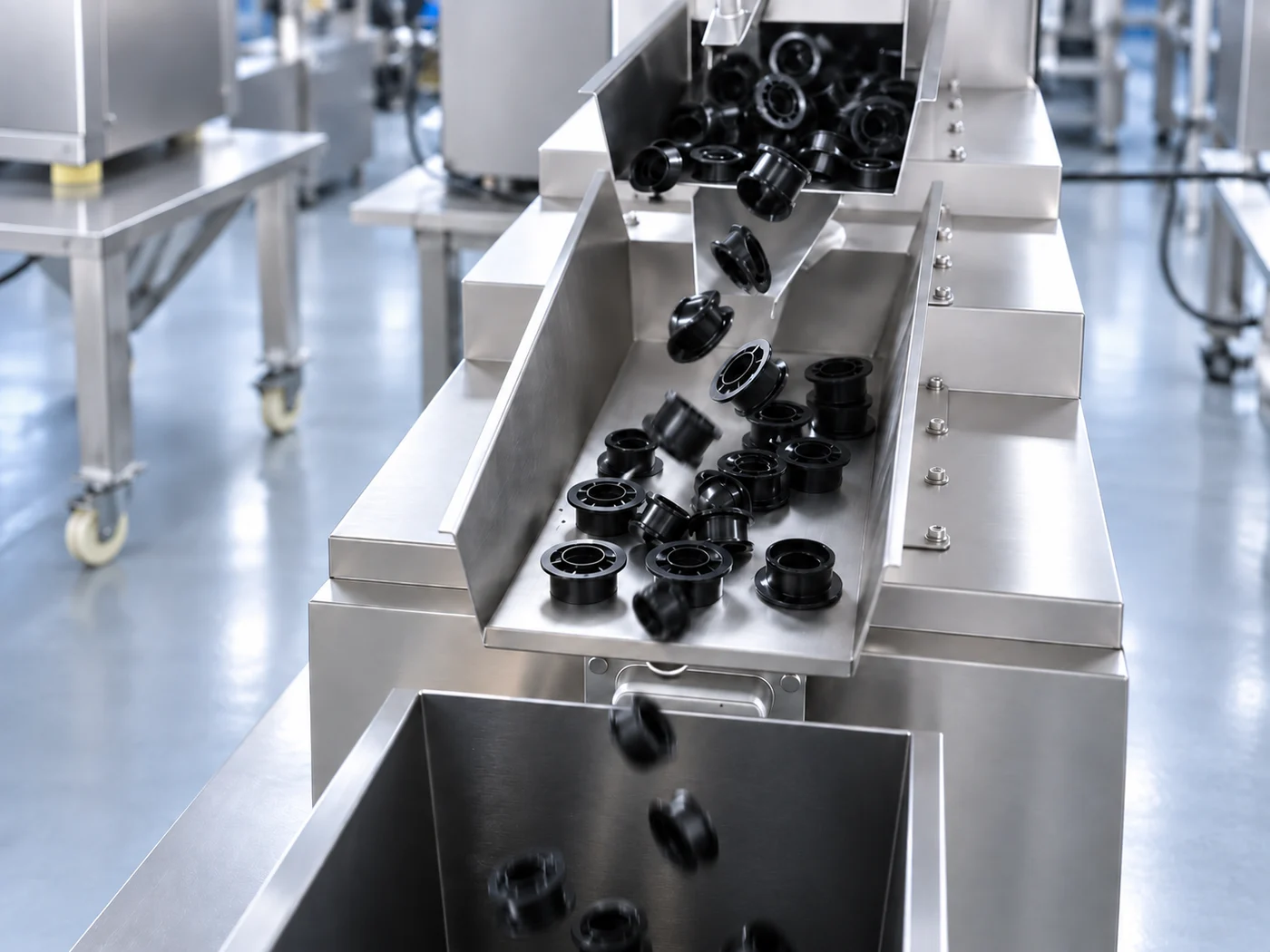
A bag of steel washers, a batch of moulded plastic parts and a container of abrasive mineral pieces can each require very different equipment even though all three may appear under the same broad category.
The important variables are the product's actual physical and environmental characteristics: size, shape, density, weight variation, abrasiveness, sharpness, flow behaviour, fragility, static, chemical compatibility and the conditions in which the equipment will operate.
Machine selection therefore starts with the real application rather than the product category.
Key handling challenges
What affects the machinery choice
Relevant factors can include:
individual piece dimensions
shape and irregularity
individual piece-weight variation
bulk density where relevant
flow behaviour
abrasiveness
hardness
sharp edges
fragility or brittleness
dust and fines
static or electrostatic behaviour where relevant
oils
grease or moisture
stickiness
corrosive or chemically active characteristics
operating temperature
orientation requirements
nesting or interlocking
feeding consistency
No single factor determines the machine choice on its own. The specification needs to consider how these characteristics interact with the proposed feeding, weighing, conveying and packaging process.
Abrasion, hardness & sharp edges
Abrasive, hard or sharp-edged solids can affect feeder surfaces, hoppers, chutes, conveyor components, liners, seals and product-contact areas — wear depends on the interaction between the material and the surfaces it contacts. Construction and wear surfaces need to be selected around the actual product; no equipment should be assumed to provide wear-free operation, universal abrasion resistance or indefinite liner life.
Density & piece weight
Dense materials or individually heavy pieces can place different loads on feeders, hoppers, support structures, transfer points, conveyors and discharge systems. Impact and product momentum become more significant as piece weight or bulk density increases. There is no universal piece-weight or density limit for this category — the allowable range depends on the selected machine and configuration.
Shape, nesting & orientation
Non-regular parts can overlap, nest, hook together, interlock, bridge, rotate or arrive in unstable orientations — affecting weighing, counting, transfer and entry into the final pack. Not every irregular product requires orientation control; where it affects reliable operation, it becomes part of the feeding and transfer specification.
Static behaviour
Friction between the product and equipment surfaces during conveying or feeding may generate electrostatic charge, particularly for light plastic parts, pellets and fine technical granules — affecting adhesion, feeding consistency, separation and weighing behaviour. Static should not be assumed to be a problem simply because a product is plastic or non-food, and static behaviour alone does not establish a hazardous-area requirement.
Corrosion & compatibility
Certain salts, chemically active solids or corrosive environments place particular demands on equipment construction — material selection depends on product chemistry, corrosion risk, environmental exposure, cleaning regime and destination market. No one contact material is assumed as the default; construction is established during specification for the actual material and installation.
Likely machinery routes
Where to start looking
Linear weighers
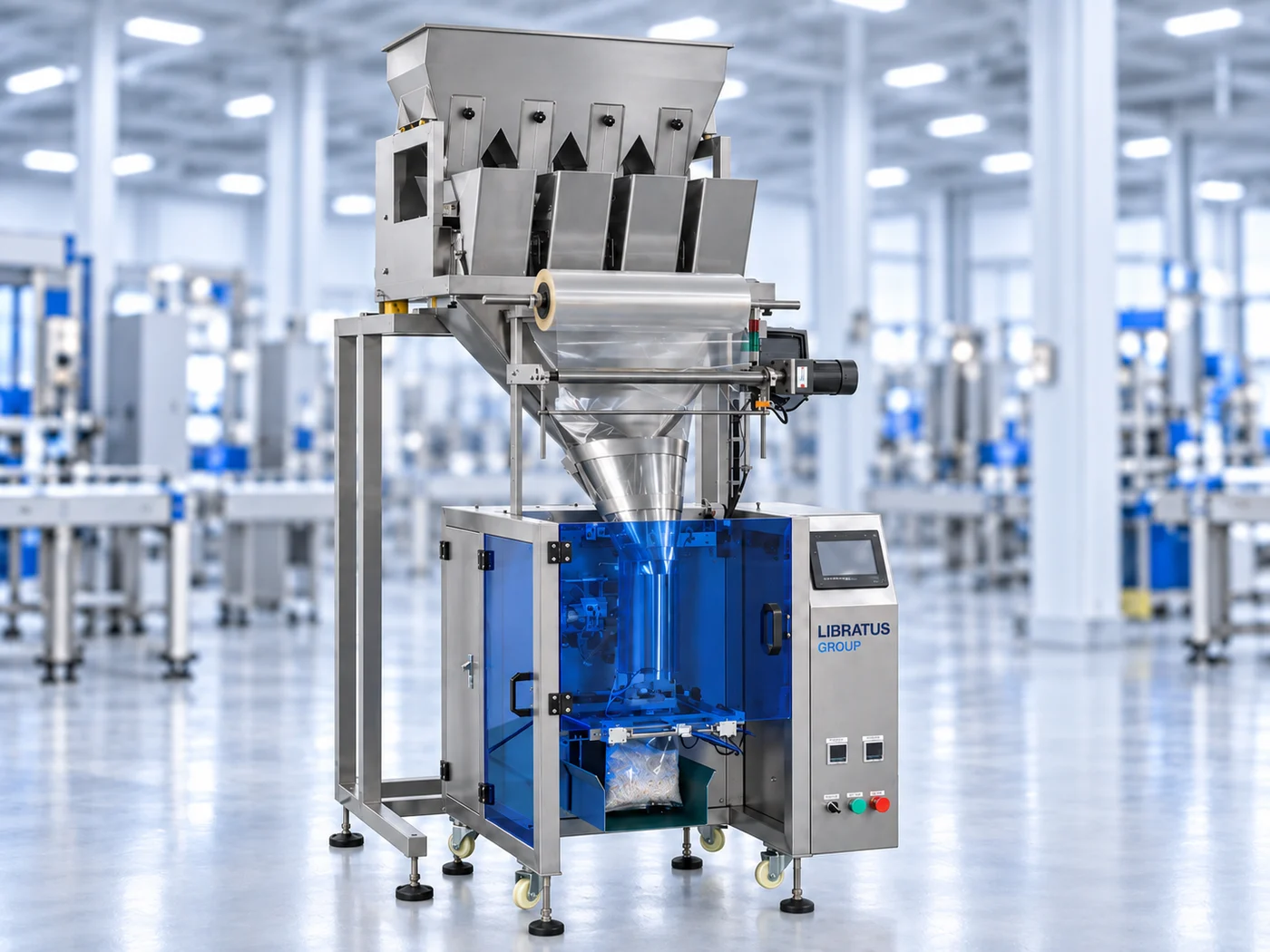
May be appropriate for non-food or irregular solids where the product feeds consistently and the application is well matched to a linear weighing architecture.
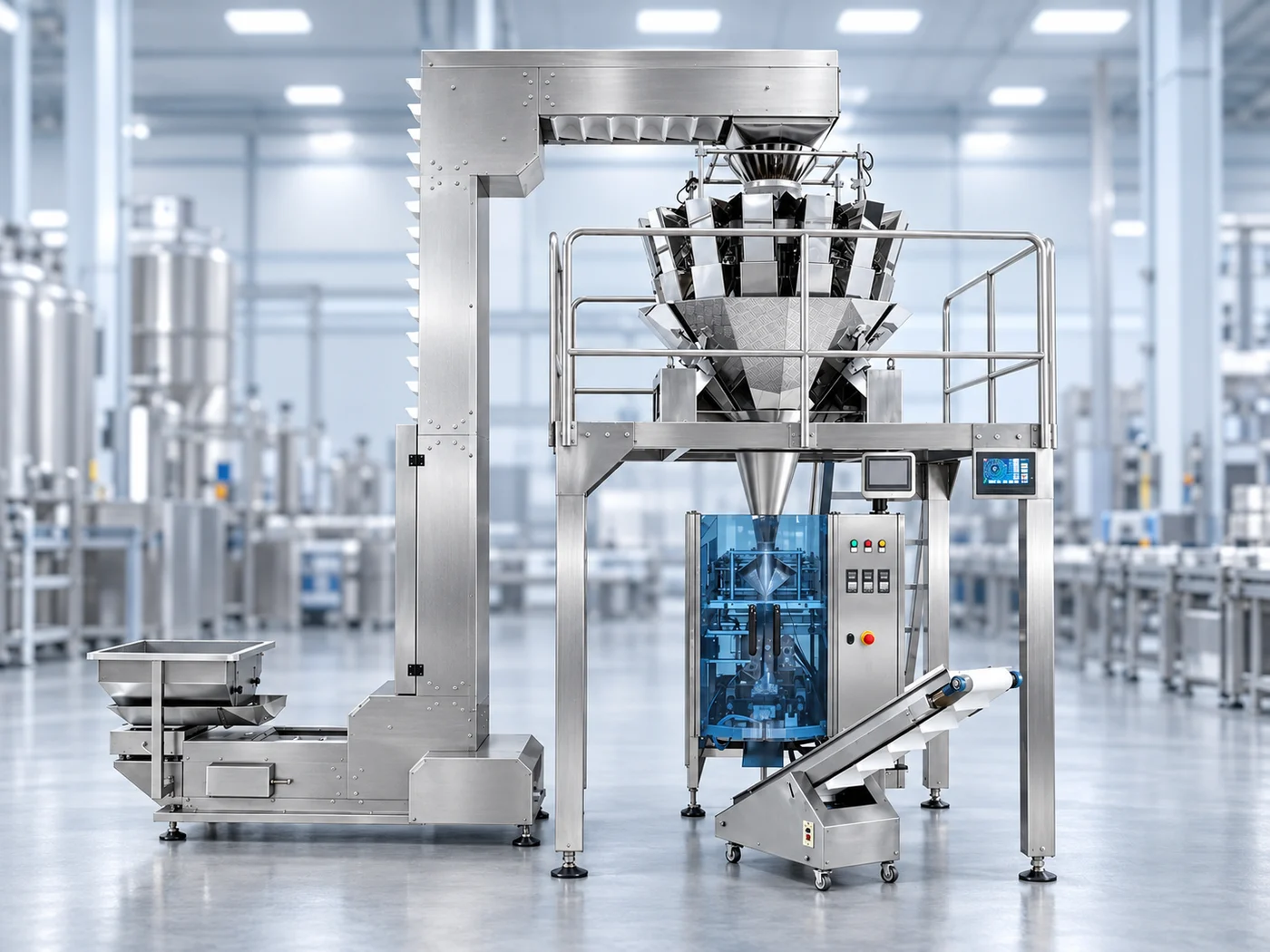
Also used in non-food applications, including suitable hardware components and plastic parts — but standard food-industry construction should not automatically be assumed to suit abrasive, sharp-edged or corrosive materials.
Moves product between locations rather than controlling how it's supplied to the next process — selection depends on dimensions, density, stability, abrasiveness and required transfer rate.
Flexible packaging is not the default for every industrial product — the format depends on the product, the protection required, presentation and downstream process.
May be used downstream to verify finished-pack weight and support process monitoring. A checkweigher does not replace the primary weighing or dosing stage.
The choice between Linear, Multihead or another control method depends on the application. Relevant factors include:
whether the product is handled individually or in bulk
size and shape
piece-weight variation
flow behaviour
abrasiveness
fragility
target weight
target count where relevant
required output
feeding consistency
pack or container
downstream process
Deeper application guidance
For engineering review
Linear weighing
Linear weighers may be appropriate for non-food or irregular solids where the product feeds consistently and the application is well matched to a linear weighing architecture.
Selection depends on factors including:
dimensions and shape
individual piece-weight variation
feeding consistency
target weight
required output
abrasiveness
fragility
cleaning or maintenance requirements
integration with the rest of the line
Linear weighing should not be treated as inferior or low-end.
It is a different architecture and can be the more appropriate engineering choice where combination weighing does not provide a meaningful benefit.
Multihead weighing
Multihead weighing is also used in non-food applications, including suitable hardware components, plastic parts and other discrete or granular technical products.
Its combination-weighing architecture can be useful where variation between individual pieces or portions makes combination selection valuable for meeting the target weight.
However, standard food-industry construction should not automatically be assumed to suit:
abrasive products
sharp-edged products
corrosive materials
dense industrial components
oily technical parts
elevated-temperature applications
Contact surfaces, hopper design, load-cell protection, discharge geometry and overall construction need to be matched to the actual material and operating conditions.
The machine architecture alone does not establish suitability.
Choosing the weighing or control method
The choice between Linear, Multihead or another control method depends on the application.
Relevant factors include:
whether the product is handled individually or in bulk
size and shape
piece-weight variation
flow behaviour
abrasiveness
fragility
target weight
target count where relevant
required output
feeding consistency
pack or container
downstream process
There is no universal weighing architecture for irregular or non-food solids.
Weight versus count
Some applications are controlled by target weight, others by count, and some require both to be considered.
Products such as screws, washers or other small components may sometimes be count-driven.
Where individual pieces vary in weight, a fixed count does not necessarily result in a fixed pack weight.
Likewise, a fixed pack weight does not necessarily result in the same number of pieces every time.
The required control objective is therefore established during specification.
Where dedicated counting technology is required, the appropriate method is selected for the application rather than assumed from the product category.
Dust, residue and cleaning
Cleaning requirements for non-food applications are not automatically the same as those for food machinery.
Relevant considerations may include:
preventing cross-contamination between technical products
controlling dust and fines
removing oil or grease
preventing residue buildup
maintaining access for inspection and maintenance
product changeover
protecting downstream equipment
Food-grade or hygienic construction should only be applied where the actual application requires it.
Cleaning and access requirements are determined from the product, process and operating environment.
Conveying and presentation
Conveying and feeding perform different functions.
Conveying moves product between locations.
Feeding or metering controls how the product is supplied to the next process.
Potential conveying approaches across the wider category may include:
belt conveyors
indexing or controlled-transfer conveyors
incline or cleated conveyors
bucket or Z-type systems where suitable
enclosed mechanical systems
other engineered transfer arrangements
Selection depends on factors including:
product dimensions
density
stability
orientation
abrasiveness
sharpness
fragility
required transfer rate
horizontal distance
elevation
route
accumulation requirements
environmental conditions
upstream equipment
downstream equipment
No single conveying method is appropriate for every irregular or non-food solid, and this page should not be interpreted as a universal Libratus offering of every listed technology.
Packaging-machine integration
The weighing or dosing method needs to integrate with the required pack or container.
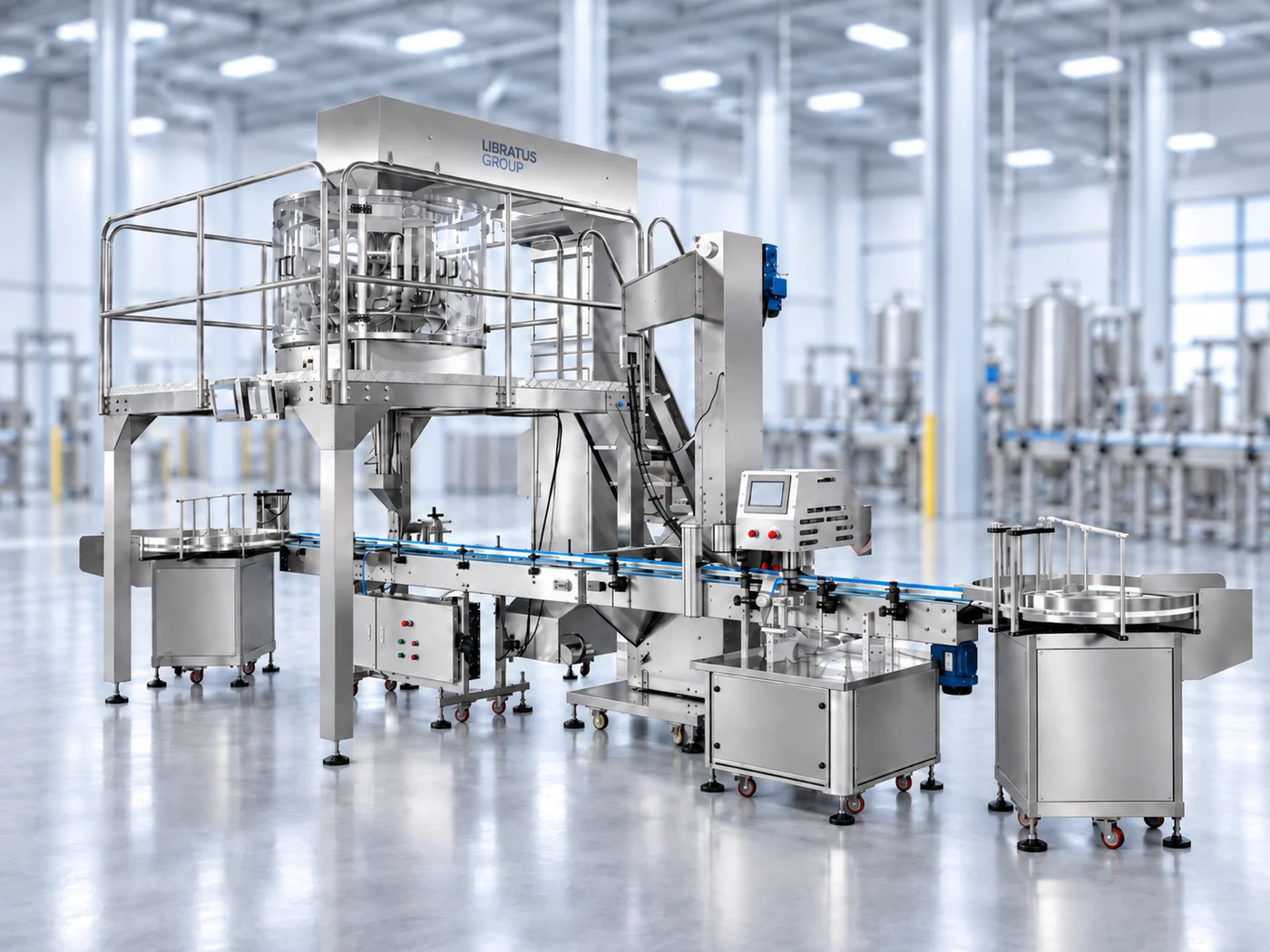
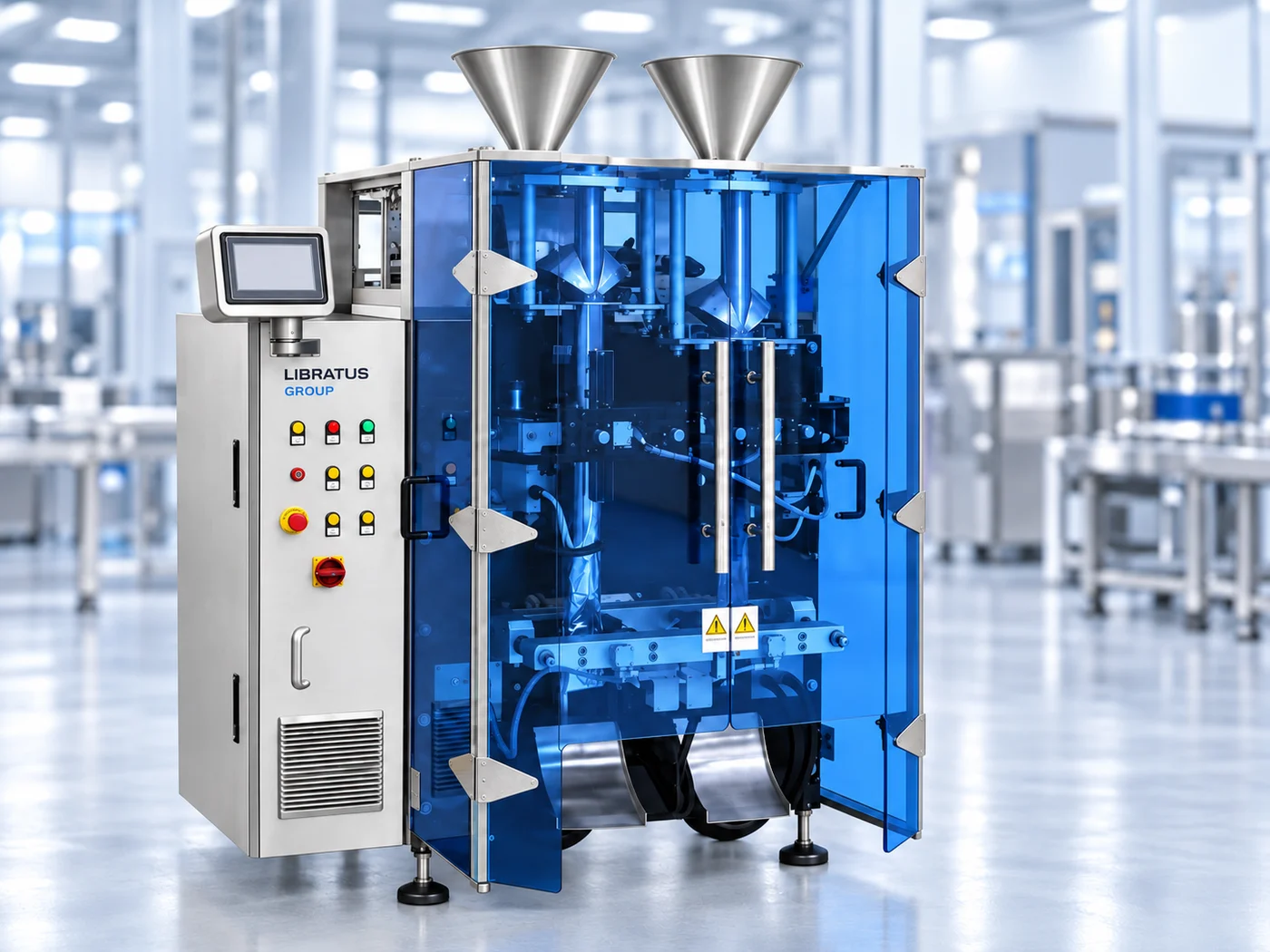
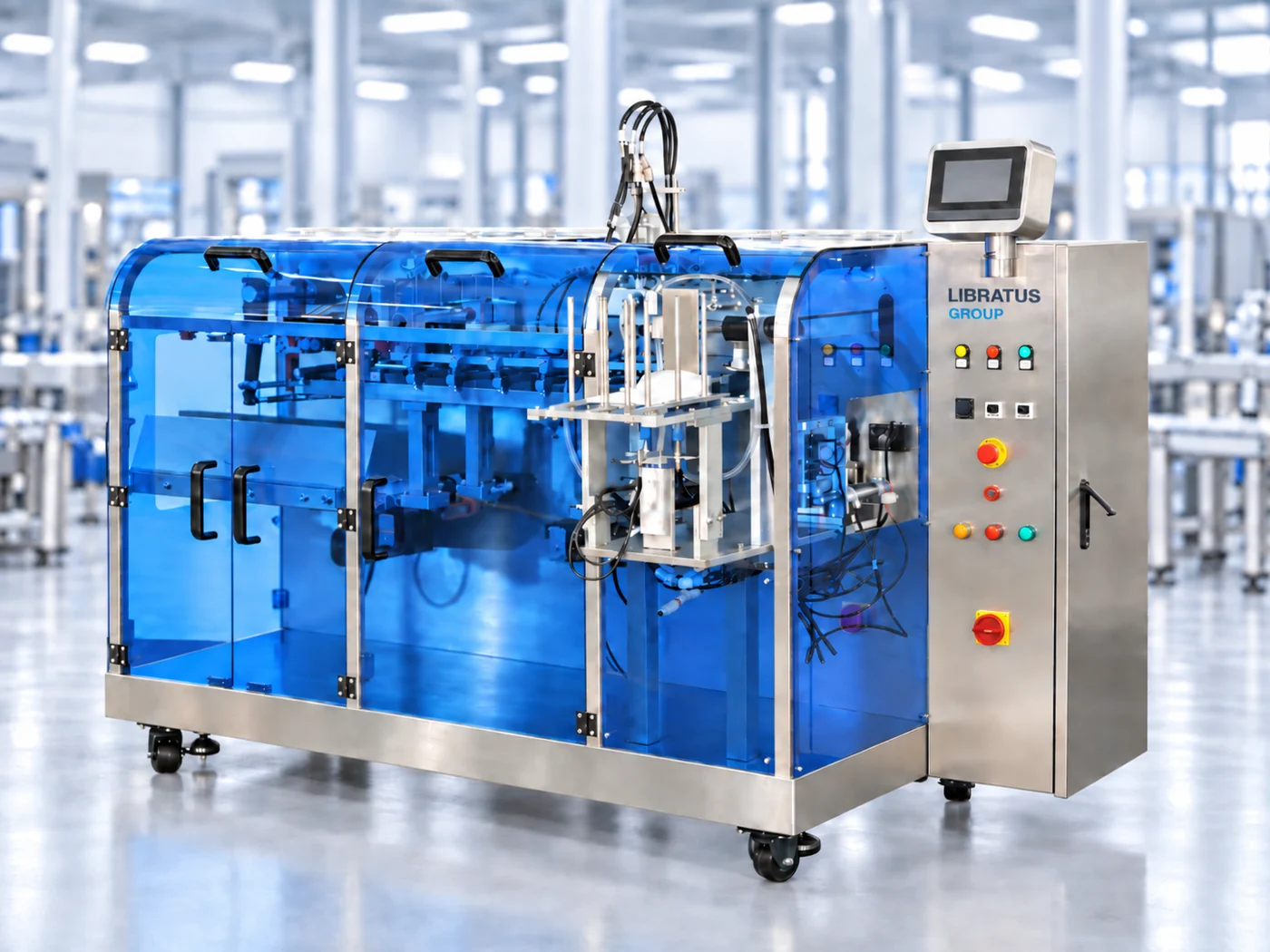
Depending on the application, this may include VFFS baggers, Premade pouch machines, rigid containers, cartons, trays or other appropriate downstream packaging.
Flexible packaging is not the default for every industrial product.
The pack format depends on the product, the protection required, presentation, dimensions and downstream process.
Checkweighing
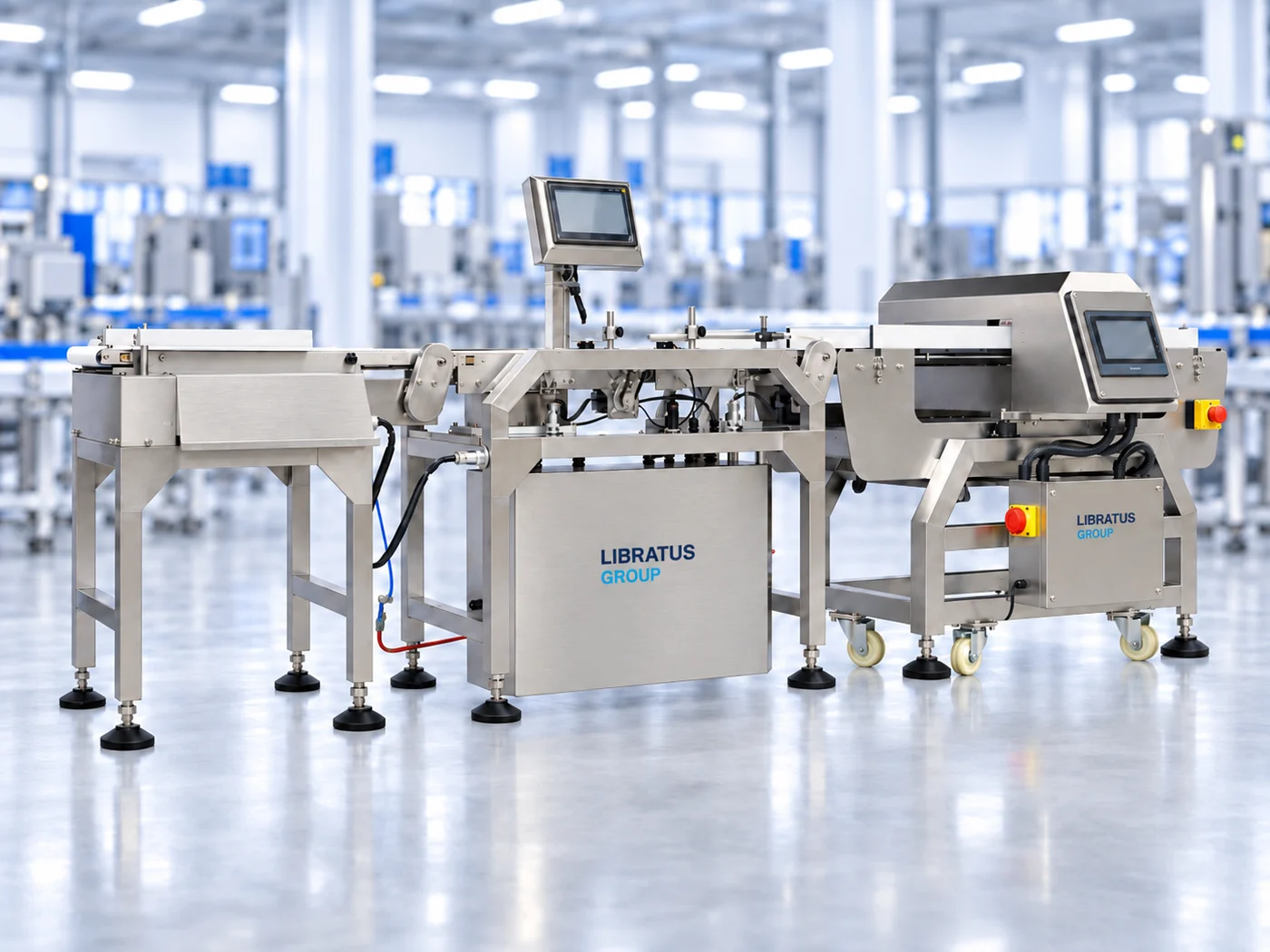
A Checkweigher may be used downstream to verify finished-pack weight and support process monitoring.
Where specifically configured, weight information may also support correction or feedback elsewhere in the line.
A Checkweigher does not replace the primary weighing or dosing stage.
Whether checkweighing is required, and any applicable metrology requirements, depend on the application and destination market.
Production environment and protection
The environment in which the equipment operates can affect machine selection.
Relevant factors may include:
dust
moisture
temperature
corrosion
exposed or enclosed installation
cleaning method
electrical and environmental protection requirements
No fixed IP rating, washdown capability or environmental protection level should be assumed from the product category.
These requirements are established from the actual installation.
Hazardous-area considerations
Some industrial materials or processes may create hazardous-area requirements.
Whether such requirements exist depends on the actual material, its relevant properties, the process and the installation.
A hazardous-area classification should not be inferred from the broad labels "industrial" or "non-food".
Where the actual material or installation creates a hazardous-area requirement, equipment configuration and the applicable conformity route are established for the real application and destination market.
No particular regional certification framework should be assumed unless it applies to that destination market and installation.
Performance
There is no universal throughput, accuracy, product-size range, count rate or hopper capacity for irregular and non-food solids.
Performance depends on factors including:
product dimensions
shape
individual piece-weight variation
density
feeding behaviour
abrasiveness
fragility
target weight
target count where relevant
required output
machine configuration
downstream acceptance
Performance requirements are therefore established for the specific application.
Qualification
What we need from you
Useful application information includes:
product name and description
what the product is made from
whether it is handled as individual pieces or in bulk
typical dimensions
shape
piece-weight range where known
density or bulk density where relevant
flow behaviour
abrasiveness
hardness
sharp edges
fragility or brittleness
dust or fines
oils or grease
moisture
stickiness
corrosive or chemical characteristics where relevant
operating temperature
static behaviour where known
orientation requirements
tendency to nest or interlock
target weight
target count where relevant
required throughput
pack or container type
pack or container dimensions where known
upstream process or equipment
downstream process or equipment
conveying or elevation requirements
cleaning and changeover requirements
environmental conditions
destination market
available layout information
photographs or video where useful
If physical assessment is needed, Libratus will advise on the appropriate route during specification.
The documentation supplied is confirmed during specification and depends on the selected machine, destination market, installation/use and customer requirements. See what a technical file typically contains →
Tell us what the product is made from, its dimensions and shape, density or piece weight, flow and abrasion characteristics, fragility, environmental conditions, target weight or count, required output and intended pack or container.
Libratus will use that information to determine the appropriate weighing, feeding, conveying and packaging configuration.