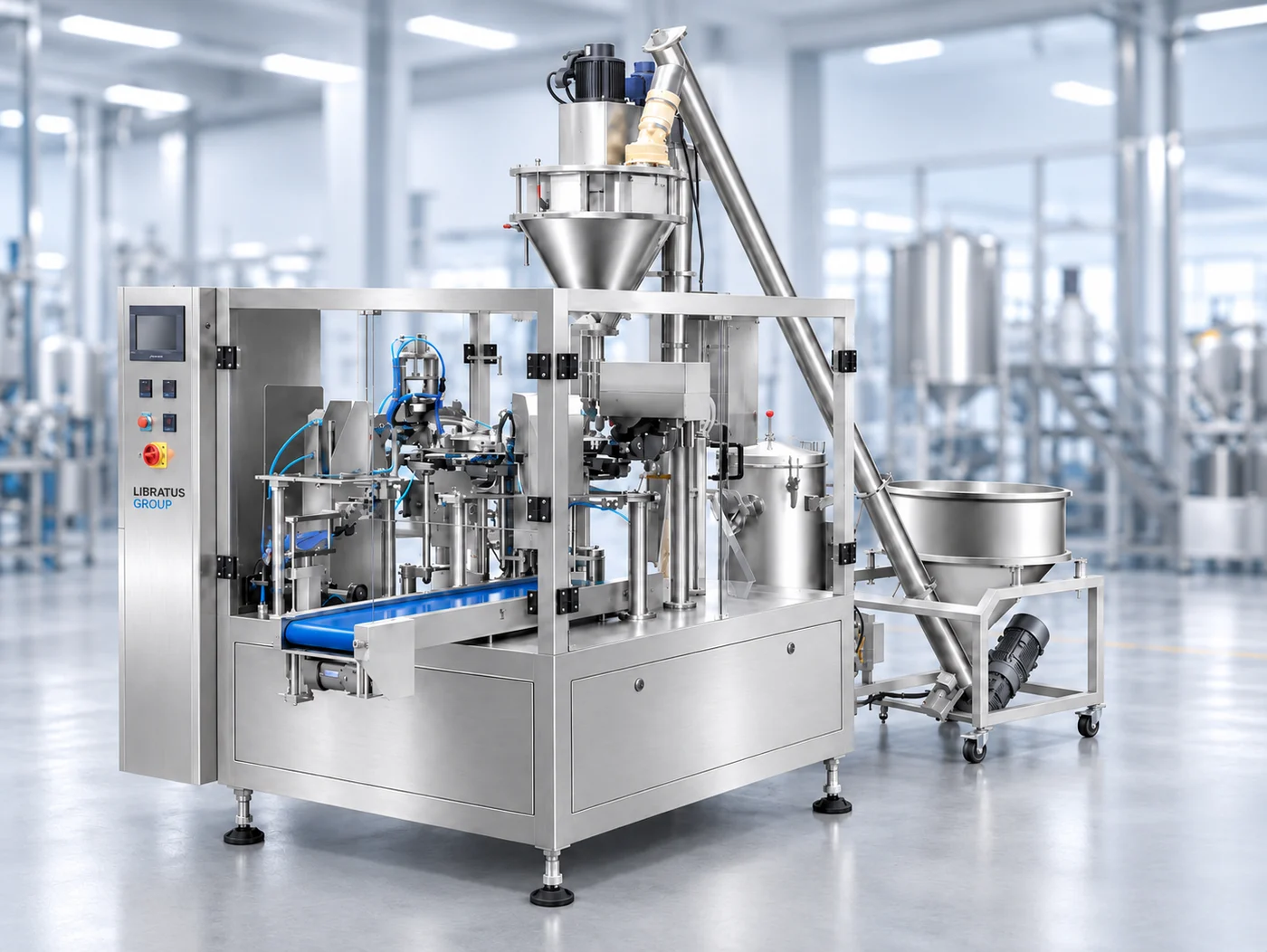
Auger fillers
Volumetric and gravimetric dosing for powders a weigher cannot handle.
Explore capabilities: Auger fillers Get a quote
Conveying
Conveying systems specified around what needs to move, where it needs to go, the required transfer rate and the equipment it needs to connect.
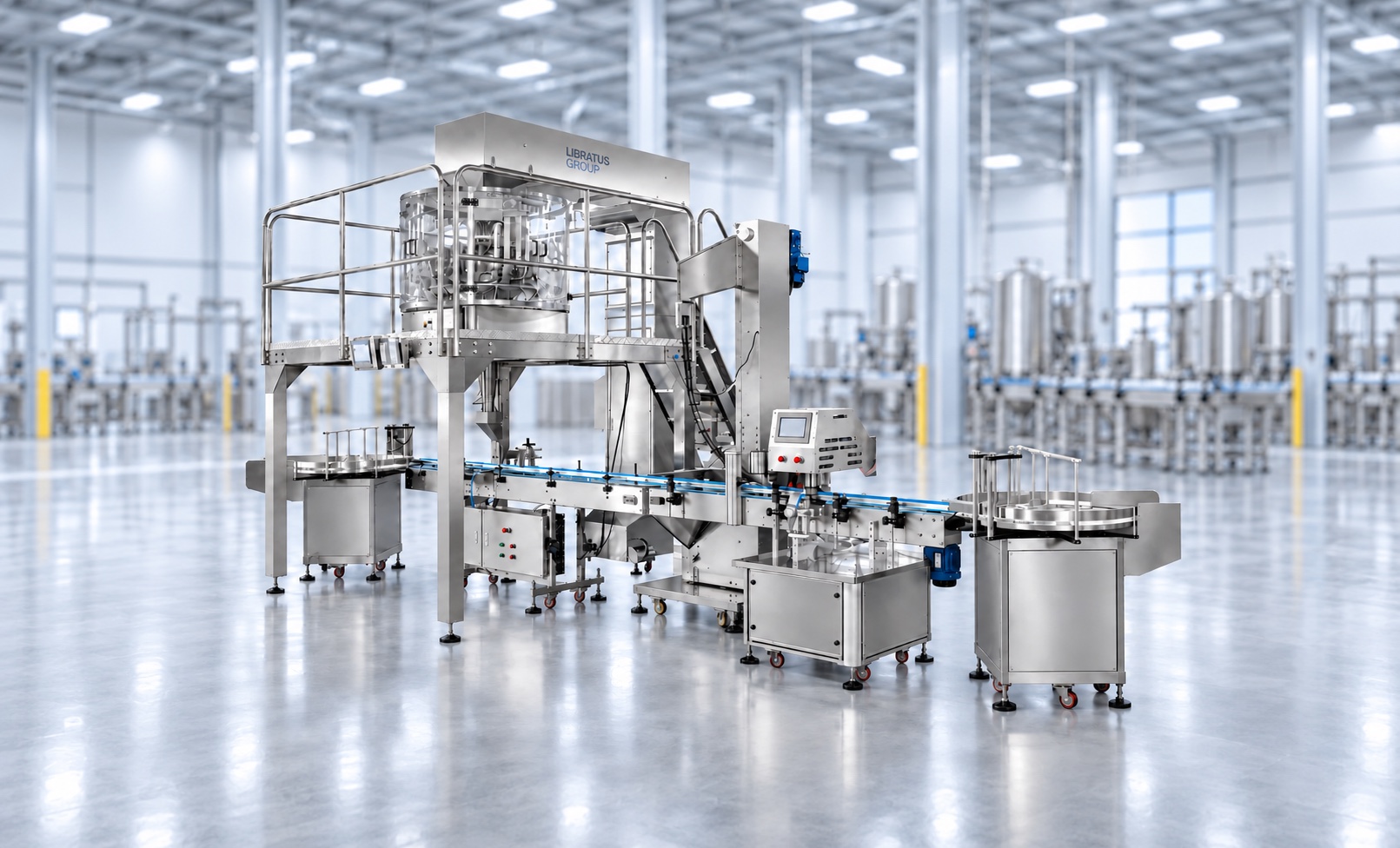
Single units from USD 3,000
Systems built to USD 50,000
All figures USD, indicative, and confirmed by quotation. Other currencies converted at an indicative rate.
How it works
"Conveying system" describes several different engineering tasks.
Moving powder into an Auger filler is different from elevating whole coffee beans to a Multihead weigher, and different again from carrying a sealed pouch towards a Checkweigher.
The starting point is therefore not a preferred conveyor type. It is the application:
Those answers determine which conveying method should be considered.
Most conveying requirements around a packaging line can be separated into three broad functions.
Bulk material conveying moves loose powders, granules or pieces between storage, feeding, filling and weighing stages.
Vertical elevation raises suitable loose product to equipment positioned above the main production level, such as a weigher or packaging machine.
Pack and product transfer moves discrete bags, pouches, cartons, containers or other finished or partly finished packs between machines.
These are different material-handling problems. Equipment selected to transfer a powder does not automatically suit a finished pouch, and a conveyor designed to elevate whole pieces may not suit a cohesive ingredient.
How it works
Loose product can be transferred using different mechanical or air-driven methods.
Across the wider bulk-handling category, these can include vacuum or other pneumatic conveying, flexible screw conveying and other enclosed mechanical systems.
Pneumatic conveying moves suitable bulk material through pipework using an air stream. Vacuum systems draw material towards the receiving point under negative pressure, while positive-pressure systems move material using air introduced upstream.
Enclosed transfer can be useful where controlling open product exposure or dust release is important, but enclosure should not be confused with eliminating dust or automatically solving containment requirements. Loading, receiving, filtration and transfer interfaces remain part of the system design.
Suitability can depend on factors including:
Vacuum and positive-pressure architectures exist across the wider pneumatic-conveying category. Which approach, if either, is appropriate for a Libratus application is established during specification.
Mechanical bulk conveying can include flexible screw and other enclosed conveying architectures.
Rather than relying on an air stream, these systems move material through mechanical action within the conveying path. Their suitability depends on how the material responds to that action and on the route required.
Relevant considerations can include:
There is no universal rule that an enclosed mechanical conveyor will preserve fragile product, prevent segregation or be easier to clean. These outcomes depend on the particular technology, geometry and material.
The appropriate bulk-transfer method is selected after the material and route are understood rather than assumed in advance.
How it works
Packaging machinery frequently requires product to be raised from a low-level feed point to equipment positioned above the main line.
Across the wider category, common approaches include bucket or Z-type elevators and incline or cleated belt conveyors.
Bucket elevators can move suitable granules and piece products through a vertical or combined horizontal-and-vertical route. Z-type architectures can be useful where product needs to be elevated within a comparatively compact floor area before discharge into weighing or packaging equipment.
Applications can include suitable:
Suitability still depends on the product itself.
Transfer points, bucket geometry, filling and discharge behaviour, drop height and cleaning requirements can all affect product handling. Fragile products therefore need to be assessed around acceptable damage rather than assuming bucket elevation is inherently gentle.
Incline conveyors use belt geometry, surface friction or cleats to retain suitable product as it is raised.
They can be useful where the product can be carried reliably on an inclined belt and where the required elevation and available footprint suit that arrangement.
Product size, rollback, cleat geometry, fragility, belt construction, cleaning requirements and discharge behaviour all influence suitability.
An incline conveyor and a bucket elevator solve related but different elevation problems. The choice is made around the actual product and layout rather than treating them as interchangeable.
How it works
Once product has been placed inside a pack, the conveying problem changes.
Finished or partly finished packs can include:
At this stage, conveyor selection is driven more by pack dimensions, stability, orientation, spacing and interaction with adjacent machines than by the bulk-flow properties of the contents.
A pack-transfer conveyor may be required to:
Functions such as indexing, accumulation or automated line balancing are configuration-specific and should not be assumed across every conveying system.
Configuration
Conveyor selection begins with the physical characteristics of what is being moved and the route it needs to follow.
Important inputs can include:
The way a product responds to movement can matter as much as the distance it needs to travel.
Fragile whole products can be damaged by impact, excessive drop height or unsuitable transfer geometry.
Powders and granular materials can behave differently according to particle size, density, cohesion, moisture and air interaction.
Products containing components with different particle sizes or densities can also present blend-segregation concerns during some forms of conveying.
For that reason, claims such as "gentle conveying" or "preserves blend integrity" are meaningful only when tied to a particular product and conveying configuration.
Where product damage or blend integrity is important, it becomes a specification input.
Powder transfer can create different dust and containment requirements from moving larger granules or finished packs.
Enclosed conveying can reduce open exposure compared with some uncovered handling methods, but no conveying architecture should be assumed to eliminate dust entirely. Product loading, discharge, filters, connections and other transfer points also need to be considered.
Where the material or installation creates a hazardous-area requirement, the equipment configuration and conformity route are established for the actual application and destination market.
Combustible-dust or hazardous-area status is not assigned from a broad product category alone.
Cleaning requirements can influence the conveying method and construction selected.
Important factors can include:
Food, supplement and ingredient applications can require very different cleaning strategies depending on the actual product and process.
Libratus therefore does not apply one universal product-contact material, stainless-steel grade, hygienic-design claim, IP rating or washdown specification across the Conveying systems category. These requirements are established during specification.
A conveying method that works well for a short transfer may not be the right method for a longer route, substantial vertical lift or multiple direction changes.
Selection can depend on:
The route needs to be considered together with the material.
For that reason, Libratus does not publish one universal maximum conveying distance or elevation for the entire category.
Conveying and controlled feeding are related but different functions.
A conveying system moves material between points. A feeding or metering function regulates how product is supplied to the next process.
For example, a weigher may need a controlled supply of product rather than an unrestricted flow into its feed hopper.
Depending on the line, this can require functions such as level sensing, controlled start/stop behaviour or coordination with upstream and downstream equipment.
Where this is required, the control relationship is established during specification. Libratus does not assume every conveying system includes automatic level control, variable-speed control, PLC integration, industrial communications or line interlocking.
There is no meaningful single throughput figure for Conveying systems as a category.
Achievable transfer rate can depend on:
The conveyor cannot be considered independently from the equipment receiving the product.
Realistic capacity is therefore established around the material, route and complete line interface.
Qualification
The documentation supplied is confirmed during specification and depends on the selected machine, destination market, installation/use and customer requirements.
To establish the appropriate conveying method, tell us about:
If physical assessment is needed, Libratus will advise on the appropriate route during specification.
Line integration
Conveying systems can connect multiple stages of the Libratus machinery range.
An Auger filler may require controlled bulk-product supply.
A Linear weigher or Multihead weigher may require suitable product feeding or elevation before weighing.
A VFFS bagger may require loose-product feed upstream and finished-pack transfer downstream.
A Premade pouch machine may similarly need product supply and subsequent pouch transfer.
A Checkweigher requires suitable transfer of finished products into and out of the dynamic weighing stage.
At the end of the line, pack-transfer conveyors can feed a robotic palletizing system, with pack presentation and line controls agreed during specification.
The conveying method at each point depends on what is being moved. A production line may therefore contain more than one conveying technology serving different functions.
Not the right fit?
Related machines
Volumetric and gravimetric dosing for powders a weigher cannot handle.
Explore capabilities: Auger fillers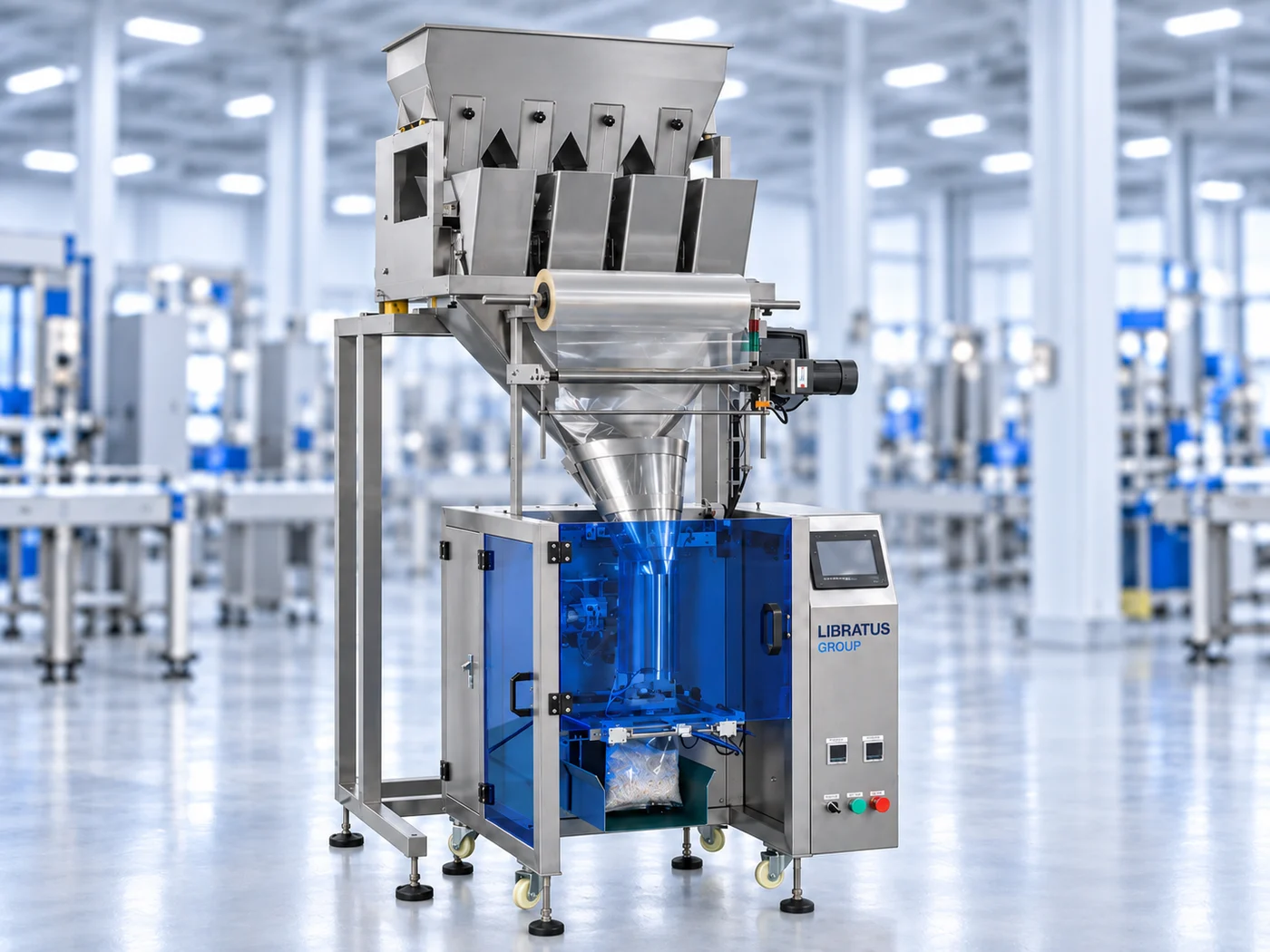
One to four heads, granules and whole pieces, bench through floor-standing.
Explore capabilities: Linear weighers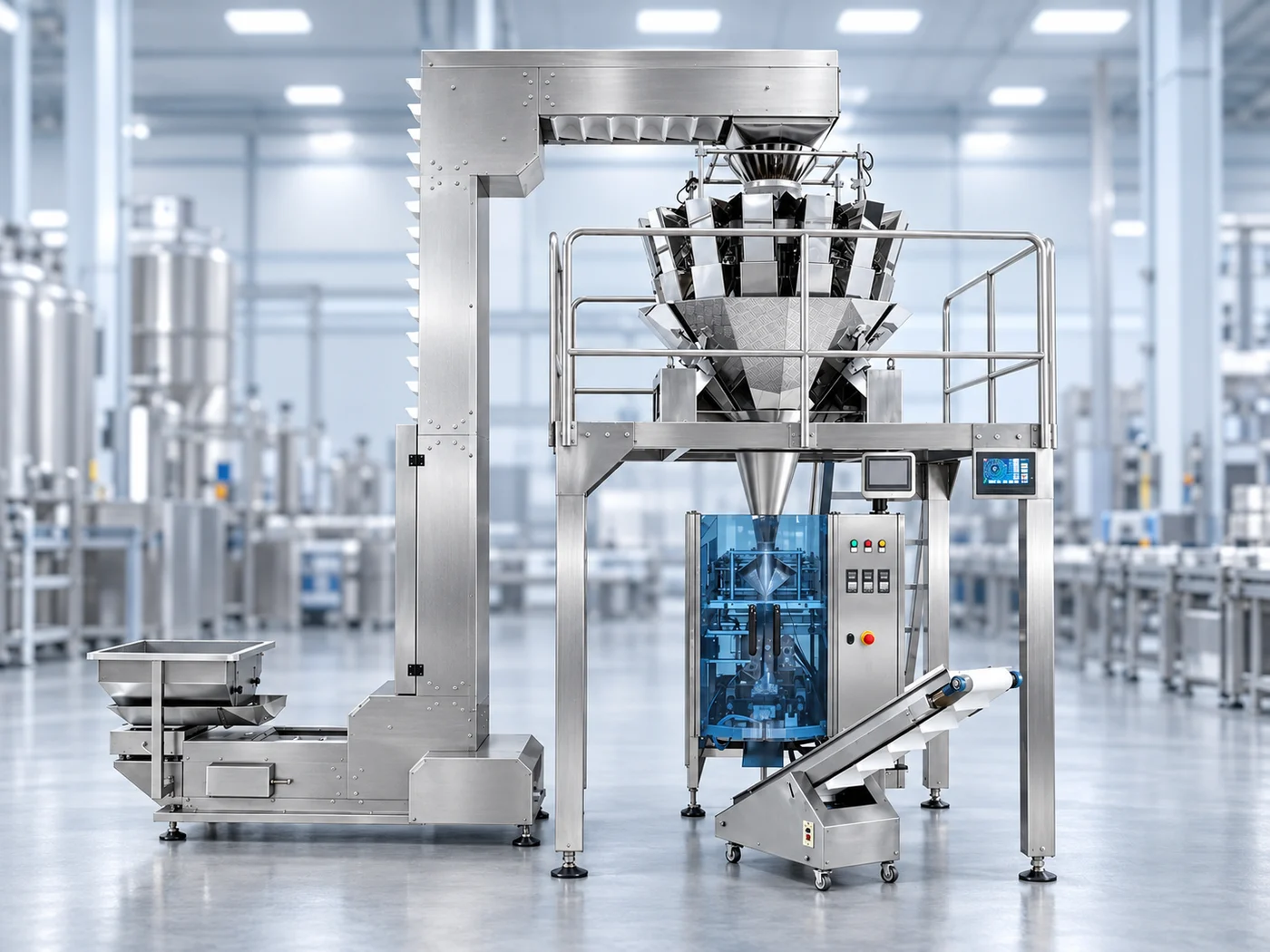
Ten to thirty-two head combination weighing at speed with minimal giveaway.
Explore capabilities: Multihead weighers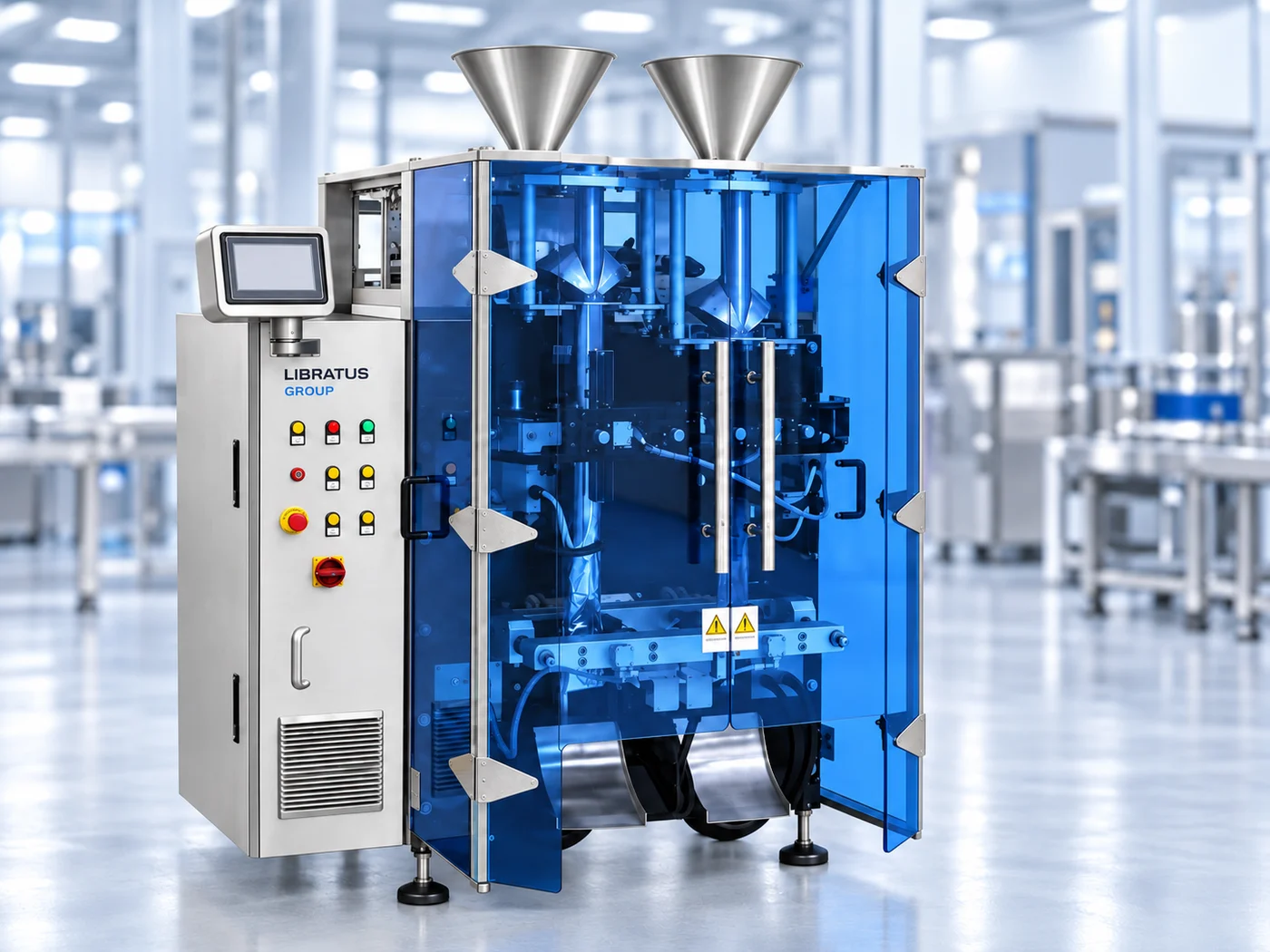
Form-fill-seal for pouches, quad-seal and flat-bottom bags.
Explore capabilities: VFFS baggers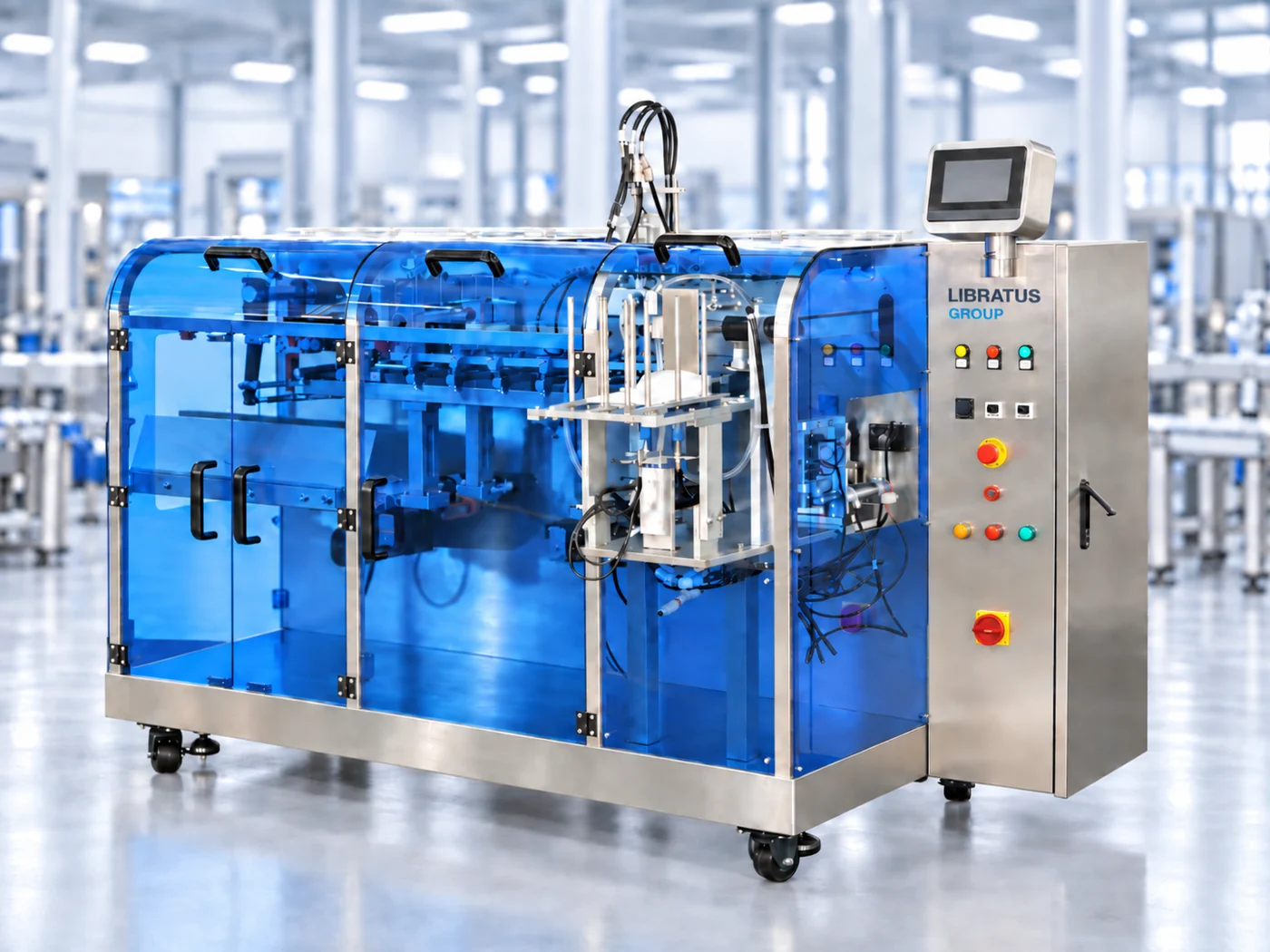
Mini doypack through eight-station rotary, gas flush and vacuum.
Explore capabilities: Premade pouch machines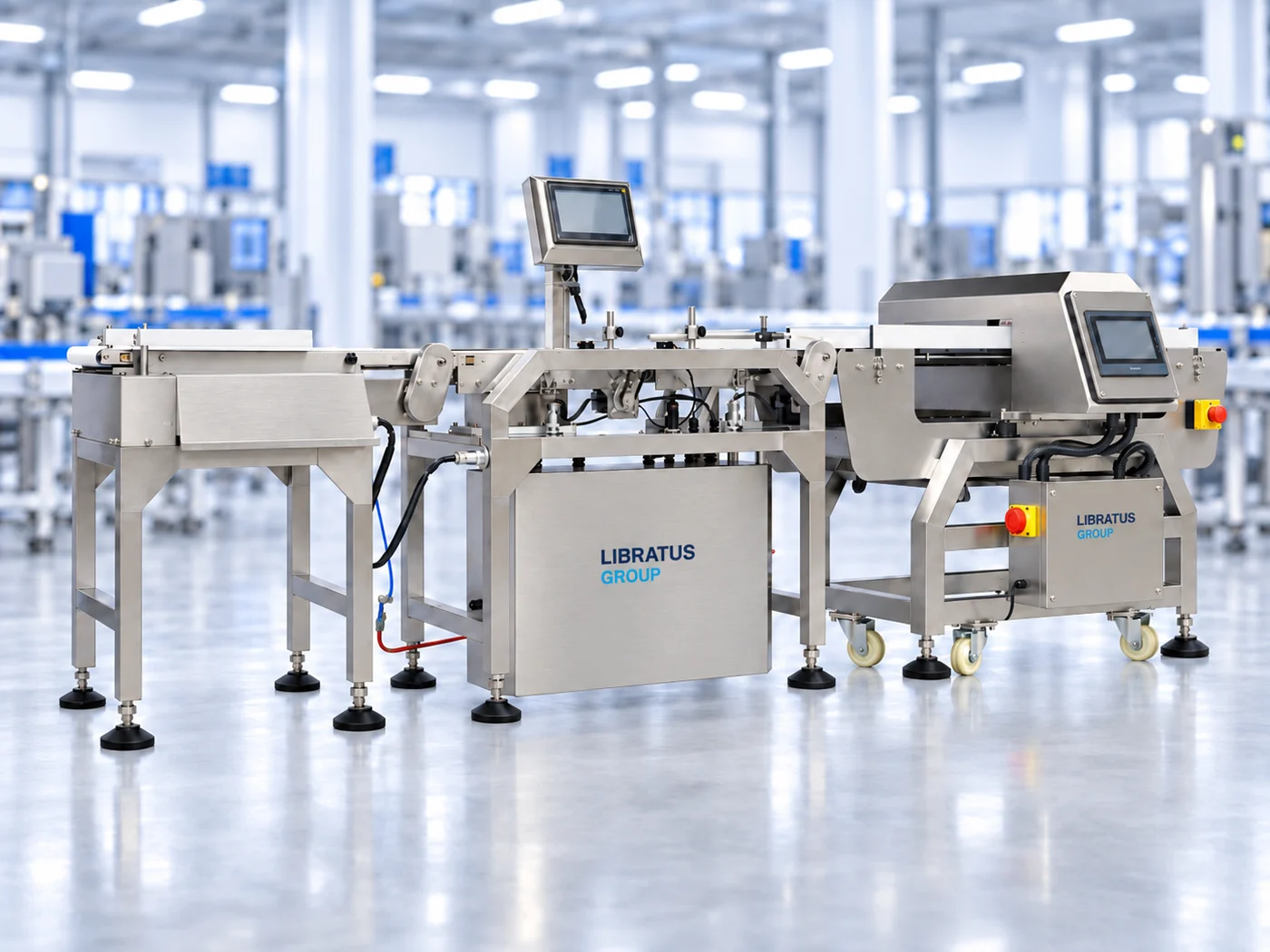
In-line weight verification and metal detection, standalone or combined, integrating upstream and downstream.
Explore capabilities: Checkweighing and metal detectionIndustries
The appropriate conveying method varies within industries as much as between them.
For Coffee & Tea, whole beans, ground product and finished retail packs each create different transfer requirements.
For Supplements & Nutrition, powders, granules and suitable discrete products can introduce flowability, blend-integrity and cleaning considerations.
For Snacks & Confectionery, fragile or irregular pieces can make transfer geometry and acceptable product damage particularly important.
For Grains, Rice & Dry Foods, free-flowing granular products can require bulk transfer or elevation into weighing and packaging equipment.
For Pet & Animal Products, conveying requirements can range from powders through kibble and larger treats.
For Frozen & IQF Products, temperature, condensation, moisture, product fragility and the production environment can affect equipment selection.
For Ingredients & Powders, dust, bulk density, flow behaviour, containment and cleaning are often central specification inputs.
For Industrial & Non-Food Products, abrasive, dense, irregular or otherwise unusual materials require selection around their actual handling characteristics rather than assumptions based on food-packaging conveyor design.
Industry provides context, but the material and transfer route determine the conveying method.
Enquiry
Tell us what needs to move, where it starts, where it needs to go, the required transfer rate and the equipment it needs to connect. Libratus will use that information to determine the appropriate conveying method and configuration.
Back to the machine range