
Checkweighing ·
Which checkweigher reject system suits your packs?
A pusher can slide a 250 g carton of rice off the belt in one stroke. Put the same weight of rice in a thin pouch and the seal can slip under the blade. A belt that tips down may suit the pouch better. Start with the pack you actually run, then check that the rejector on your inline checkweigher can remove it without disturbing the good pack behind it.
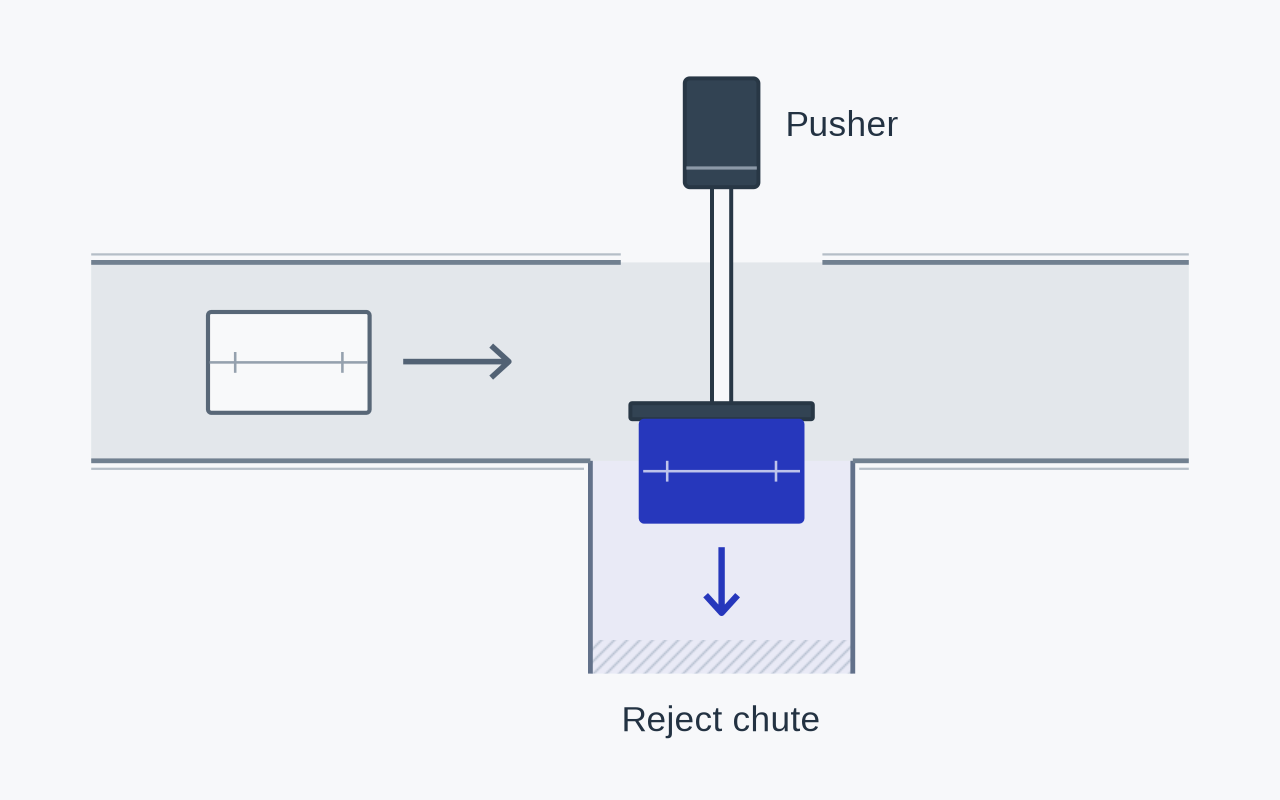
Pusher reject for cartons and rigid trays
Best suited to
Filled cartons, boxes and lidded trays with a flat base and a firm side.
If the carton holds its shape and can slide on its base into a side chute, a pusher is a good first choice. Its blade can move a dense carton that an air jet would struggle to shift. For a tray, check where the blade meets the pack. It should press on the rigid sidewall and leave the lid and seal intact.
At the trial
Have the supplier reject your heaviest carton with a good one close behind. The carton should clear the belt and the blade should be back before the next carton reaches it.
Air jet reject for light, sealed packs
Best suited to
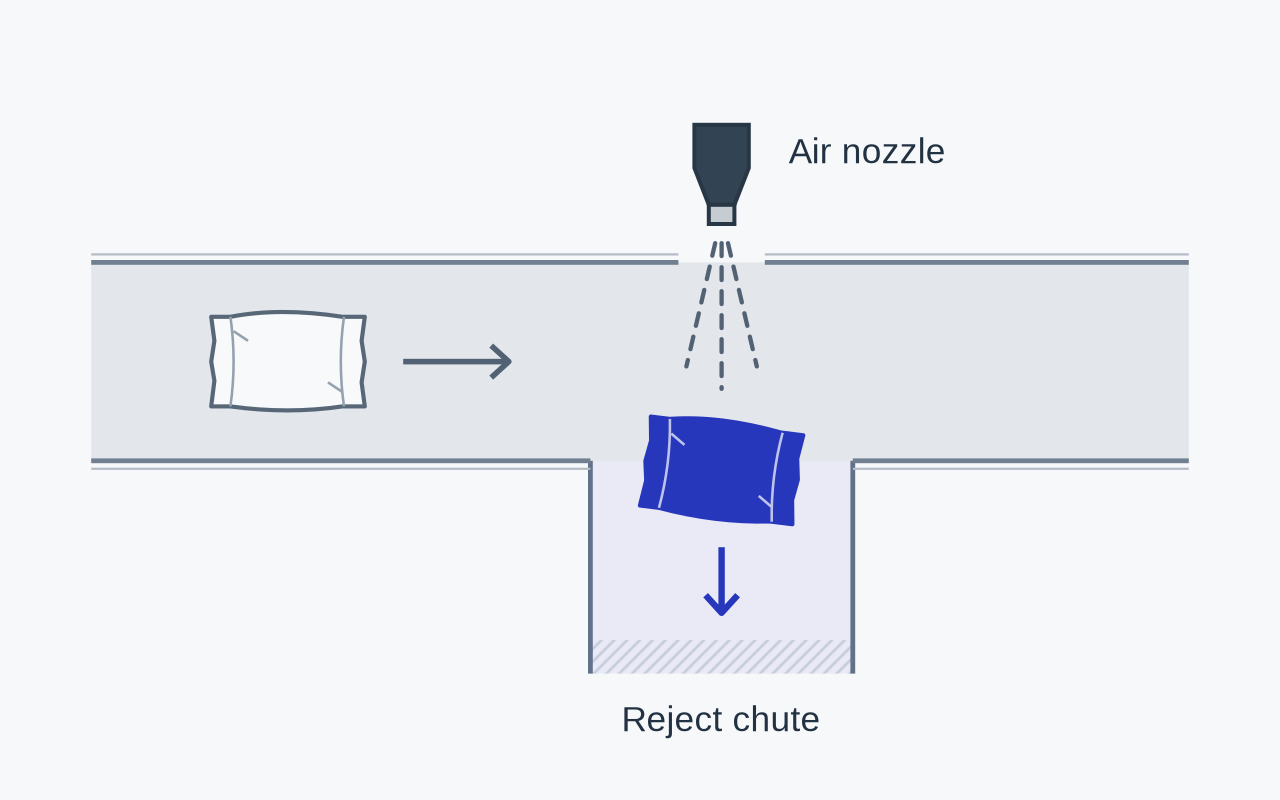
Light, sealed packs that travel flat, such as seasoning sachets, wrapped cereal bars and small bags of crisps.
An air jet, also called an air blast, uses a short burst of compressed air to blow the pack into a side chute. It’s worth trying on a fast line because there’s no blade to return between packs. Bring filled samples. An empty bag can fly off the belt even when the full bag barely moves.
At the trial
Use the heaviest filled bag in the range and the compressed-air supply available on your line. If clearing that bag also blows the next light bag off course, try a drop flap.
Swing arm diverter for upright cans and bottles
Best suited to
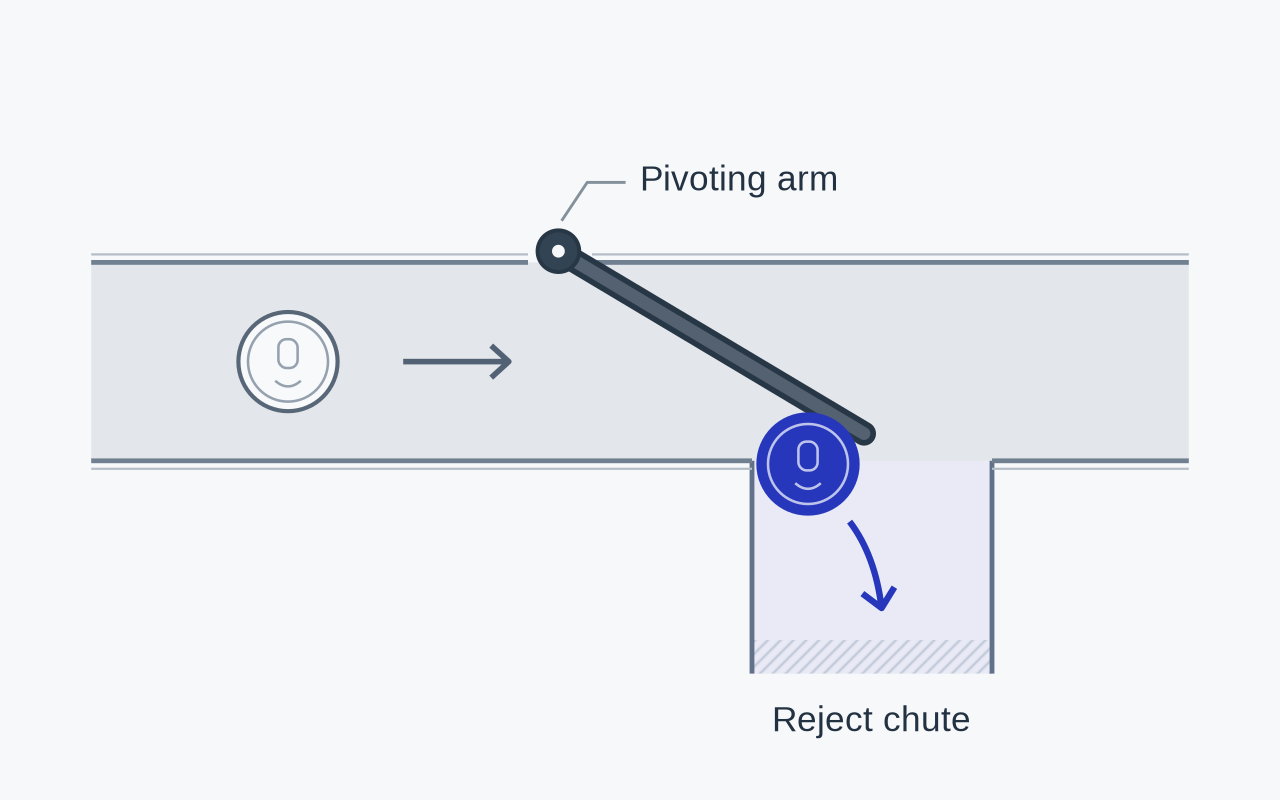
Stable, upright containers that need to enter a side lane standing up, such as a capped bottle or a filled can on a broad base.
A swing arm pivots across the belt. The belt keeps the container moving forward while the angled arm guides it to one side. Choose this route when you want to collect cans or bottles upright on a receiving lane at belt height.
At the trial
Try the tallest, narrowest container you sell. Watch it where the arm first touches it and where it crosses into the side lane. If it leans or catches, ask to see a guided transfer that supports it through the turn.
Drop flap reject for thin, flexible pouches
Best suited to
Flat pouches and thin bags that buckle under a pusher or are too dense for an air jet, provided the filled pack can tolerate the drop.
The hinged belt tips down and the pouch drops into a bin below. A retracting belt achieves a similar result by pulling back to open a gap. Check how far the pouch will fall when the bin is empty. If the contents are fragile or the seal splits on landing, ask about a transfer that supports the pouch at belt height.
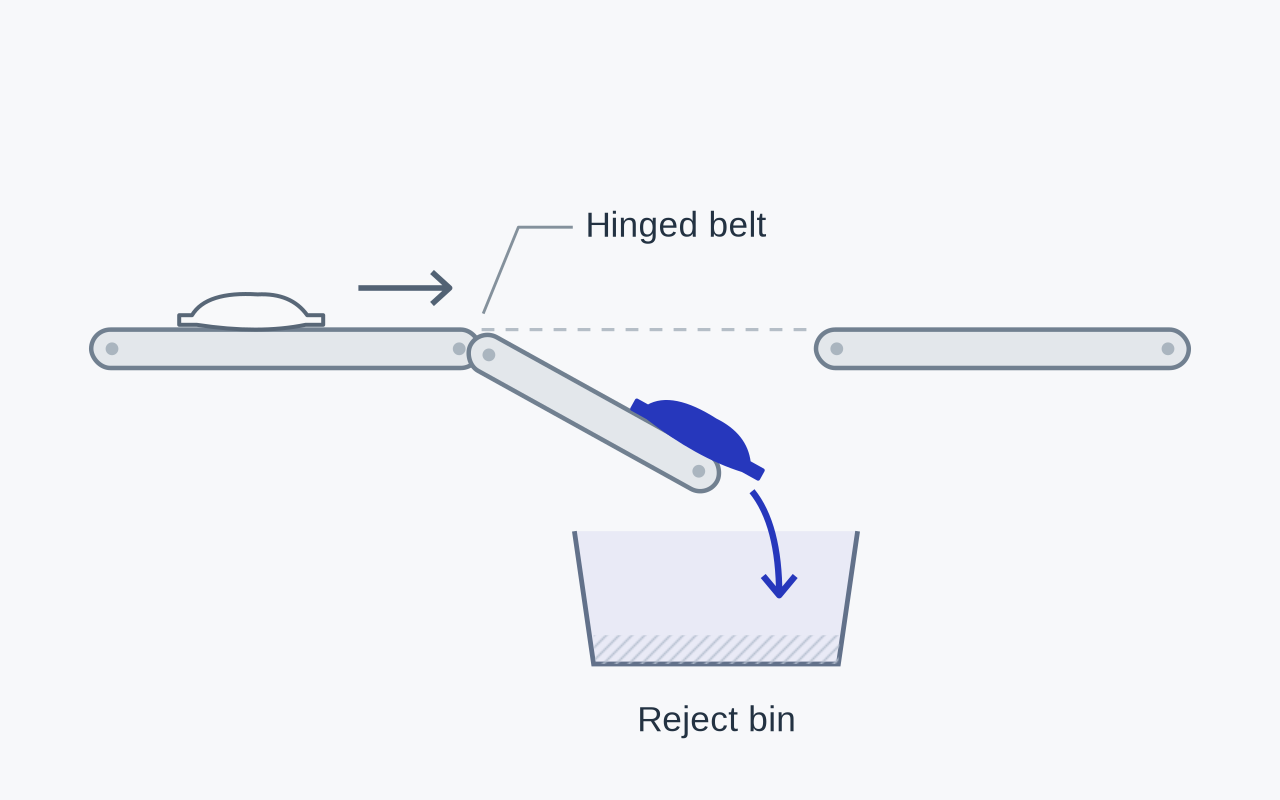
At the trial
Run your longest filled pouch at the closest spacing you normally see. Its trailing seal should clear the opening, the pouch should land intact and the belt should be level again for the next good pack.
When to separate underweight and overweight packs
Best suited to
Lines where your operators do something different with a light pack and a heavy one.
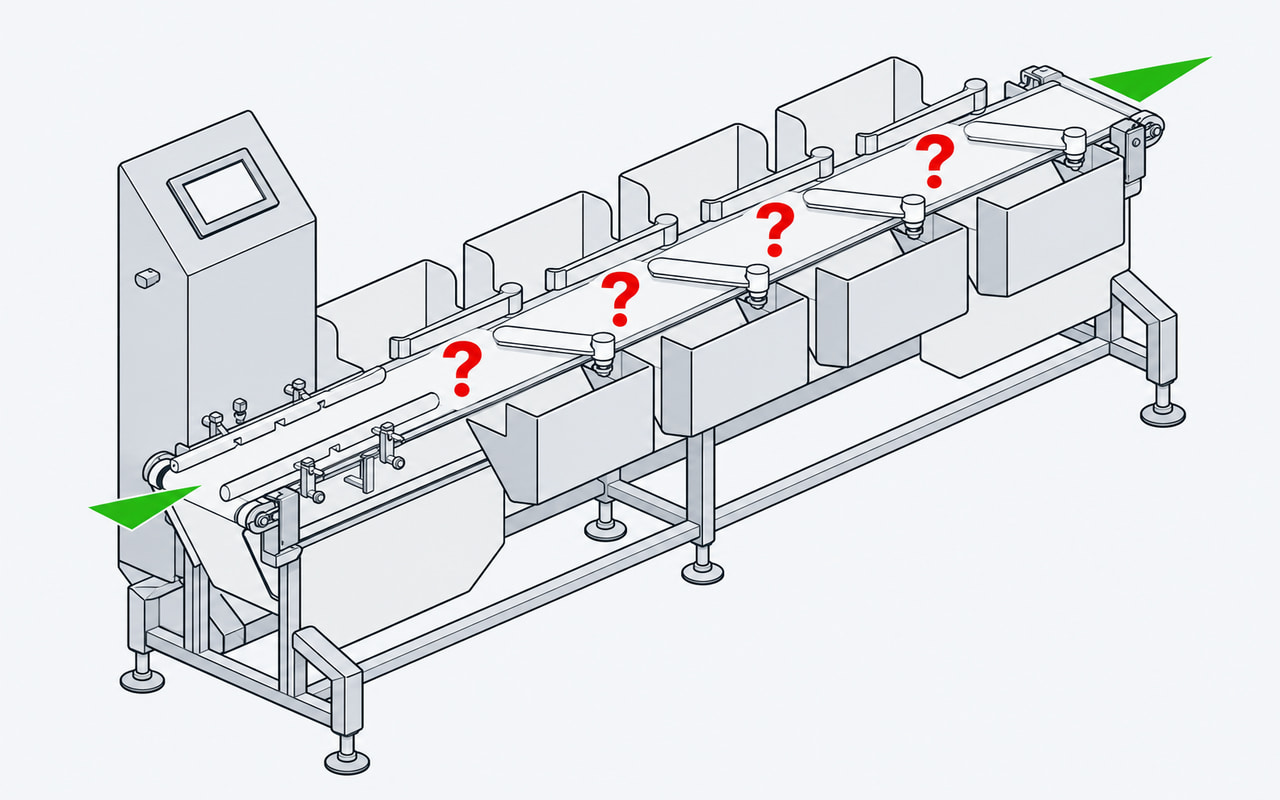
Suppose light cartons go to a rework bench, while heavy cartons go to quality control to check for an extra item. Separate lanes save someone sorting them by hand. If both go to the same bench for the same check, a single reject bin may be enough. The illustration shows how two pushers can serve two destinations.
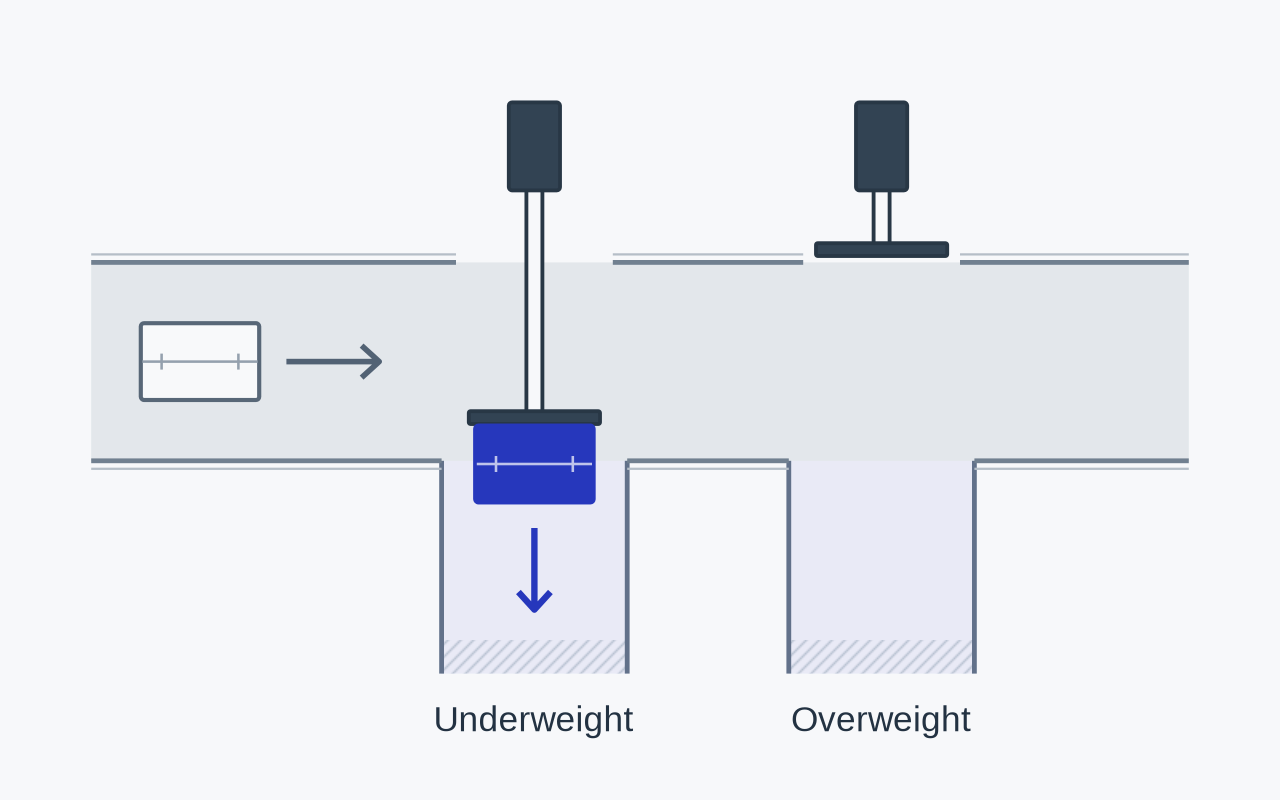
At the trial
Send a known light pack, a heavy pack and a good pack through in a different order on each run. Follow each one to its destination and check that the counts agree with what you collected.
Why the gap between packs matters
At 60 evenly spaced packs a minute, one pack arrives every second. On a belt moving at 300 mm per second, a carton 100 mm long leaves a 200 mm gap. A pouch 250 mm long leaves just 50 mm. A blade or flap has much less time to return before the next pouch arrives. Measure the shortest gap on your line from the back of one pack to the front of the next, and give the supplier that figure alongside packs per minute.
What to ask for before you buy
- One out-of-range pack between two good ones. Run at production speed with the shortest gap you measured. Only the middle pack should enter the reject bin.
- Two out-of-range packs in succession. Check that both reach the collection point and the next good pack continues downstream.
- A change of format. Switch between the two packs you expect to behave most differently. Watch what the operator has to adjust, then repeat the first run. Ask the supplier to demonstrate what the operator sees if a pack misses the bin.
Continue your research
Published by Libratus Group on .
Your application
Discuss your project
For a Libratus quotation, send the dimensions and weight of your smallest and largest filled packs, your normal belt speed and the shortest gap between packs. A short video showing how the packs travel and where you could fit a bin helps us narrow down which reject system to trial.