
Specification
How to specify a robotic palletising system for bags and cartons
A practical checklist for specifying robotic palletising around pack dimensions, sustained output, pallet patterns, and the existing production line.
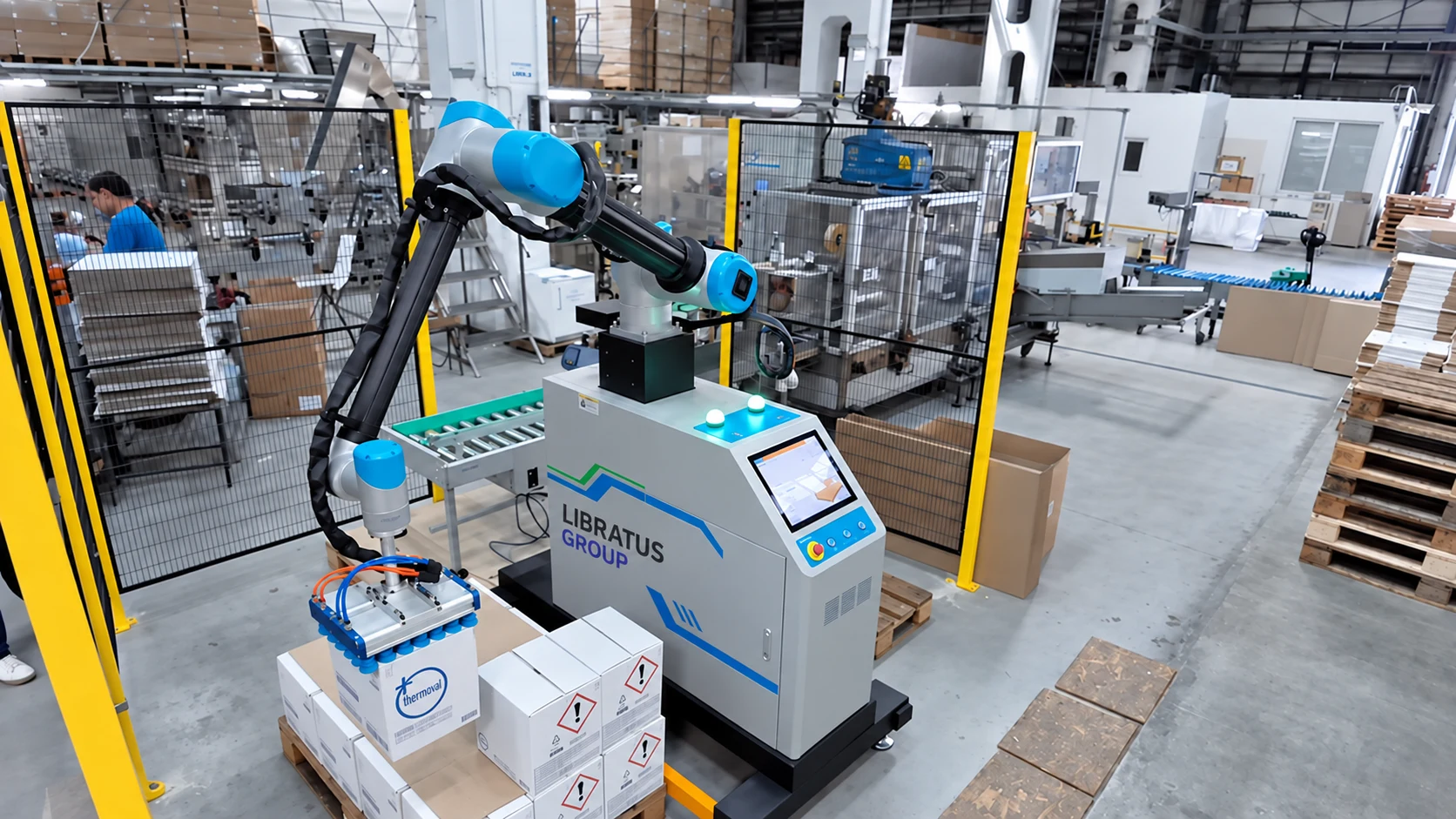
A robotic palletising system moves packaged products from the end of a production line onto a pallet in a planned pattern. The right starting point is the pack and the required output: an arm that can lift a load on its own may not be suitable for the complete workstation once the gripper, reach and speed are considered.
This guide helps you collect the information needed to compare options for an existing or new packaging line. The final equipment and safety arrangements depend on the application.
Start with what the robot will handle
For cartons, record the outside dimensions, filled weight, shape and strength. A carton that distorts under suction or pressure may need a different gripping approach from a rigid case.
For bags, record the filled dimensions and weight as well as how the product settles. A flexible bag can change shape as it is lifted; the gripper and placement method need to suit the actual filled bag, not just the empty packaging. Individual retail pouches may need to be packed into cases before palletising.
If you run more than one format, list the lightest, heaviest, smallest and largest packs, and how often operators change between them. Photos or short videos of normal production can help explain how packs arrive.
Define the required output
Provide the number of packs per minute or hour, normal shift pattern and any peaks. Also describe whether products arrive evenly or in batches. The workstation needs to handle the required flow, including the time needed for lifting, placing, pallet changes and any planned stops.
Ask a supplier to explain the assumptions behind its proposed output: the pack, pattern, pallet arrangement and operating cycle being considered. A robot's advertised speed by itself is not a confirmed line rate.
Describe the pallet and stacking pattern
Give the pallet dimensions, the desired loaded height and the proposed arrangement of packs in each layer. If the pack is unstable, include how it will be presented and what makes the finished load stable. Check practical constraints such as ceiling height and access for removing full pallets and placing empty ones.
Check the complete line, not just the robot
The palletiser needs packs to arrive in a consistent position and orientation. Note the existing conveyor height, available space, product spacing and any inspection equipment upstream. Discuss how the palletising station will communicate with the rest of the line, whether accumulation is needed, and what should happen when pallets or packs are unavailable.
A collaborative robot may suit some applications, but the word “collaborative” does not by itself mean the complete installation can operate without guarding. The final safety measures depend on the whole cell, load, speed, access and operating mode and should be established through the appropriate risk assessment.
Compare proposals on the same basis
When requesting quotations, ask each supplier to identify the proposed pack formats, output assumptions, gripper, pallet positions, line interfaces, required utilities and available floor space. Clarify what is included for installation, commissioning, documentation and support, and how performance will be assessed for the actual product.
Avoid comparing a robot arm price with a complete installed system without checking what each quotation includes.
Information to gather before your enquiry
- Pack type, filled dimensions and weight range.
- Target throughput and production pattern.
- Pallet dimensions, layer pattern and loaded height.
- Number of formats and changeover frequency.
- Available floor space, ceiling height and access.
- Existing conveyors and upstream machinery.
- Destination country and operating environment.
- Photos, video or a line layout if available.
Send what you have to start the specification discussion.
Your application