
Bagging and sealing
Pre-made pouch machines vs VFFS
Compare pre-made pouch filling with VFFS rollstock packing. Check which line can make the pack you need and calculate the cost per 1,000 saleable packs.
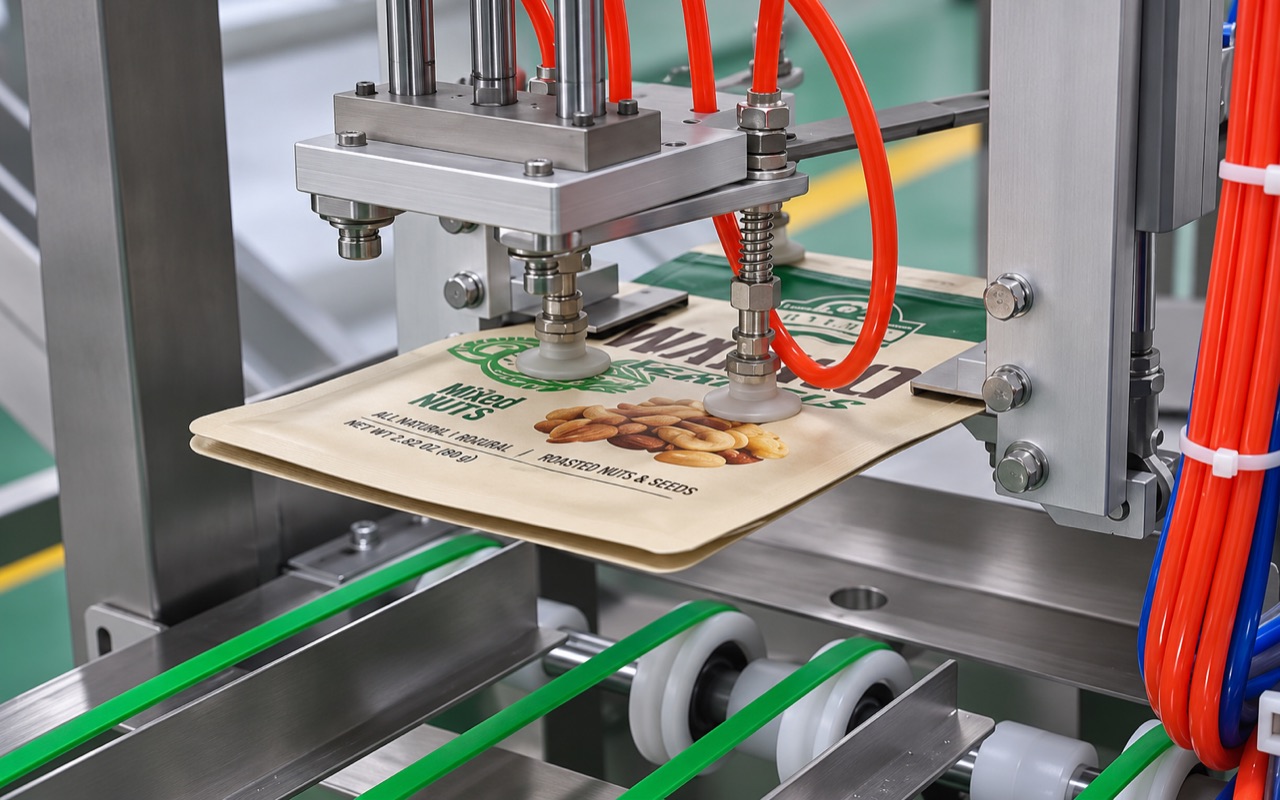 1. Pick up the pouch
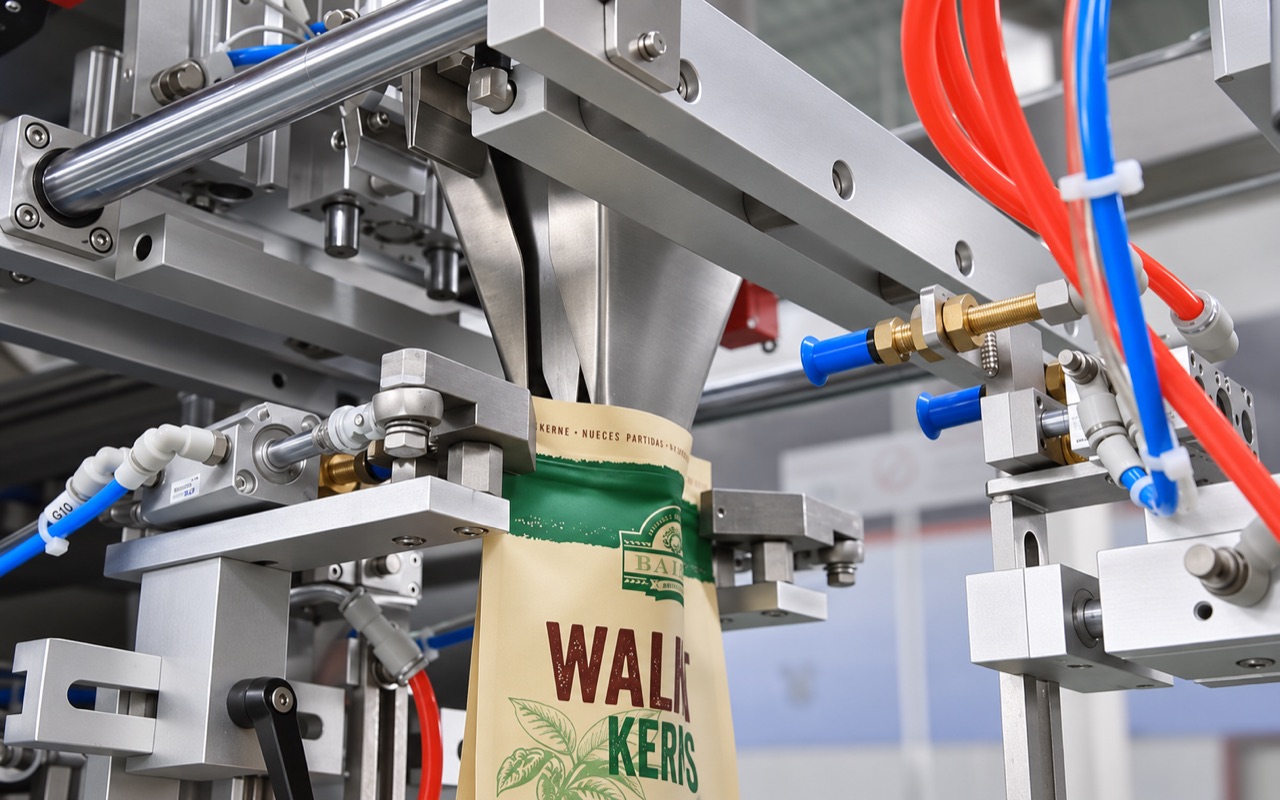 2. Fill the pouch
Start with the pack you need to sell
If customers recognise your pouch by its shape, finish or artwork, start there. Decide which features the finished pack must have, including its size, barrier and closure. A pre-made pouch machine opens, fills and seals a pouch that arrives already formed. A vertical form, fill and seal (VFFS) machine forms the bag from rollstock film on the line, then fills and seals it.
Ask each supplier what its proposed machine can produce with your product and packaging material. If both routes can make a pack you would sell, compare their running costs. See how an Australian machinery supplier explains the two routes.
Compare a normal production run
Compare the same product, finished pack requirements and production schedule. Count the packs that pass your seal, weight and appearance checks. Record the total time, including start-up, stoppages and changeovers. If a supplier has quoted figures before a trial, ask what assumptions they used and treat those figures as estimates.
For the pre-made pouch line, count all pouches used, including misfeeds and rejects. For VFFS, measure all film used, including material consumed during set-up and changeovers. Using the total material used already captures packaging waste. Record any product you cannot recover as a separate cost.
Calculate the cost per 1,000 saleable packs
For each line, add the cost of packaging used, packing labour, product you cannot recover and any other costs you can assign to the run. Count shared staff time the same way for both lines. Keep installed equipment costs and annual ownership costs separate so you can compare the investment as well as the cost of a run.
Running cost per 1,000 saleable packs = (total running cost ÷ number of saleable packs) × 1,000.
Run the calculation for a long batch of your main product and again for a day with several short runs. Check how the result changes if your sales forecast moves. Ask for packaging prices at the quantities you expect to buy and check whether minimum orders would leave you with unused stock.
A worksheet for comparing the two lines
- Finished pack
- Product, pack dimensions, barrier, appearance and required closure.
- Production
- Saleable packs, total run time, packing labour and changeover time.
- Materials
- Quantity and delivered cost of pouches or film used, plus any product lost.
- Investment
- Installed price, tooling and ongoing ownership costs, listed separately.
If the running costs are close, give more weight to which line can reliably make the pack you want at the volumes you expect to sell. Share your figures and sample packs with the equipment supplier.
Continue your research
Your application
Discuss your project
Tell us what you pack, what the finished pack needs to look like and how many packs you expect to produce. If you already have a pouch or film sample, include a photo.