
Palletising
When does a robotic palletiser pay for itself?
Work out what manual palletising costs your business, what labour a robot could free up and how to estimate payback on the complete installation.
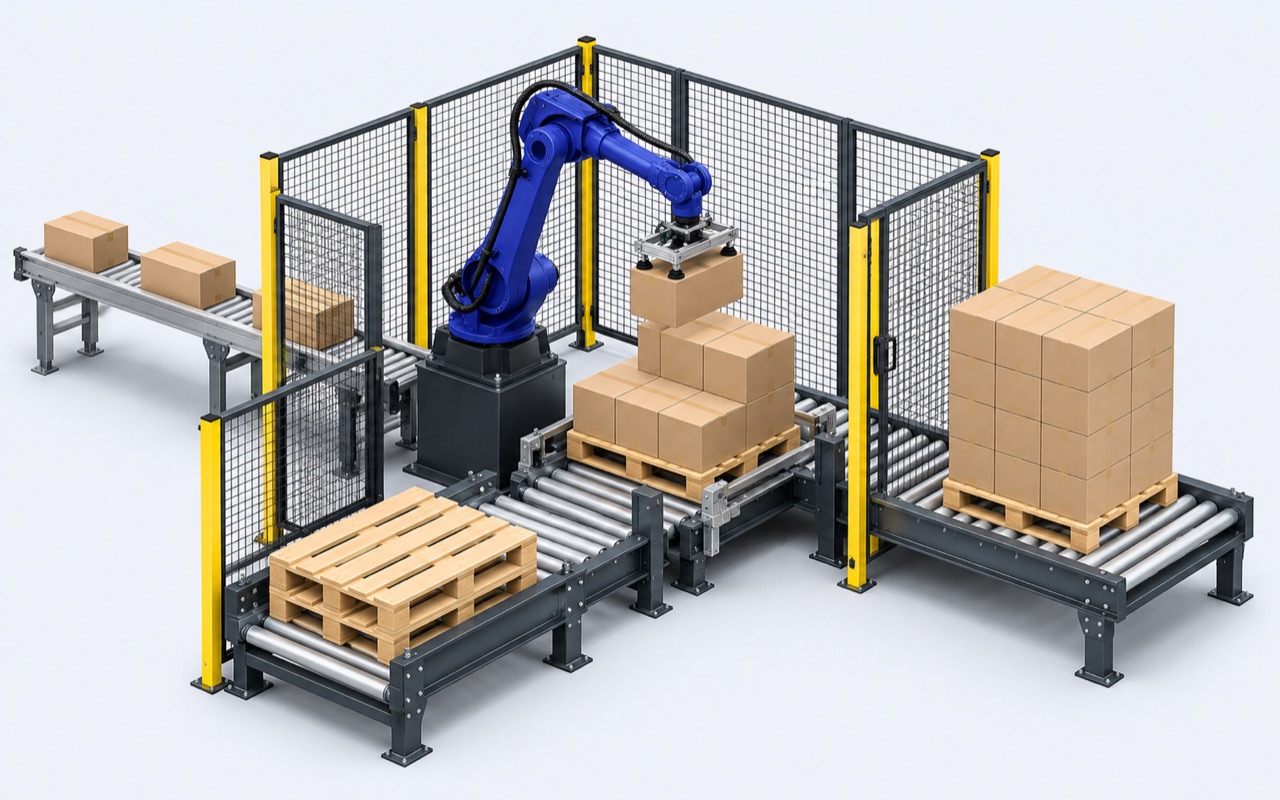
Start with a shift your team recognises
Your packing line can turn out the day’s orders, but finished cartons are still waiting for someone to stack them. Before pricing a robot, spend a representative shift finding out when the queue starts and what it costs you.
Record the hours actually spent stacking, how many good pallets leave the station and where the team loses time. Include waiting for empty pallets, full-pallet removal and busy periods when you pull people from elsewhere. Repeat on a shift with a different pack or workload if the difference could change the decision.
In a supplier-published New Zealand case, Bostik described manual stacking falling from about five units a minute early in a shift to two later in the day. Use your own shift records to see whether that pattern applies on your line.
Separate cash savings from time freed up
Start with overtime, agency cover or other staffing costs you could genuinely avoid. If an operator stays on payroll and moves to another job, record the hours released and where they would go. For example, those hours might help keep a second line running. Count a cash benefit only when you can show how that change affects spending or produces additional saleable output you can use.
Walk the proposed process with the people who run it. List who supplies empty pallets, clears full ones, changes formats and deals with interruptions. Record the repeated lifting the project would remove. Keep that benefit visible in the decision even if you have no defensible way to put a cash figure on it.
Work out what the whole installation has to earn back
Start with the complete installed cost. Ask whether the quotation covers tooling, infeed and pallet handling, guarding, controls, site work, commissioning and training. Estimate the ongoing costs that change, including service, wear parts, energy and any additional labour the new arrangement needs. Include each cost once.
Simple payback in years = installed project cost ÷ annual net cash benefit. Annual net cash benefit is the recurring cash benefit less the additional running costs.
Try it in reverse if you have no quote yet. If your business needs a three-year simple payback, multiply the annual net cash benefit you can substantiate by three. That gives you a ceiling to compare with a complete quotation. Use a conservative case for quiet months and downtime. If the net cash benefit is zero or negative, those assumptions produce no cash payback.
A before-and-after worksheet
- Output
- Current good pallets per shift and the output the proposed cell needs to sustain with the same product mix.
- Paid work
- Stacking hours today, hours that would remain and costs you can actually avoid.
- Complete cost
- Installed project cost and the annual change in running costs.
- Decision
- Compare your normal and quieter shifts. Record any capacity or lifting benefit separately.
If stacking is occasional or the main queue starts upstream, the numbers may favour improving the existing station first. If your case holds up, use the technical guide below to brief the complete cell with the packs you actually run.
Continue your research
Your application
Discuss your project
Share your pack sizes and weights, pallet pattern, shift pattern and the output your line needs to sustain.