
Production planning
When should a coffee roaster automate bag packing?
Measure where coffee bag packing slows down, compare the work each option leaves with operators, and prepare a brief for a machinery quote.
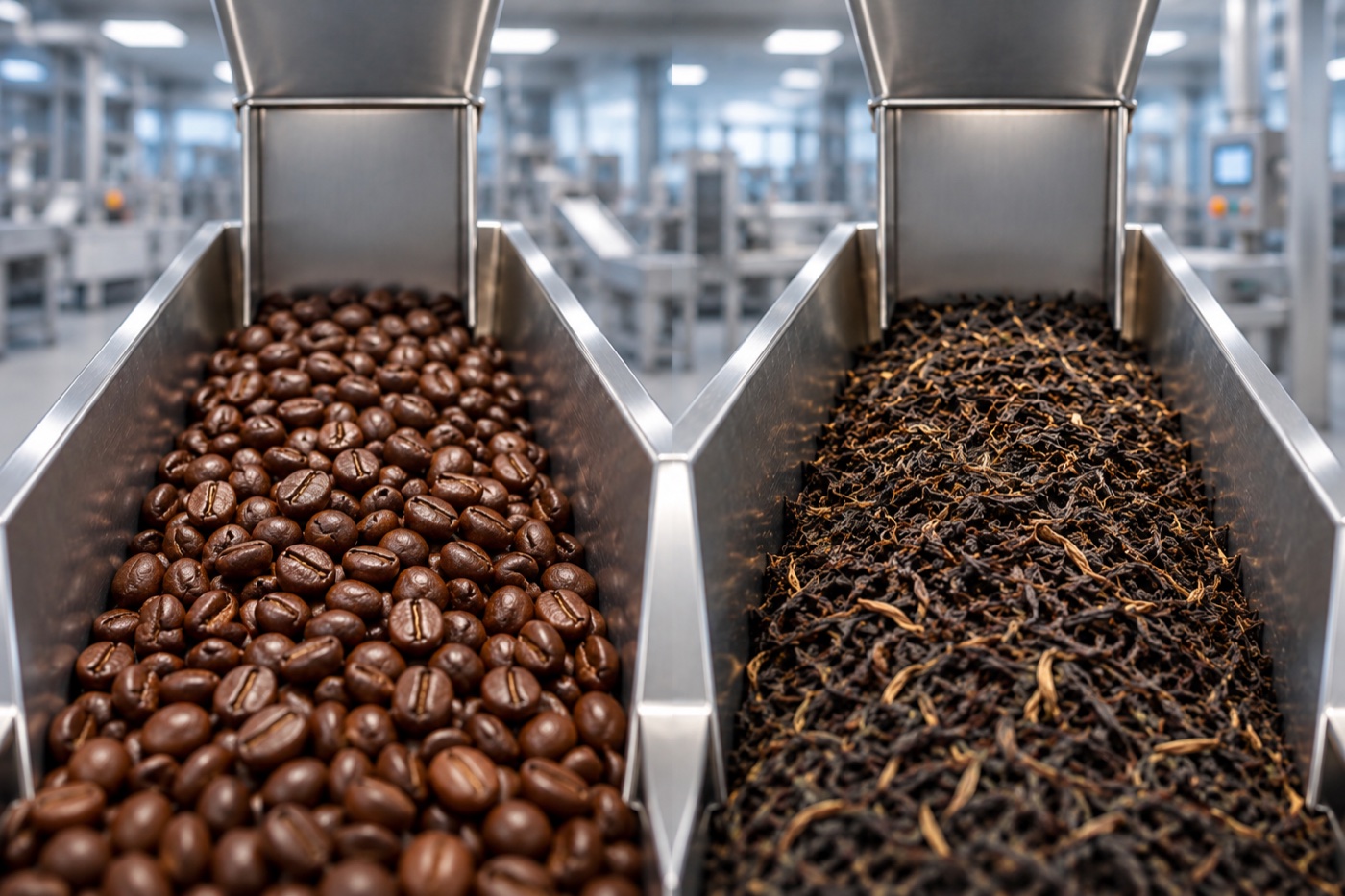
Automate the step that consistently limits the number of good bags you can ship. Work out which step that is on a normal shift and during peak orders. Then you can decide whether to improve one operation or connect several.
Measure one normal run
Record how many saleable bags you finish and how many people are working on packing. Include the time spent weighing, filling, sealing and labelling, as well as topping up the hopper, changing pack sizes and reworking rejects. Repeat this for a busy run if your demand comes in peaks.
Use finished bags per hour over the whole run as your baseline. For example, 450 good bags in five hours is 90 bags per hour. If you need 600 good bags in the same time, your target is 120 per hour. Use your own production figures for the comparison.
Find the step that holds up the rest
Watch where packs or product wait. If bags queue at the sealer, start with that step. If operators spend most of the run weighing, topping up and correcting fills, look at dosing first. If the delay comes from switching between wholesale and retail bags, record how long each change takes and what has to be adjusted.
Keep whole beans and ground coffee separate in your notes. Give the supplier a sample description, target weight and pack details for each. A proposal should explain which products and formats it is based on.
Compare the work left with the operator
- Improve the packing bench. If the problem is reaching for materials, waiting for labels or moving finished bags, test a change to that step and measure the next run.
- Automate one operation. A semi-automatic arrangement can suit a line where an operator can present the bag and move it on while the machine handles a repeated task such as dosing. Include that operator time when comparing options.
- Connect the line. If several steps limit output, ask how feeding, dosing, bag handling and sealing will work together. Specify whether you intend to use premade bags or form bags from rollstock. Include any closure, valve, coding and changeover requirements in the brief.
Australian roaster Inglewood moved from hand packing to a line that forms and fills coffee bags from rollstock as its fulfilment needs grew. That installation is one example of the connected-line route. Inglewood Coffee Roasters case report.
Send a brief that lets suppliers compare options
- Product and pack formats, including whole beans or ground coffee, bag dimensions and target weights.
- Current good bags per hour and the output you need during normal and peak runs.
- Operator tasks, number of people on the line and the step where work backs up.
- How often formats change, available space and any equipment you want to keep.
Ask how the proposed setup would achieve your target with your pack mix, what work stays manual and how performance would be assessed for your product.
Your product, your application