
Weighing
How do I reduce overfill when weighing dry products?
Measure where the extra weight comes from before changing the weigher. Compare dry products using the same pack target, operating conditions and sustained output.
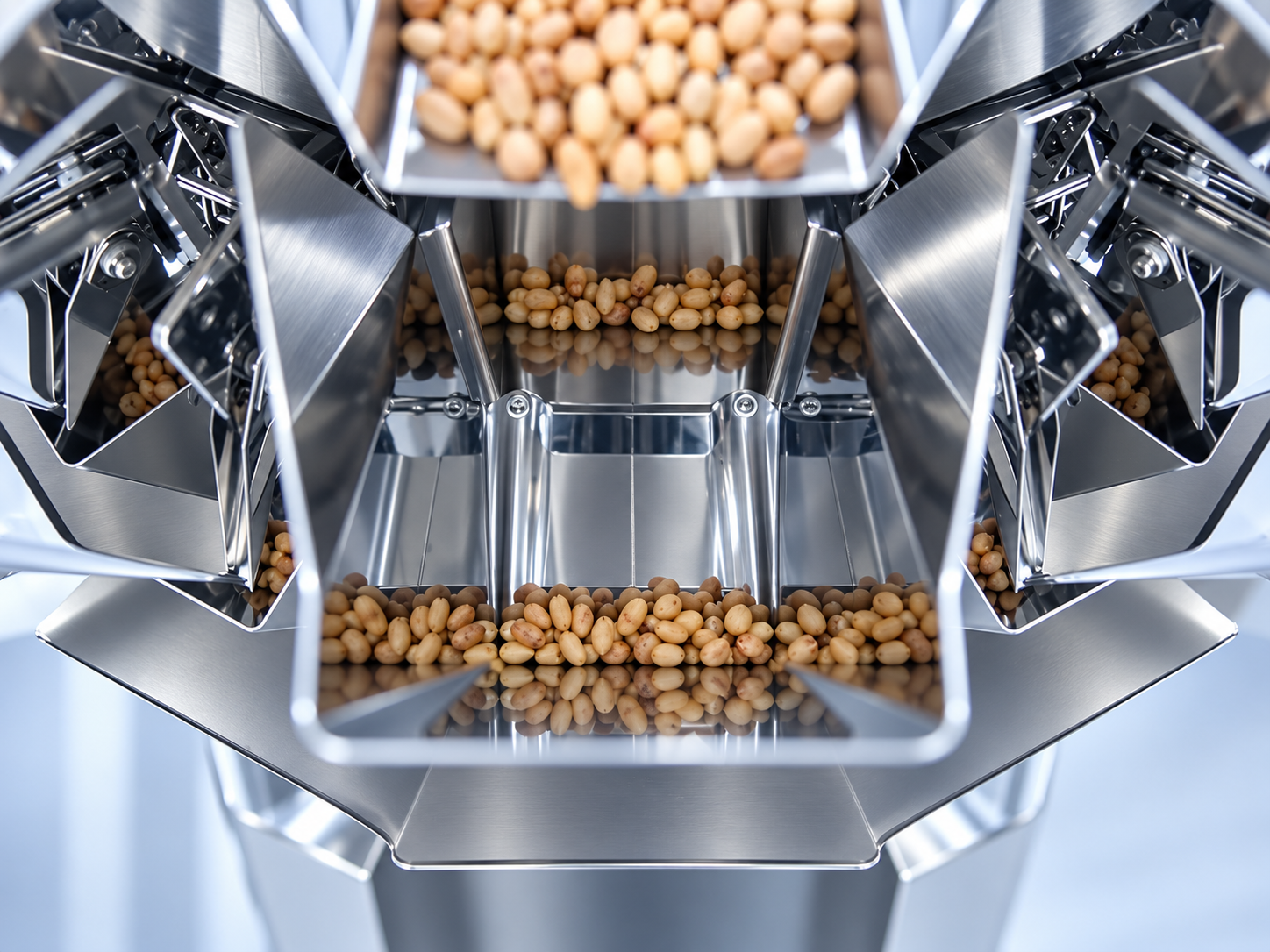
Measure the fill distribution
Record the target and actual weights of consecutive packs during a normal run. Keep product, pack size and line speed with the record. Look at the average, the spread and the number of packs outside your agreed limits. Keep different products and pack formats separate so a steady average does not hide variation.
Follow the product through the feed
Watch the supply into the weigher and the final part of each dose. Rice may flow steadily while irregular treats arrive in groups. With coarse pieces, weigh several individual pieces to understand how much the last piece can move the result. Note any sticking, breakage or interruption in feed.
Compare linear and multihead weighing on the same job
A linear weigher can approach the target by feeding more slowly near the end of the dose. A multihead weigher combines portions from several hoppers. Ask what each approach does with your product at the required rate, then compare fill variation, excess product, rejected packs and operator tasks over the same period.
Bring the numbers to the discussion
Send your product, typical piece size, target weight, pack details, good packs per hour and a recent weight record if available. Agree how the proposal will account for your acceptable weight limits and the output you need to sustain.
Explore the relevant equipment
Your application
Discuss your requirements
Send the details you have so we can discuss the next step for your line.
Discuss your project